The Economic Revolution Is Closer Than You Think
Artificial intelligence isn’t just reshaping industries—it’s set to transform the very foundation of the global economy. According to Anton Korinek, a leading AI economist, artificial general intelligence (AGI) could arrive within the next 2–5 years, bringing with it seismic changes that will touch every worker, business, and government.
“It’s completely unpredictable what the world will look like in a couple years down the road.” — Anton Korinek
Why Planning for the Future Is Now "Almost Impossible"
The pace of AI development is so rapid that even experts admit it’s nearly impossible to predict what the world will look like in a few years. Traditional advice like creating a five-year career plan is quickly becoming obsolete. As technology evolves, short-term adaptability and continuous learning are the new survival skills.
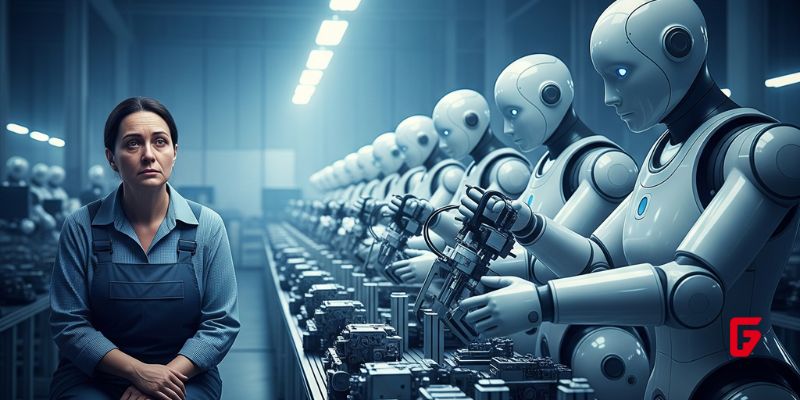
The Moment Human Workers Become "Easily Substitutable"
We’re approaching a threshold where AI systems can outperform most humans in tasks ranging from math and data analysis to creative problem-solving. While AI isn’t yet on par with the top human experts in every field, it has already surpassed the average worker in many domains. As AI becomes cheaper and more capable, the value of human labor is set to decline.
Universal Basic Income: From Radical to Inevitable
As AGI advances, the traditional system—where most people earn income through work—may no longer be viable. Universal basic income (UBI) or similar models will likely become necessary to ensure everyone shares in the economic gains. This isn’t just a radical idea; it’s quickly becoming a practical necessity to avoid mass immiseration and social instability.
Why UBI is gaining traction:
AGI could do almost anything a human can.
Wages and labor market value are expected to fall as AI substitutes for people.
Income distribution systems must be reimagined to prevent widespread hardship.
The Invisible Economic Impact—For Now
Despite the hype, AI’s impact isn’t yet fully visible in productivity statistics or macroeconomic variables. But the groundwork is being laid: companies worldwide are integrating AI into their processes, and the biggest payoffs are still ahead. The expectation is that, within a few years, AI will trigger a massive economic transformation.
The Great Disruption: Risks and Opportunities
The main challenge of the AI era will be ensuring technological progress benefits everyone, not just a select few. If left unchecked, AI could exacerbate inequality, destabilize political systems, and concentrate power in the hands of a few dominant tech companies.
Risks to watch:
Mass job displacement and loss of income.
Political destabilization from economic upheaval.
Market concentration among a few AI superpowers.
Opportunities:
Leveraging AI as a force multiplier in education and business.
Developing new models of income distribution.
Building global cooperation and safety standards for AI governance.
What Should We Do Now?
Stay informed and agile. The most valuable skill is the ability to adapt and learn how to use AI tools effectively.
Rethink education. Teaching students and workers to leverage AI will be crucial for future success.
Push for smart regulation. Governments need to build expertise and create frameworks that encourage innovation while mitigating risks.
Prepare for new economic models. Universal basic income or similar systems may soon be necessary to maintain social stability.