By futureTEKnow | Editorial Team
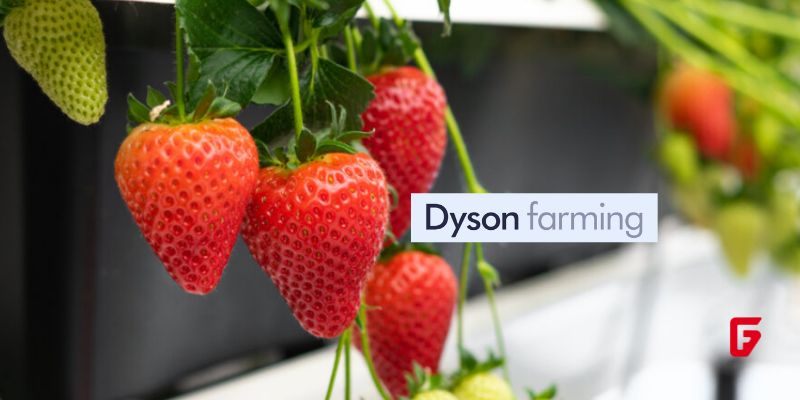
Dyson, a name synonymous with innovative vacuums and fans, is now making waves in the world of vertical farming. In the heart of Lincolnshire, England, Dyson has constructed a 26-acre glasshouse that houses an astonishing 1,225,000 strawberry plants. This isn’t your average farm—it’s a showcase of how advanced engineering and automation can reshape food production.
James Dyson describes the project as a natural extension of his manufacturing philosophy: “Growing things is like making things. I’ve approached farming from that point of view—how can we make it more efficient? What technology can improve quality, taste, and land use?”
Giant Rotating Wheels: The farm features massive wheels, each weighing about 500 kg (1,100 lb), which slowly rotate rows of strawberry plants. This design ensures every plant receives optimal sunlight, maximizing growth and fruit quality.
UV-Emitting Robots: To combat mold, autonomous robots patrol the aisles, emitting UV light that sterilizes plant leaves without chemicals.
Biological Pest Control: A distributor bot releases beneficial insects to control pests like aphids, reducing the need for pesticides.
Robotic Harvesting: When strawberries ripen, 16 robotic arms gently pick the fruit. In just one month, these robots harvested 200,000 strawberries, demonstrating the scale and efficiency of the operation.

Anaerobic Digester: The facility is powered by an on-site anaerobic digester that converts grain gases into electricity. The process’s excess heat warms the glasshouse, and the leftover digestate is recycled as organic fertilizer.
Rainwater Harvesting: The glasshouse’s 760-meter roof collects rainwater, reducing reliance on external water sources and supporting the farm’s annual yield of 1,250 tonnes of strawberries.
Local Distribution: By growing and distributing strawberries within the UK, Dyson reduces the energy and emissions associated with importing fruit during the off-season.
Sustainable food production and food security are critical for the UK’s health and economy.
High-tech agriculture offers solutions to land scarcity, climate challenges, and the demand for fresher, tastier produce.
Dyson’s approach demonstrates how robotics, automation, and renewable energy can be integrated into farming for greater efficiency and environmental benefit.
As James Dyson puts it, “Efficient, high-technology agriculture holds many of the keys to our future. Dyson Farming strives to be at the forefront of this.”
Robotics and automation are revolutionizing traditional farming.
Vertical farming enables higher yields in smaller spaces.
Sustainable practices like renewable energy and rainwater harvesting are central to Dyson’s model.
This model could shape the future of agriculture, making food production more resilient and eco-friendly.
Dyson strawberries are now available in select UK stores, offering a glimpse into the future of farming—where engineering and nature grow together for a sustainable tomorrow.
To provide the best experiences, we use technologies like cookies to store and/or access device information. Consenting to these technologies will allow us to process data such as browsing behavior or unique IDs on this site. Thanks for visiting futureTEKnow.