
























Lomazzo, Lombardy, Italy
2014
Satellite Communications, Telecommunications, Aerospace, Earth Observation, Satellite Operations, Defense
Leaf Space is a space technology company providing Ground Segment as a Service (GSaaS) for satellite operators. The company operates a global network of ground stations that enables spacecraft to exchange commands, telemetry, and mission data with systems on Earth. Its services support commercial satellite constellations, institutional spacecraft, and government missions. Through its Leaf Line, Leaf Key, Leaf Hosting, and TreeNet offerings, Leaf Space provides satellite connectivity infrastructure without requiring operators to build and maintain their own worldwide ground station networks.
Leaf Space builds and operates ground station infrastructure that connects satellites with their mission control systems. Its network supports spacecraft commanding, telemetry reception, and the transmission of payload data collected during orbital missions.
The company provides telemetry, tracking, and command (TT&C) services through ground antennas distributed across multiple geographic locations. Satellite operators can schedule communication sessions, monitor spacecraft status, send commands, and download mission data through a unified software interface.
Leaf Space also provides automated satellite pass scheduling, dedicated ground station capacity, infrastructure hosting, and technical support during launch and early orbit operations. Its services include radio-frequency licensing, signal processing, data backhaul, and integration with customers’ mission control environments.
The company’s infrastructure supports satellites used for Earth observation, communications, scientific research, and government applications. Its TreeNet initiative is developing an additional connectivity architecture intended to link spacecraft and ground infrastructure more continuously.
Leaf Space develops satellite communications infrastructure based on a globally distributed network of ground stations. Its Ground Segment as a Service architecture combines radio-frequency antennas, satellite tracking equipment, signal processing systems, cloud-connected software, and automated network scheduling.
The company’s ground stations support communication across several frequency bands, including UHF, S-band, X-band, and Ka-band, depending on the station and mission configuration. These systems receive satellite telemetry, transmit commands, and download payload data generated by spacecraft in orbit.
Leaf Space provides access to its network through a RESTful application programming interface (API) and the Leaf Portal. These interfaces allow satellite operators to integrate ground communications with their existing mission control software, automate satellite contact scheduling, and retrieve data without managing individual ground station systems.
Its scheduling technology considers spacecraft orbital parameters, available antennas, communication compatibility, and customer capacity requirements. Operators can use automated scheduling, on-demand reservations, and priority access models to manage communication windows across the network.
The company also supports software-defined radio technology and communication protocols such as CCSDS, DVB-S2, and DVB-S2X. These capabilities help accommodate different satellite radios, data formats, and mission communication requirements.
In 2026, Leaf Space introduced TreeNet, a connectivity architecture designed to link satellites through TreeNodes and its ground station network. Unlike conventional pass-based communications, TreeNet is being developed to enable more continuous connectivity through a federated satellite and ground infrastructure network.
Satellites depend on ground stations to receive commands, transmit operational telemetry, and deliver mission data. Building a geographically distributed ground network requires substantial infrastructure, regulatory coordination, and ongoing maintenance.
Leaf Space addresses these requirements through shared and dedicated satellite ground station services, allowing spacecraft operators to access communications infrastructure without developing every ground facility independently.
Its global network supports the increasing communication requirements of small satellite constellations and data-intensive space missions. By providing automated scheduling and standardized software integration, the company helps operators manage multiple satellites and ground contacts through a common interface.
The development of TreeNet also reflects a broader shift toward more continuous satellite connectivity, where spacecraft communications could become less dependent on individual ground station contact windows.
Leaf Line is Leaf Space’s Ground Segment as a Service platform, providing shared access to a global network of ground stations. Satellite operators use the service for telemetry, tracking, commanding, and payload data downlink. Leaf Line includes automated scheduling, on-demand antenna reservations, unified API access, and usage-based pricing.
Leaf Key provides dedicated ground station infrastructure for satellite operators requiring reserved antenna capacity, specific communication frequencies, or greater control over their ground systems. The service supports customized antennas, including configurations from approximately 1.8 to 13 meters, with deployment at Leaf Space facilities or customer-selected locations.
Leaf Hosting allows organizations to install their own radio-frequency or optical ground stations at Leaf Space locations. The service provides site infrastructure, electrical power, network connectivity, civil works coordination, and first-level maintenance while customers retain control of their communications equipment.
TreeNet is an emerging satellite connectivity architecture designed to connect spacecraft and ground infrastructure through a federated mesh network. Its TreeNodes are intended to support communication between satellites and the Leaf Line network, reducing dependence on scheduled ground station contact windows. The architecture was introduced in 2026 and represents a developing service rather than an established replacement for conventional ground communications.
Leaf Portal and the Leaf Space API provide software interfaces for managing ground station access. Satellite operators can schedule communication passes, reserve antenna capacity, configure mission requirements, and integrate satellite data delivery with their own mission control systems.
Leaf Space operates a distributed network of more than 40 ground stations across multiple geographic regions. The infrastructure supports several radio-frequency bands and provides ground connectivity for commercial satellite constellations, scientific missions, and institutional spacecraft.
Leaf Space technology supports satellite telemetry, tracking, and command operations throughout spacecraft missions. Operators use its infrastructure to monitor satellite health, transmit flight commands, and retrieve mission data from spacecraft in orbit.
Its ground station network supports Earth observation missions that require the delivery of imagery, environmental measurements, and geospatial data. It also serves satellite communications systems, scientific research spacecraft, and government missions.
Additional applications include satellite constellation management, launch and early orbit operations, dedicated ground infrastructure for security-sensitive missions, and hosted antenna deployments. TreeNet is being developed for applications requiring more frequent or continuous access to spacecraft data and commands.
No. Leaf Space specializes in ground segment infrastructure rather than satellite manufacturing. Its services enable satellite operators to communicate with spacecraft, transmit commands, and retrieve mission data through a distributed ground station network.
Leaf Space reports operating more than 40 ground stations across over 20 locations worldwide. Its network continues to expand to support additional satellite missions and improve geographic coverage.
Leaf Space supports satellite communications using frequency bands including UHF, S-band, X-band, and Ka-band, depending on the ground station and service configuration. These frequencies are used for spacecraft commanding, telemetry, and payload data transmission.
Leaf Line provides shared access to Leaf Space’s global ground station network, allowing multiple satellite missions to use available antenna capacity. Leaf Key provides dedicated or partially dedicated ground stations configured for customers requiring specific capacity, communication frequencies, or infrastructure control.
TreeNet is a satellite connectivity architecture introduced by Leaf Space in 2026. It is designed to connect spacecraft and ground infrastructure through a federated mesh network, enabling more continuous communication instead of relying entirely on scheduled ground station passes. The technology remains part of the company’s developing connectivity portfolio.
Have an update, correction, or additional information about this company? Help us keep the futureTEKnow company database up to date by submitting the latest company information.

Turion Space has raised more than $75 million in Series B funding to scale its Starfire platform and satellite fleet, betting that space domain awareness is the next critical defense infrastructure layer. The piece unpacks Turion’s business model, contracts, and risks for operators and investors watching the new space intelligence stack.
Pulsar Fusion’s Sunbird fusion rocket has achieved first plasma, validating its exhaust architecture and edging a reusable “space tug” concept toward sub‑six‑month Mars transfers. Drawing on multiple reports, this piece breaks down how the Dual Direct Fusion Drive works, what the 2027 in‑orbit demo must prove, and which technical and regulatory hurdles still stand between Sunbird and operational deep‑space logistics.
Aetherflux is betting that orbital data centers can power the next wave of AI, shifting from laser power beaming to space-based compute as it targets a $2 billion valuation. For founders and investors, the company’s 2027 satellite plans highlight how quickly space infrastructure is converging with AI demand and reshaping the deep-tech funding landscape.
Sierra Space’s $550 million Series C round, valuing the company at $8 billion, signals a decisive shift toward defense-tech space. This feature unpacks the hardware, strategy, and risks shaping the next decade of orbital infrastructure.
Axiom Space has locked in a fresh $350M raise to push its commercial space station and NASA lunar spacesuits toward launch, signaling growing investor faith in private orbital infrastructure.
Morpheus Space secures $15M funding for GO-2 electric propulsion mass production. Learn how this boosts satellite mobility with efficient thrusters.

Stoke Space extended its Series D funding to $860 million, fueling Nova’s full-reuse rocket production at Cape Canaveral. Backed by founders from Blue Origin, this pushes total capital to $1.34B.
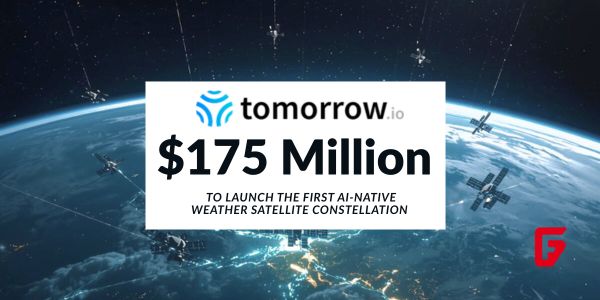
Tomorrow.io has closed a $175 million equity round to deploy DeepSky, its AI-native weather satellite constellation designed to make global atmospheric data far more precise, frequent, and useful for businesses, governments, and communities facing extreme weather.

Stay ahead of AI and space tech wars: OpenAI vs Google AI, SpaceX and Blue Origin’s race for orbital data centers, Meta’s AI strategy shift, and key robotics breakthroughs reshaping industry.
Bridgit Mendler’s Northwood Space is pioneering mass-produced ground stations, enabling scalable, high-speed connectivity for the new era of satellite networks and megaconstellations.
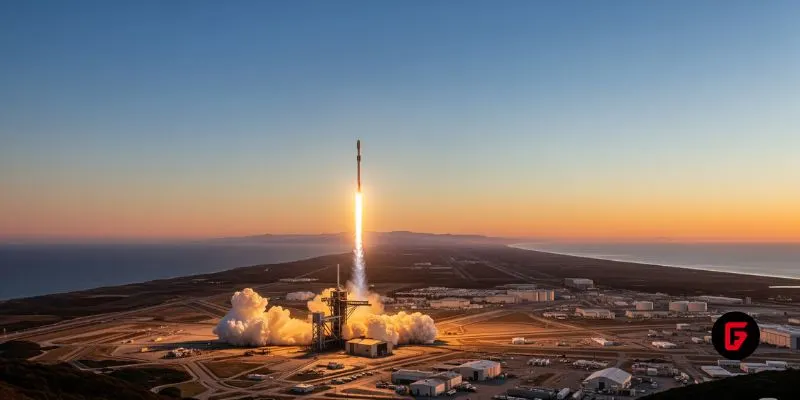
SpaceX aims to nearly double launches from Vandenberg in 2025, facing support from federal agencies but strong objections from the state and local communities.

NASA and Google’s AI-powered Crew Medical Officer Digital Assistant enables autonomous diagnoses for astronauts on Mars missions, redefining remote healthcare for space and Earth.
futureTEKnow is focused on identifying and promoting creators, disruptors and innovators, and serving as a vital resource for those interested in the latest advancements in technology.
© 2026 All Rights Reserved.