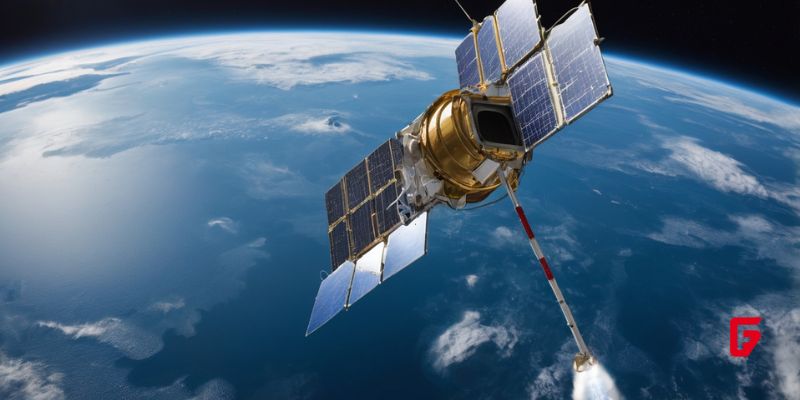
Greece has officially entered the space age with the launch of DUTHSat-2, its first-ever domestically designed and built satellite. This milestone isn’t just a win for national pride—it’s a leap forward for Greece’s capabilities in environmental monitoring, disaster response, and civil protection.
The Launch: A Symbol of Greek Innovation
On June 23, 2025, DUTHSat-2—a compact, 7-kilogram CubeSat—soared into orbit aboard a SpaceX Falcon 9 rocket as part of the Transporter-14 rideshare mission from Vandenberg Space Force Base in California. The satellite was developed by the Democritus University of Thrace, in close collaboration with Greek tech companies and the European Space Agency (ESA), marking a true example of academic-industry partnership.
Greek Digital Governance Minister Dimitris Papastergiou called the launch “the beginning of a new era for Greek microsatellite programmes,” highlighting the project as a testament to what the Greek scientific community and local industry can achieve together.
What DUTHSat-2 Brings to the Table
DUTHSat-2 isn’t just another satellite—it’s a versatile platform designed to tackle some of Greece’s most pressing challenges:
Marine Pollution Detection: Equipped with advanced optical cameras and spectral sensors, DUTHSat-2 can spot oil spills and ship ballast water discharge with impressive accuracy. This is a game-changer for monitoring the Aegean and other vulnerable marine environments, allowing for quicker, more effective responses to environmental threats.
Soil Moisture Monitoring: The satellite also captures data on soil moisture, providing valuable insights for agriculture and drought management—critical for a country that faces increasing climate pressures.
Disaster Response and Civil Protection: By delivering high-resolution imagery and real-time data, DUTHSat-2 supports disaster response teams and strengthens civil protection efforts across Greece.
Space Black Box: The satellite features an onboard telemetry and housekeeping unit—essentially a “space black box”—that keeps tabs on the satellite’s health and operational status, even if main subsystems fail.
The Tech Behind the Mission
DUTHSat-2 is a 6U CubeSat, assembled and tested at the Democritus University of Thrace. Its development was guided and monitored by ESA, ensuring it meets rigorous international standards. The satellite’s sensors operate in both visible and near-infrared spectrums, enabling it to capture detailed images of both land and sea.
This mission is part of Greece’s National Microsatellite Program, which is funded by the EU’s Recovery and Resilience Facility and overseen by the Ministry of Digital Governance. The program is a strategic investment in Greece’s innovation, sovereignty, and technological independence.
Looking Ahead: More Greek Satellites on the Horizon
DUTHSat-2 is just the beginning. Two more Greek-made CubeSats, developed by local industry consortia, are scheduled for launch later this year. This growing constellation of homegrown satellites will further enhance Greece’s capabilities in Earth observation, secure communications, and environmental monitoring.
Why This Matters
The launch of DUTHSat-2 is a clear signal that Greece is serious about building a robust, self-sufficient space ecosystem. By bringing together universities, research centers, and tech companies, Greece is not only advancing its own technological capabilities but also positioning itself as an active player in European space policy.
For tech enthusiasts and space watchers, DUTHSat-2 is a shining example of how small satellites can deliver big results—especially when backed by strong collaboration and a clear vision for the future.