
Startups & Business News
Loop’s AI supply chain platform raises $95M Series C to predict disruptions before they hit
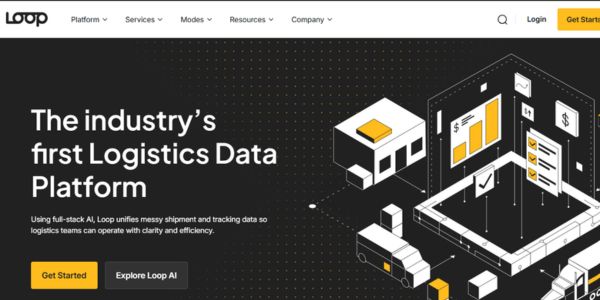
When a container goes missing somewhere between Shenzhen and Santos, most teams discover it when it is already too late. Emails start flying, spreadsheets are updated in a rush, and someone has to explain to a customer why a production line stopped for lack of parts. Loop, a San Francisco startup, is betting that artificial intelligence can turn that chaos into a manageable, even predictable, workflow—and investors just wrote a $95 million check to see that vision scale across the global supply chain.
Funded by a new Series C round led by Valor Equity Partners and the Valor Atreides AI Fund, Loop positions itself as a full‑stack, vertical AI platform for logistics and supply chains, not just another dashboard. The company ingests the messy documents, PDFs, rate tables, and emails that normally live in siloed systems and turns them into structured intelligence that operations and finance teams can actually use. For founders and operators in any market—including those shipping in and out of Latin America—this is a glimpse of how AI-native infrastructure is reshaping the unglamorous but critical plumbing of global trade.
What Loop actually does in the supply chain
Loop’s platform sits at the intersection of logistics operations and working capital. It reads invoices, bills of lading, rate tables, and other transportation documents, using a logistics‑trained foundation model called DUX to extract relevant fields with high accuracy and minimal human intervention. The company claims it can achieve more than 99% “touchless” automation in document processing, reducing workflows that used to take days down to hours.
From there, the data does not just feed back‑office reconciliation. Loop uses it to monitor shipment locations, detect bottlenecks, and flag potential disruptions before they cascade into missed delivery windows or urgent, expensive re‑routing. By turning historically unreliable data into a structured asset, the platform gives teams a live view of their network and helps them negotiate better freight rates, identify leakage, and automate discount workflows in exchange for early payment to carriers. For enterprises working with dozens of shipping partners and multiple currencies, this translates into fewer surprises and more predictable cash flow.
Inside the $95M Series C round
The new $95 million Series C round is led by Valor Equity Partners and the Valor Atreides AI Fund, with participation from returning backers such as 8VC, Founders Fund, Index Ventures, J.P. Morgan Growth Equity Partners, and Tao Capital Partners. This brings Loop’s total funding to around $210 million, putting it firmly in the scale‑up category of AI infrastructure companies.
According to the company, the capital will fund an expansion of its platform beyond its original focus on freight invoice auditing and into a broader range of logistics, finance, and supply chain operations. Loop plans to grow its team, deepen its product and engineering capabilities, and invest in specialized AI talent to keep refining its models and agents. For investors, the bet is that the same AI stack that reconciles freight bills today can become the decision layer for a much wider slice of the supply chain tomorrow.
From invoice checking to decision engine
Loop’s evolution reflects a common pattern in successful B2B AI: start with a painfully specific problem and grow from there. The company initially focused on catching inaccurate freight invoices and recovering overpayments by scrutinizing line items that human teams often miss. As its AI learned to read more document types—rate tables, bills of lading, contracts—it became possible to reconstruct a more complete picture of how goods move, where they get stuck, and what it costs to ship them.
With the new funding, Loop is positioning itself as a foundational platform for logistics and supply chain decision‑making. The idea is not only to look backwards at what went wrong but to alert operators days or weeks before a disruption materializes, whether that is congestion at a port, a weather event, or a pattern of delays on a specific lane. In practice, that means AI agents monitoring flows in real time, recommending alternative routes, and even supporting renegotiations with carriers based on performance and market conditions.
Why this matters for emerging markets and Latin America
Supply chains in Latin America and other emerging regions are complex by design: multimodal routes, smaller ports, infrastructure gaps, and regulatory friction all make transparency harder and delays more likely. Many mid‑market companies still rely on a mix of WhatsApp messages, manually updated spreadsheets, and local freight forwarders’ knowledge to keep cargo moving. A platform that can ingest PDFs with stamps and handwritten notes, understand the fine print, and bring all that into a unified data layer speaks directly to this reality.
For exporters shipping agricultural products from Brazil, electronics through Mexico, or textiles from Central America, the challenge is not just moving goods but doing it with margins that can absorb shocks. Tools like Loop promise earlier warnings and better control over freight costs, which can be decisive for thin‑margin businesses trying to compete globally. If AI can turn fragmented logistics data into actionable intelligence, it lowers the barrier for teams in the Global South to play at the same level of operational sophistication as large multinationals.
Lessons for founders building vertical AI platforms
Loop’s story also offers a set of practical lessons for founders working on vertical AI in any industry. First, the company went deep into one vertical—logistics—rather than building generic automation. That allowed it to train models like DUX specifically on transportation documents, reaching the level of accuracy needed to automate 99% of cases without constant human review. For teams building in sectors like healthcare, energy, or agriculture, that commitment to domain‑specific data and workflows is a clear takeaway.
Second, Loop anchored its value proposition in measurable financial outcomes: recovered overpayments, reduced processing time, and improved working capital through automated early‑payment discounting. That focus likely made the platform easier to sell to both operations and finance leaders, and more resilient in the face of changing hype cycles around AI. Startups in Latin America can learn from this by aligning AI features with hard ROI metrics that CFOs understand.
Finally, the company’s progression from point solution to decision layer shows the importance of sequencing. By starting with invoice accuracy and expanding into disruption prediction and strategic decision support, Loop turned a narrow beachhead into a broader platform story. Founders in frontier markets often feel pressure to “boil the ocean” from day one; Loop’s path suggests that winning one painful workflow and building outwards can be a more sustainable strategy.
The next wave of supply chain intelligence
Loop’s raise lands in a context where supply chain resilience is no longer a post‑pandemic buzzword but a board‑level priority. Climate‑related events, geopolitical tensions, and shifting trade routes have made forecasting and agility more important than incremental savings on any single lane. Investors like Valor Equity Partners are backing platforms that treat AI not as an add‑on but as the core engine for understanding and orchestrating logistics.
For founders and operators across the Americas, the message is clear. The future of supply chain management will be built on AI‑native infrastructure that can read the world as it is—messy, multilingual, and full of exceptions—and still give teams a clear set of options when something goes wrong. Loop’s $95 million bet does not guarantee that outcome, but it signals that the race to build this decision layer is very much underway.

Diego Alvarez is a Staff Writer at futureTEKnow, covering AI startups and ecosystems across Latin America, with a focus on real‑world deployments and local markets.
Discover the companies and startups shaping tomorrow — explore the future of technology today.
Most Popular
Trending Companies
Latest Articles
futureTEKnow is focused on identifying and promoting creators, disruptors and innovators, and serving as a vital resource for those interested in the latest advancements in technology.
© 2026 All Rights Reserved.