































Beijing, China
2022
Semiconductors, Artificial Intelligence, Automotive, Autonomous Vehicles, Computing Infrastructure
EVAS Intelligence is a semiconductor technology company developing AI computing chips and processor architectures for artificial intelligence workloads. Also known as Yixing Intelligence, the company works with the RISC-V instruction set and domain-specific computing architectures to develop hardware for AI applications. Its technology addresses computing requirements across areas such as autonomous driving, large-model training, and cloud and edge computing. EVAS Intelligence operates within the AI hardware ecosystem, where specialized processors provide the computing resources required to run increasingly complex AI systems.
EVAS Intelligence designs and provides AI computing chips and related computing solutions. Its business focuses on developing processors that address the computational requirements of artificial intelligence applications, including automotive and autonomous driving systems.
The company uses RISC-V-based processor architecture and domain-specific computing designs to develop chips suited to particular workloads. Its solutions are intended to address computing performance, power consumption, and total cost of ownership.
EVAS Intelligence also operates in AI computing infrastructure, with reported applications across cloud and edge environments. Its work connects semiconductor design with the growing demand for specialized hardware capable of supporting AI model training and deployment.
EVAS Intelligence works across AI semiconductor design, processor architecture, and computing infrastructure. Its technology combines the RISC-V instruction set with domain-specific architecture to develop computing chips for AI workloads.
RISC-V is an open instruction set architecture that can be used as the foundation for customized processor designs. EVAS Intelligence uses this architectural approach in developing AI computing solutions.
The company’s focus on domain-specific computing involves designing hardware around the requirements of particular workloads rather than relying exclusively on general-purpose processors. This is relevant to AI applications that require substantial computation and efficient use of energy and hardware resources.
EVAS Intelligence’s technology is associated with AI computing for cloud and edge environments, as well as automotive applications such as autonomous driving. Its broader computing focus includes processors intended to support large-model training.
The company operates within the AI semiconductor field, where processor architecture, computing efficiency, and workload-specific hardware design are important considerations for deploying AI systems at scale.
EVAS Intelligence operates in the AI computing hardware sector, which provides the processors and infrastructure needed to train and run artificial intelligence systems.
As AI workloads expand across cloud computing, edge devices, and automotive systems, specialized processors are an important part of the technology ecosystem. EVAS Intelligence’s use of RISC-V and domain-specific architecture connects its work to the development of customized AI computing hardware.
Its automotive applications also place the company within the intersection of AI semiconductors and autonomous mobility. These systems require computing resources capable of processing information and supporting AI-driven functions in vehicles.
EVAS Intelligence is therefore relevant to understanding how semiconductor design contributes to AI infrastructure and the hardware requirements of large-scale and application-specific AI workloads.
EVAS Intelligence develops AI computing chips based on RISC-V architecture. These processors are designed to support artificial intelligence workloads, with applications that include AI computing infrastructure and automotive systems.
The company provides AI computing solutions using domain-specific architecture. Its reported focus includes computing for cloud and edge environments, with an emphasis on computing efficiency and total cost of ownership.
EVAS Intelligence’s technology is associated with several AI computing applications.
Autonomous driving: AI computing chips for automotive systems and autonomous vehicle technology.
Large-model training: Computing hardware intended to support the computational requirements of training large AI models.
Cloud computing: AI computing solutions for workloads operating in cloud environments.
Edge computing: Specialized computing hardware for AI applications deployed closer to where data is generated or processed.
EVAS Intelligence is also known as Yixing Intelligence. Its legal name is reported as Yixing Intelligent Technology (Guangzhou) Co., Ltd.
RISC-V is an instruction set architecture used as the foundation for processor designs. EVAS Intelligence uses it in developing AI computing chips and customized processor architectures.
Yes. Company descriptions identify automotive AI chips and autonomous driving computing as areas of its business.
Both cloud and edge computing are identified in company databases as areas for its AI computing solutions.
EVAS Intelligence is based in Beijing, China.
Have an update, correction, or additional information about this company? Help us keep the futureTEKnow company database up to date by submitting the latest company information.

OpenAI’s Astra for Law combines GPT-6 Astra with specialized legal search, integrations, and governance controls. The launch shows how frontier AI is moving deeper into professional legal workflows.

AI projects often stall because business data isn’t consistent or trustworthy. Here’s how to identify data gaps before they become an AI roadblock.
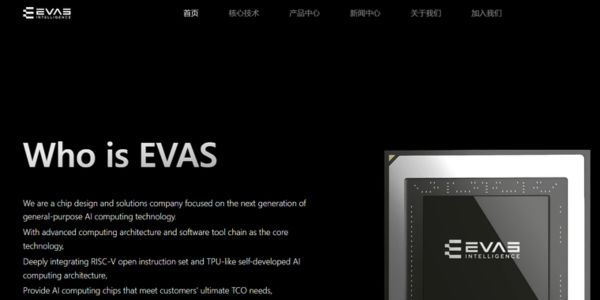
EVAS Intelligence has raised 1.5 billion yuan to mass‑produce its RISC-V Epoch AI chips, deepen its full‑stack platform, and accelerate global expansion, signaling rising investor confidence in alternative AI compute.
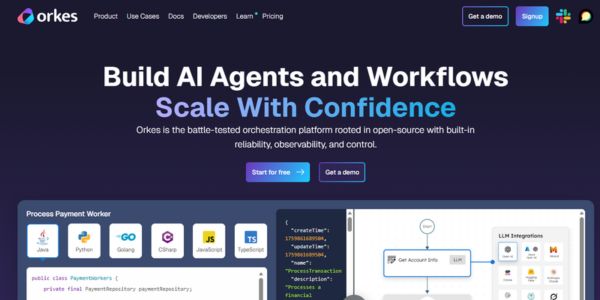
Orkes has raised 60 million dollars to turn its Netflix‑born workflow engine into a control plane for enterprise AI agents. The piece unpacks how its orchestration platform works, why investors are backing it now, and what this means for companies trying to move AI from pilots into production.

Paris-based Sillage has raised €1.7 million to launch an AI signal engine that helps enterprise sales teams follow the right buying signals, prioritize high-intent accounts, and improve pipeline efficiency without replacing human-led conversations.

Cloneable is launching an agentic AI platform for infrastructure operations that captures institutional knowledge from retiring experts and turns it into scalable agents, targeting energy, utilities, and other asset-heavy sectors. The $4.6M seed-backed startup aims to connect field data capture with back-office execution so founders and operators can modernize infrastructure faster and with fewer bottlenecks.

Excerpt: Ricursive Superintelligence has raised at least $500 million to build self‑improving AI, with GV and Nvidia backing a four‑month‑old lab at a $4 billion valuation. The deal crystallizes how quickly capital, talent and regulatory scrutiny are converging around autonomous AI research—and what that means for builders trying to compete outside the frontier club.

Brazilian startup BOND has raised US$2M to automate accounting for SMEs in Brazil’s complex tax system. Combining AI with human accountants, it targets a fragmented market of manual processes, aiming to turn back-office compliance into a faster, more strategic function for founders and operators.

Loop just raised a $95M Series C to expand its AI-native supply chain platform, turning messy logistics data into early disruption warnings and better financial outcomes for global operators and shippers.

Linkedin X-twitter-square Facebook-square Startups & Business News AI agents are finally moving from demos to the day-to-day stack of real
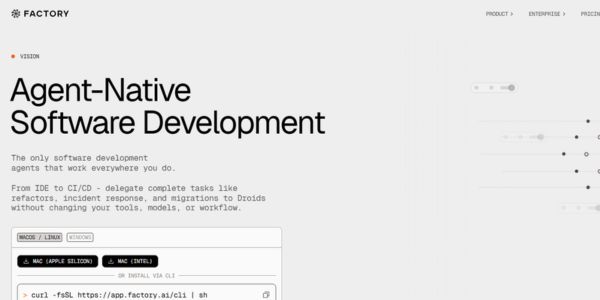
Factory has raised a $150M Series C at a $1.5B valuation to scale its autonomous “Droids” platform, betting that enterprises will standardize software engineering around agent‑native missions, governance and cost‑optimized AI infrastructure.

Solidroad has raised $25 million to bring AI-native quality assurance to every human and AI-powered customer interaction. The new funding will accelerate product development and expansion for support-heavy businesses leaning into automation.
futureTEKnow is focused on identifying and promoting creators, disruptors and innovators, and serving as a vital resource for those interested in the latest advancements in technology.
© 2026 All Rights Reserved.