



































London, England
2007
Marketing Technology, Social Media Analytics, Consumer Intelligence, Market Research, Digital Marketing, Public Relations, Brand Management, Customer Experience, Influencer Marketing, Enterprise Software
Brandwatch is an artificial intelligence and consumer intelligence software company specializing in social listening, social media management, and market research. Its platform uses machine learning, natural language processing, computer vision, and generative AI to analyze online conversations and consumer behavior. Brandwatch develops software that helps organizations monitor brand reputation, identify emerging trends, understand customer opinions, and manage social media activities. Its technology combines AI-powered consumer analytics with tools for content publishing, audience engagement, competitive analysis, and influencer marketing.
Brandwatch helps businesses understand what consumers are saying online and use that information to guide marketing, communications, and business decisions.
Its software collects and analyzes conversations from social media, news websites, forums, blogs, and other digital sources. Organizations use these insights to monitor brand mentions, evaluate customer sentiment, identify trends, and compare their performance with competitors.
Brandwatch also provides social media management tools for scheduling content, managing customer messages, coordinating campaigns, and measuring engagement across multiple platforms.
Its consumer research capabilities help marketing and research teams identify audience interests, understand customer feedback, and investigate changes in public perception.
The platform includes AI-powered analytics and reporting, allowing users to summarize conversations, detect unusual activity, and generate insights without manually examining large datasets.
Brandwatch also supports influencer discovery and campaign management, bringing consumer research and social media operations into a connected software environment.
Brandwatch combines natural language processing, machine learning, computer vision, and generative AI to analyze consumer conversations and support social media workflows.
Its Consumer Intelligence platform processes information from social networks, news publications, forums, and other online sources. Brandwatch reports access to approximately 1.7 trillion historical conversations dating back to 2010, with hundreds of millions of new conversations added daily.
Natural language processing helps classify online discussions, identify brands and topics, and evaluate sentiment. Machine learning models organize conversations into categories and detect patterns across large datasets.
Brandwatch also uses computer vision for image analysis, allowing organizations to identify logos, objects, scenes, and other visual elements in online images. This helps businesses understand brand exposure beyond text-based mentions.
Its Iris AI assistant combines proprietary AI models with third-party generative AI technology. Iris supports natural language searches, automated summaries, content analysis, and reporting. Users can describe the information they want to investigate, and the assistant can help construct search queries and interpret results.
Brandwatch’s anomaly detection technology identifies unusual changes in conversation volume, including sudden increases in brand mentions or emerging negative sentiment.
The platform also provides AI-assisted content writing, social media performance analysis, and automated message classification.
These capabilities connect large-scale consumer data analysis with practical marketing and customer engagement workflows.
Brandwatch demonstrates how AI is expanding consumer intelligence beyond traditional surveys and market research by analyzing public conversations across digital channels.
Businesses receive feedback through social media, reviews, online communities, and news coverage. Understanding this information requires identifying patterns across large amounts of unstructured text and visual content.
Brandwatch applies AI to organize these conversations, detect changes in sentiment, and identify emerging consumer interests. Its technology can help organizations recognize potential reputation issues and understand how audiences respond to products or campaigns.
The company’s combination of consumer intelligence and social media automation also reflects a broader trend toward connected enterprise AI platforms.
Rather than separating market research from daily marketing activities, Brandwatch provides tools that help organizations move from identifying consumer insights to planning content, engaging audiences, and measuring results.
Brandwatch Consumer Research is the company’s primary AI-powered consumer intelligence platform. It analyzes online conversations, customer opinions, brand mentions, and market trends across social media, news, forums, and other digital sources. Users can investigate consumer behavior, compare competitors, monitor sentiment, and create research dashboards.
Iris is Brandwatch’s generative AI assistant for consumer insights and social media workflows. It helps users analyze conversations, identify emerging topics, generate summaries, and create search queries through natural language instructions. Iris also supports AI-assisted content writing, social media performance analysis, and automated reporting.
Brandwatch Listen is a social listening and brand monitoring tool that tracks online conversations across more than 100 million sources. It analyzes sentiment, detects unusual changes in mentions, and provides alerts about emerging reputation issues. The product also integrates with Brandwatch Engage to connect monitoring insights with customer interactions.
Brandwatch provides a suite of social media management applications:
Publish: Schedules content, organizes social media calendars, and manages team approvals.
Engage: Centralizes customer messages and comments across social channels.
Measure: Analyzes social media performance through dashboards and reports.
Benchmark: Compares social media activity and performance with competitors.
Advertise: Supports advertising campaign creation and management.
These tools combine content management, customer engagement, and performance analysis in a connected environment.
Brandwatch’s technology is used in marketing, consumer research, public relations, and customer experience management.
Marketing teams use the platform to identify audience interests, evaluate campaigns, plan social media content, and compare performance with competitors. Market researchers analyze online conversations to understand consumer preferences, emerging trends, and product feedback.
Public relations teams apply AI-powered brand monitoring to detect reputation issues, investigate negative sentiment, and measure media coverage.
Customer service teams use Brandwatch Engage to manage social media inquiries, respond to messages, and coordinate customer support activities.
Influencer marketing teams use Brandwatch Influence to identify creators, manage partnerships, and evaluate campaign results.
The platform also supports product development research, competitive intelligence, and search trend analysis across consumer-facing industries.
Iris AI helps users analyze consumer conversations, summarize research findings, create search queries, and generate social media content. It combines Brandwatch’s proprietary AI technology with third-party generative AI models to support consumer research, reporting, and social media management.
Yes. Brandwatch uses computer vision to identify logos, objects, scenes, and other visual elements in images. This helps organizations analyze brand exposure and consumer activity that may not be captured through text-based searches.
Brandwatch monitors changes in online conversation volume and sentiment. Its AI-powered alerts identify unusual spikes in mentions or negative discussions, helping communications teams investigate emerging issues and determine whether a response is necessary.
Yes. Brandwatch provides tools for publishing content, responding to customer messages, monitoring conversations, and analyzing performance across supported social networks, including Facebook, Instagram, LinkedIn, TikTok, YouTube, and X. Available features depend on each platform’s integration.
Brandwatch’s Search Intelligence solution includes analysis of consumer discovery and search behavior across generative AI platforms. It helps organizations investigate brand visibility, search demand, and how consumer research activity is changing across traditional and AI-powered search environments.
Have an update, correction, or additional information about this company? Help us keep the futureTEKnow company database up to date by submitting the latest company information.

OpenAI’s Astra for Law combines GPT-6 Astra with specialized legal search, integrations, and governance controls. The launch shows how frontier AI is moving deeper into professional legal workflows.

AI projects often stall because business data isn’t consistent or trustworthy. Here’s how to identify data gaps before they become an AI roadblock.
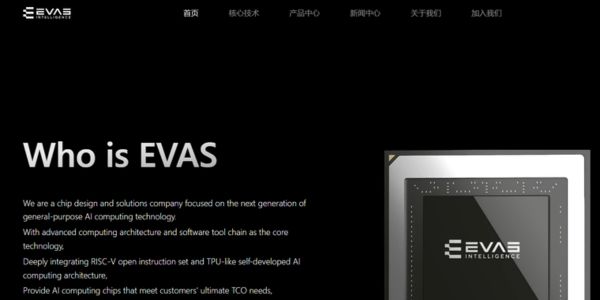
EVAS Intelligence has raised 1.5 billion yuan to mass‑produce its RISC-V Epoch AI chips, deepen its full‑stack platform, and accelerate global expansion, signaling rising investor confidence in alternative AI compute.
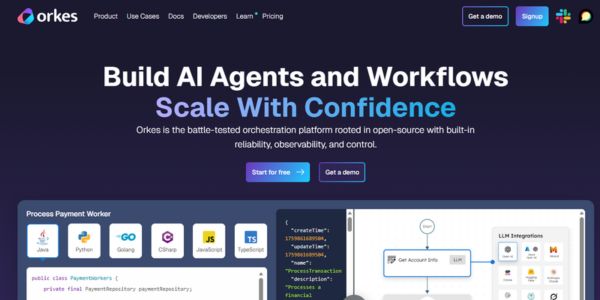
Orkes has raised 60 million dollars to turn its Netflix‑born workflow engine into a control plane for enterprise AI agents. The piece unpacks how its orchestration platform works, why investors are backing it now, and what this means for companies trying to move AI from pilots into production.

Paris-based Sillage has raised €1.7 million to launch an AI signal engine that helps enterprise sales teams follow the right buying signals, prioritize high-intent accounts, and improve pipeline efficiency without replacing human-led conversations.

Cloneable is launching an agentic AI platform for infrastructure operations that captures institutional knowledge from retiring experts and turns it into scalable agents, targeting energy, utilities, and other asset-heavy sectors. The $4.6M seed-backed startup aims to connect field data capture with back-office execution so founders and operators can modernize infrastructure faster and with fewer bottlenecks.
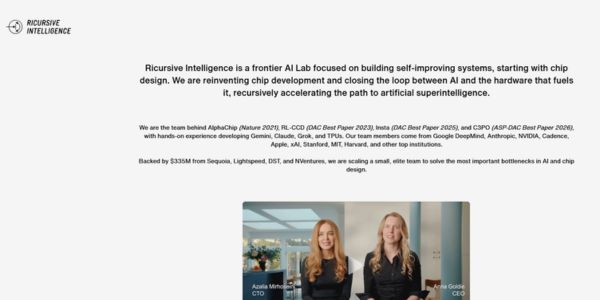
Excerpt: Ricursive Superintelligence has raised at least $500 million to build self‑improving AI, with GV and Nvidia backing a four‑month‑old lab at a $4 billion valuation. The deal crystallizes how quickly capital, talent and regulatory scrutiny are converging around autonomous AI research—and what that means for builders trying to compete outside the frontier club.

Brazilian startup BOND has raised US$2M to automate accounting for SMEs in Brazil’s complex tax system. Combining AI with human accountants, it targets a fragmented market of manual processes, aiming to turn back-office compliance into a faster, more strategic function for founders and operators.

Loop just raised a $95M Series C to expand its AI-native supply chain platform, turning messy logistics data into early disruption warnings and better financial outcomes for global operators and shippers.

Linkedin X-twitter-square Facebook-square Startups & Business News AI agents are finally moving from demos to the day-to-day stack of real

Factory has raised a $150M Series C at a $1.5B valuation to scale its autonomous “Droids” platform, betting that enterprises will standardize software engineering around agent‑native missions, governance and cost‑optimized AI infrastructure.

Solidroad has raised $25 million to bring AI-native quality assurance to every human and AI-powered customer interaction. The new funding will accelerate product development and expansion for support-heavy businesses leaning into automation.
futureTEKnow is focused on identifying and promoting creators, disruptors and innovators, and serving as a vital resource for those interested in the latest advancements in technology.
© 2026 All Rights Reserved.