































Wayve

Discover Wayve, an AI company developing embodied intelligence and end-to-end autonomous driving technology for vehicles and advanced driver assistance.

Headquarters

London, England, United Kingdom

Year Founded

2017

Website

Wayve

Sector

Artificial Intelligence

Industries

Artificial Intelligence, Embodied AI, Autonomous Driving, Self-Driving Vehicles, Automotive Technology, Deep Learning, AI Foundation Models, Computer Vision, Machine Learning, Generative AI, Robotics, Advanced Driver Assistance Systems, Autonomous Mobility, Robotaxis, Vehicle Automation

What Is Wayve?

Wayve is an artificial intelligence company developing embodied AI foundation models for autonomous driving. Its technology enables vehicles to interpret road conditions, understand surrounding traffic, and make driving decisions using learned patterns rather than relying primarily on predefined rules or detailed digital maps. Wayve’s software-based approach is designed to operate across different vehicle platforms, sensor configurations, and geographic environments. The company develops autonomous driving technology for automotive manufacturers and mobility operators, supporting applications ranging from driver assistance to automated transportation services.

What Does Wayve Do?

Wayve develops AI driving software that converts vehicle sensor information into driving decisions. Its systems process visual and other sensor data to recognize road layouts, detect vehicles and pedestrians, anticipate movement, and determine appropriate steering, braking, and acceleration responses.

The company’s AV2.0 architecture uses end-to-end neural networks trained on driving data collected across different roads, cities, and conditions. Rather than programming separate rules for every driving scenario, Wayve trains models to learn relationships between observations, vehicle behavior, and the surrounding environment.

Wayve also develops generative world models, driving-language models, and simulation technologies for training, evaluating, and interpreting autonomous driving systems. Its AI Driver is being integrated into commercial mobility services and automotive platforms, including supervised autonomous rides and planned production-vehicle driver assistance systems.

Join Our Newsletter

* indicates required

Intuit Mailchimp

ADVERTISEMENT
eMerge Americas 2027 Conference
ADVERTISEMENT
Submit Your Company | futureTEKnow

Wayve Technology

Wayve’s autonomous driving technology is built around AV2.0, an end-to-end neural network architecture that learns driving behavior from real-world data. The system processes information from vehicle-mounted cameras and other supported sensors to generate driving actions, replacing much of the separately programmed perception, prediction, and planning software traditionally used in autonomous vehicles.

The company’s embodied AI foundation models are trained to recognize relationships between road conditions, surrounding objects, traffic movement, and vehicle behavior. Self-supervised learning allows models to extract information from large quantities of driving data without requiring every observation to be manually labeled. Wayve’s approach is designed to generalize across unfamiliar roads and cities without depending on high-definition maps.

Wayve also develops GAIA, a generative world-model technology that produces simulated driving sequences from video, text, and driving actions. These generated environments support research into how autonomous driving models respond to different road conditions and unusual traffic scenarios.

Its LINGO technology connects language-based reasoning with driving models to help interpret vehicle decisions and driving situations. Additional technologies include photorealistic neural simulation, scenario analysis, and model evaluation tools. Together, these systems support the development, testing, and refinement of Wayve’s AI Driver across different vehicle platforms.

Why Wayve Matters

Autonomous driving systems have traditionally required extensive mapping, location-specific engineering, and separate software components for interpreting road conditions and controlling vehicles. These requirements can make expansion into new geographic markets technically complex and expensive.

Wayve is developing an alternative based on general-purpose AI driving models that learn from experience. Its technology is designed to transfer driving capabilities between vehicles and locations, potentially reducing the engineering work needed to introduce autonomous driving systems into new markets.

The company’s partnerships with automotive manufacturers and mobility providers demonstrate how embodied AI can move from research into commercial transportation. Its approach also contributes to broader developments in robotics, where AI models must interpret changing physical environments and make decisions in real time.

Wayve Products & Platforms

Wayve AI Driver

Wayve AI Driver is the company’s autonomous driving software platform for automotive manufacturers and mobility operators. It processes vehicle sensor data to interpret road environments and produce driving decisions. The platform is designed to support different vehicle architectures and sensor configurations without requiring high-definition maps. Its capabilities are intended to span supervised driver assistance and higher levels of automated driving, depending on vehicle integration, validation, and regulatory requirements.

AV2.0

AV2.0 is Wayve’s end-to-end autonomous driving architecture. It uses deep learning to transform information from vehicle sensors into driving actions through a unified learned system. The architecture is designed to adapt across road networks, traffic conditions, and vehicle platforms. Its data-driven approach reduces reliance on separately programmed driving rules and location-specific mapping.

GAIA

GAIA is Wayve’s generative world-model technology for autonomous driving research. It generates realistic driving scenarios using combinations of video, text descriptions, and driving actions. Researchers can use these generated sequences to study vehicle behavior, explore unusual traffic situations, and evaluate autonomous driving models in simulated environments.

LINGO

LINGO is Wayve’s family of language-based driving intelligence models. It connects visual driving information with natural-language descriptions and reasoning to help researchers understand road situations and interpret autonomous driving behavior. The technology supports model analysis, research into driving decisions, and the development of more interpretable AI systems.

Wayve Applications

Wayve’s technology supports autonomous passenger transportation, advanced driver assistance, and automated vehicle operations. Its AI Driver is used in supervised autonomous ride-hailing services, where vehicles navigate public roads while trained safety drivers oversee operations. The technology is also being developed for integration into consumer vehicles, allowing automotive manufacturers to introduce AI-based driving assistance and progressively more automated functions.

Additional applications include autonomous delivery vehicles, fleet operations, and driving simulation. Its foundation models can support research into unfamiliar driving environments, complex traffic interactions, and unusual road scenarios. GAIA and LINGO provide tools for generating training scenarios and interpreting driving decisions, while Wayve’s vehicle-independent software architecture supports integration across different automotive platforms.

Latest Companies

ADVERTISEMENT
eMerge Americas 2027 Conference

Frequently Asked Questions

Does Wayve manufacture its own autonomous vehicles?

Wayve primarily develops autonomous driving software rather than manufacturing its own vehicles. Its AI Driver is designed for integration into vehicles produced by automotive manufacturers and used by mobility operators.

Does Wayve require high-definition maps for autonomous driving?

No. Wayve’s AV2.0 architecture is designed to operate without high-definition maps. Its AI models learn driving behavior from sensor observations and training data, allowing them to adapt to different road environments.

Are Wayve-powered vehicles available to passengers?

Yes. Wayve and Uber introduced supervised autonomous rides in London in September 2026. Eligible passengers may be matched with Wayve-powered vehicles through Uber, with trained safety drivers onboard during the initial service.

How is Wayve working with Nissan?

Wayve is collaborating with Nissan to integrate its AI Driver into next-generation vehicle automation systems. The companies have identified supervised driving assistance in consumer vehicles as an initial application, with integration planned to begin in 2027.

Can Wayve’s AI technology work in different cities?

Wayve develops its AI Driver to generalize across different cities, roads, and driving conditions. The company has demonstrated its technology in hundreds of cities, although commercial deployment in each location still requires appropriate testing, vehicle integration, and regulatory approval.

Do You Have an Update for This Company?

Have an update, correction, or additional information about this company? Help us keep the futureTEKnow company database up to date by submitting the latest company information.

Update Company Information

Latest Articles

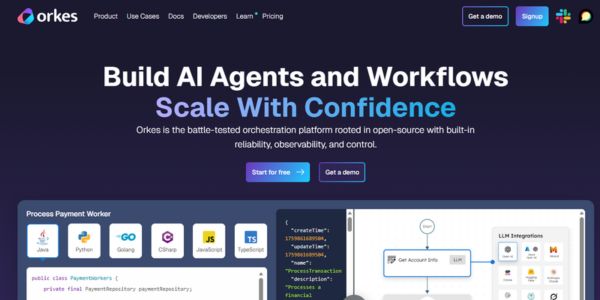
Orkes AI orchestration platform raises 60M dollars to help enterprises run reliable AI agents in production with durable workflows and governance.

Orkes Raises $60M to Orchestrate Enterprise AI Agents in Production

Orkes has raised 60 million dollars to turn its Netflix‑born workflow engine into a control plane for enterprise AI agents. The piece unpacks how its orchestration platform works, why investors are backing it now, and what this means for companies trying to move AI from pilots into production.

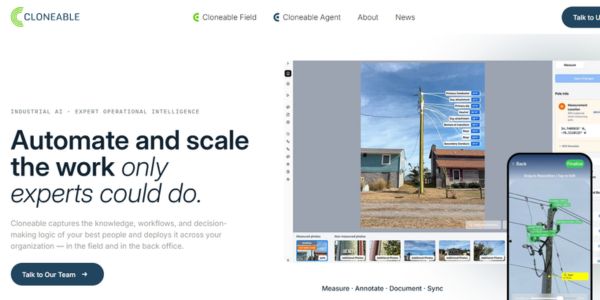
Cloneable’s agentic AI platform for infrastructure operations captures expert knowledge, automates back-office workflows, and targets aging grids, telecoms, and construction.

Cloneable’s agentic AI platform targets the infrastructure knowledge gap with $4.6M seed round

Cloneable is launching an agentic AI platform for infrastructure operations that captures institutional knowledge from retiring experts and turns it into scalable agents, targeting energy, utilities, and other asset-heavy sectors. The $4.6M seed-backed startup aims to connect field data capture with back-office execution so founders and operators can modernize infrastructure faster and with fewer bottlenecks.
futureTEKnow is focused on identifying and promoting creators, disruptors and innovators, and serving as a vital resource for those interested in the latest advancements in technology.

© 2026 All Rights Reserved.