





















New York, USA
2018
Enterprise Software, AI Governance, AI Security, Machine Learning Operations (MLOps), Generative AI, Financial Services, Healthcare, Insurance, Cybersecurity, Information Technology
Arthur AI is an artificial intelligence software company developing AI monitoring, security, and governance technology for organizations deploying machine learning models, generative AI applications, and autonomous AI agents. Its platform helps businesses evaluate model performance, detect unexpected behavior, enforce security policies, and maintain oversight of AI systems operating in production. Arthur combines AI observability, continuous evaluation, and runtime security within a centralized environment. Its technology is designed for enterprises that need to manage AI reliability, data protection, and regulatory requirements across multiple applications and computing environments.
Arthur AI helps organizations monitor and control artificial intelligence systems throughout development and deployment.
Its software tracks how AI models and agents behave, evaluates their outputs, and identifies potential problems such as inaccurate responses, data drift, security violations, or unexpected agent actions.
For generative AI applications, Arthur provides real-time guardrails that detect prompt injection attempts, sensitive information exposure, and responses that violate defined policies. Its monitoring tools also trace how AI agents interact with external software, retrieve information, and execute tasks.
Businesses use Arthur to compare AI models, test applications before deployment, investigate production incidents, and maintain records of AI activity.
The platform also provides centralized AI governance, helping security, engineering, and compliance teams identify deployed AI agents, apply policies, and monitor operational risks across their organizations.
Arthur AI combines machine learning observability, large language model evaluation, AI agent tracing, and runtime security to monitor artificial intelligence systems.
Its platform collects information about AI model inputs, outputs, performance, and application behavior. For traditional machine learning, Arthur measures data drift, prediction accuracy, classification performance, and other metrics that indicate whether models continue to operate as expected.
For generative AI applications, the platform evaluates hallucinations, response relevance, groundedness, prompt injection attempts, and sensitive data exposure. It supports predefined evaluation rules as well as custom metrics developed using Python, SQL, or LLM-based evaluators.
Arthur’s AI agent observability technology traces individual steps within agent workflows, including model requests, tool selection, information retrieval, and interactions with external systems. These traces help developers understand how an agent reached an outcome and identify failures within multi-step processes.
Runtime guardrails evaluate prompts and generated responses against security and acceptable-use policies. Organizations can configure rules to detect prohibited content, personally identifiable information, and potentially unsafe instructions.
The platform uses a distributed architecture with separate data and control planes. Its evaluation engine can run within a customer’s cloud environment or private infrastructure, allowing sensitive inference data to remain local while aggregated metrics support centralized monitoring.
Arthur also supports OpenTelemetry-based tracing, API integrations, automated alerts, and continuous evaluation workflows. These capabilities allow organizations to connect AI quality testing with ongoing production monitoring and security enforcement.
Arthur AI addresses an increasingly important challenge in enterprise technology: maintaining visibility and control over AI systems after deployment.
Traditional software generally follows predictable instructions, while generative AI applications and autonomous agents can produce variable responses and interact with external tools. This creates additional challenges involving reliability, security, accountability, and regulatory oversight.
Arthur provides technology for examining AI behavior, evaluating outputs, and identifying potential failures before they affect business operations.
Its focus on AI agent security and governance is particularly relevant as organizations move beyond chatbots toward systems capable of accessing data, making decisions, and performing tasks.
The company also reflects the growing importance of AI observability as a distinct category of enterprise infrastructure, connecting model development with cybersecurity, operational monitoring, and responsible AI deployment.
The Arthur Platform is the company’s central AI observability, evaluation, and governance system. It provides dashboards, monitoring, policy management, alerts, and audit records for traditional machine learning models, generative AI applications, and autonomous agents. Organizations use it to track AI performance, investigate incidents, and manage deployments through a unified interface.
Arthur Engine is an open-source evaluation and guardrails engine that can run within an organization’s own infrastructure. It evaluates LLM responses, checks security policies, monitors application behavior, and supports continuous testing. The engine includes tools for hallucination detection, prompt injection protection, sensitive data monitoring, and agent evaluation.
Arthur Agent Discovery & Governance helps organizations identify and inventory AI agents operating across endpoints, cloud platforms, and private infrastructure. It provides visibility into agent activity, including tool calls, data retrieval, and workflow execution. Security and governance teams use it to identify unauthorized agents, investigate behavior, and apply organizational policies.
Arthur Runtime Security provides real-time monitoring and security controls for AI applications and agents. It uses behavioral analytics to identify suspicious activity, unexpected tool usage, and potential security incidents. The system supports automated alerts and integration with existing security operations platforms, including Splunk, Elastic, and CrowdStrike Falcon.
Arthur AI’s technology is used in enterprise AI development, cybersecurity, financial services, healthcare, and insurance.
Financial institutions can use its monitoring and governance tools to evaluate predictive models, detect performance changes, and maintain records for internal oversight.
Healthcare and insurance organizations can monitor AI applications for accuracy, fairness, data protection, and unexpected behavior.
In generative AI development, engineering teams use Arthur to evaluate chatbots, AI copilots, retrieval-augmented generation systems, and autonomous agents before and after deployment.
Cybersecurity teams use its runtime monitoring and behavioral analytics to identify suspicious agent activity, investigate policy violations, and detect potential data exposure.
Organizations also apply Arthur’s tools to model selection, AI cost monitoring, regulatory reporting, and centralized management of AI applications across departments.
Yes. Arthur provides evaluation tools that assess whether generated responses are supported by available information. Its guardrails can identify responses that contradict or extend beyond supplied context, helping developers investigate hallucinations in chatbots, AI assistants, and retrieval-augmented generation applications.
Arthur’s agent discovery capabilities identify AI applications and agents operating across supported enterprise environments. Its governance tools maintain an inventory of detected agents, track their activities, and help security teams identify systems operating outside established organizational policies.
Yes. Arthur supports monitoring and evaluation of applications built using models from providers such as OpenAI, Anthropic, Google, and Meta. Its platform allows organizations to apply consistent evaluation criteria across different models and application architectures.
Yes. Arthur supports deployment in customer-managed cloud environments, private infrastructure, and enterprise configurations. Its distributed architecture allows evaluation processing to occur within an organization’s environment, reducing the need to transfer sensitive inference data to external systems.
Yes. Arthur Engine provides an open-source framework for evaluating and protecting generative AI applications. Developers can deploy the engine within their own infrastructure and use it for guardrails, continuous evaluation, prompt management, and agent testing.
Have an update, correction, or additional information about this company? Help us keep the futureTEKnow company database up to date by submitting the latest company information.

OpenAI’s Astra for Law combines GPT-6 Astra with specialized legal search, integrations, and governance controls. The launch shows how frontier AI is moving deeper into professional legal workflows.

AI projects often stall because business data isn’t consistent or trustworthy. Here’s how to identify data gaps before they become an AI roadblock.
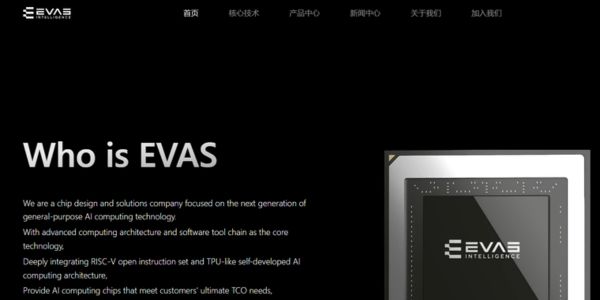
EVAS Intelligence has raised 1.5 billion yuan to mass‑produce its RISC-V Epoch AI chips, deepen its full‑stack platform, and accelerate global expansion, signaling rising investor confidence in alternative AI compute.
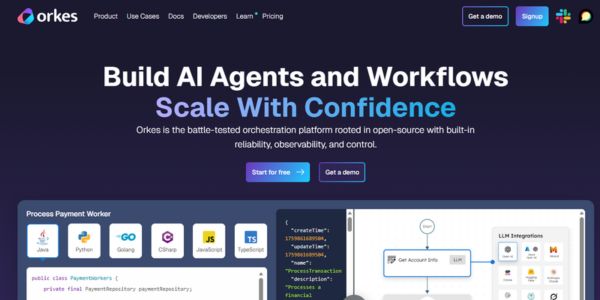
Orkes has raised 60 million dollars to turn its Netflix‑born workflow engine into a control plane for enterprise AI agents. The piece unpacks how its orchestration platform works, why investors are backing it now, and what this means for companies trying to move AI from pilots into production.

Paris-based Sillage has raised €1.7 million to launch an AI signal engine that helps enterprise sales teams follow the right buying signals, prioritize high-intent accounts, and improve pipeline efficiency without replacing human-led conversations.
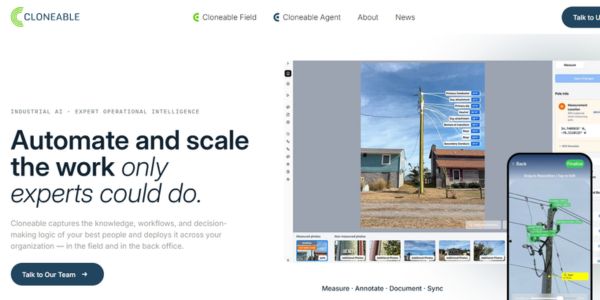
Cloneable is launching an agentic AI platform for infrastructure operations that captures institutional knowledge from retiring experts and turns it into scalable agents, targeting energy, utilities, and other asset-heavy sectors. The $4.6M seed-backed startup aims to connect field data capture with back-office execution so founders and operators can modernize infrastructure faster and with fewer bottlenecks.
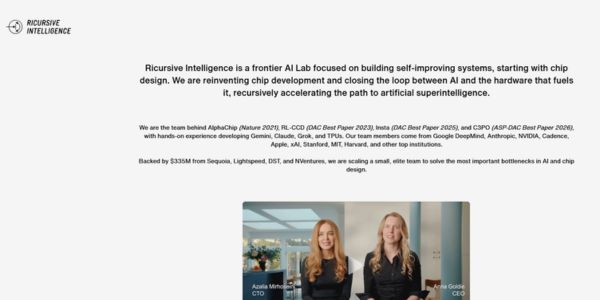
Excerpt: Ricursive Superintelligence has raised at least $500 million to build self‑improving AI, with GV and Nvidia backing a four‑month‑old lab at a $4 billion valuation. The deal crystallizes how quickly capital, talent and regulatory scrutiny are converging around autonomous AI research—and what that means for builders trying to compete outside the frontier club.

Brazilian startup BOND has raised US$2M to automate accounting for SMEs in Brazil’s complex tax system. Combining AI with human accountants, it targets a fragmented market of manual processes, aiming to turn back-office compliance into a faster, more strategic function for founders and operators.

Loop just raised a $95M Series C to expand its AI-native supply chain platform, turning messy logistics data into early disruption warnings and better financial outcomes for global operators and shippers.
Linkedin X-twitter-square Facebook-square Startups & Business News AI agents are finally moving from demos to the day-to-day stack of real
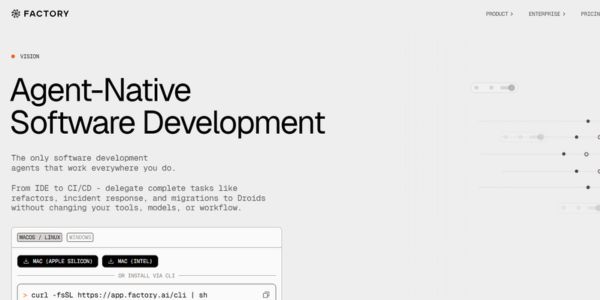
Factory has raised a $150M Series C at a $1.5B valuation to scale its autonomous “Droids” platform, betting that enterprises will standardize software engineering around agent‑native missions, governance and cost‑optimized AI infrastructure.

Solidroad has raised $25 million to bring AI-native quality assurance to every human and AI-powered customer interaction. The new funding will accelerate product development and expansion for support-heavy businesses leaning into automation.
futureTEKnow is focused on identifying and promoting creators, disruptors and innovators, and serving as a vital resource for those interested in the latest advancements in technology.
© 2026 All Rights Reserved.