


















Cape Coast, Ghana
2020
Natural Language Processing, Language Technology, Artificial Intelligence Research, Education Technology, Software Development
Ghana NLP is an open-source artificial intelligence research initiative focused on developing natural language processing technology for Ghanaian and other African languages. Its work addresses the limited availability of linguistic datasets, computational resources, and language models needed to support AI applications in languages such as Twi, Ewe, Ga, and Fante.
The initiative brings together researchers, engineers, and community contributors to develop multilingual AI resources. Its projects include machine translation, speech recognition, language identification, and evaluation benchmarks designed for languages with limited representation in mainstream AI systems.
Ghana NLP develops language datasets, machine learning models, and open-source tools that support the processing of African languages. Its research includes training and evaluating AI systems capable of translating text, recognizing spoken language, and identifying languages from speech transcripts.
The initiative also contributes technology to practical applications such as the Khaya Translator, which supports translation and speech-to-text capabilities for selected African languages. Through its research projects and publicly available resources, Ghana NLP provides developers with tools for building language technologies suited to local communication needs.
Ghana NLP develops language technologies using machine learning, transformer architectures, and natural language processing techniques. Its research includes adapting neural network models to languages where the availability of labeled text, speech recordings, and linguistic resources is limited.
Its technical work covers multilingual speech datasets, automatic speech recognition, language classification, and neural machine translation. Projects such as ABENA investigate transformer-based language representations, while Ghana Speech ID uses a lightweight classification approach to identify languages from transcripts.
The initiative also develops evaluation frameworks for measuring translation accuracy and speech transcription performance. These resources help researchers compare language models and identify limitations when applying existing AI architectures to Ghanaian languages.
Many African languages remain underrepresented in the datasets used to train modern artificial intelligence systems. This limits the accuracy and availability of digital translation, speech recognition, and language understanding tools for communities that primarily communicate in those languages.
Ghana NLP addresses this gap through open-source language resources and research focused on lower-resource languages. Its datasets and models provide technical foundations for developing AI applications that can process Ghanaian languages rather than relying exclusively on widely represented global languages.
Its work also contributes to broader research on multilingual AI, including how language models perform when training data is scarce and how speech technologies can be adapted to additional languages. These developments are relevant to the accessibility and geographic reach of artificial intelligence.
Khaya is an AI-powered translation application developed through work involving Ghana NLP and Algorine Research. It supports text translation between English and selected African languages, including Twi, Ewe, Ga, and Yoruba. The application also incorporates speech recognition for supported languages and is available through web and mobile interfaces.
Ghana Speech ID is a lightweight language identification system that classifies transcripts across 41 Ghanaian and West African languages. It works with speech recognition technology to identify the language being spoken and supports deployment on mobile and CPU-based systems.
Ghana Speech is a multilingual audio dataset containing approximately 2,247 hours of recordings across 42 Ghanaian languages. It provides training material for developing automatic speech recognition models and studying speech patterns in languages with limited digital resources.
Nsanku evaluates the translation performance of large language models across 43 Ghanaian languages. The benchmark measures translation quality and consistency, providing comparative results for researchers developing multilingual AI systems.
Nsanku ASR is a benchmarking framework for evaluating automatic speech recognition models across Ghanaian languages. It measures transcription performance using word error rate and character error rate, with results organized by language and evaluation category.
ABENA is a natural language processing research project based on BERT language modeling for Twi. It explores how transformer-based language representations can be adapted to support text processing and language understanding in a lower-resource setting.
Machine Translation: Developing systems that translate written content between English and selected African languages for multilingual communication.
Speech Recognition: Converting spoken African languages into written text for transcription, voice interfaces, and language technology applications.
Language Identification: Detecting languages from transcribed speech to support multilingual processing and the selection of appropriate language models.
AI Research and Model Evaluation: Providing datasets, benchmarks, and evaluation tools for studying the performance of language models across underrepresented languages.
Education and Language Accessibility: Supporting the development of translation, transcription, and language-learning resources for communities that communicate in local African languages.
Ghana NLP is an open-source artificial intelligence research initiative developing natural language processing, speech recognition, machine translation, and language datasets for Ghanaian and other African languages.
Ghana NLP works with languages including Twi, Ewe, Ga, Fante, Dagbani, and Hausa. Language coverage varies by project, with some research datasets and benchmarks covering more than 40 Ghanaian languages.
Khaya is an AI-powered translation application developed using technology contributed by Ghana NLP and Algorine Research. It supports translation between English and selected African languages, with speech recognition capabilities for certain languages.
Yes. Ghana NLP develops speech datasets, automatic speech recognition models, language identification tools, and evaluation benchmarks for Ghanaian languages. Its research includes the Ghana Speech dataset and Ghana Speech ID.
Yes. Ghana NLP operates as an open-source initiative and publishes research resources, datasets, models, and software repositories. Individual resources may have different licensing terms.
Ghana NLP helps address the shortage of training data and language processing tools for African languages. Its research supports the development and evaluation of AI systems that can process languages with limited representation in existing machine learning datasets.
Have an update, correction, or additional information about this company? Help us keep the futureTEKnow company database up to date by submitting the latest company information.

OpenAI’s Astra for Law combines GPT-6 Astra with specialized legal search, integrations, and governance controls. The launch shows how frontier AI is moving deeper into professional legal workflows.

AI projects often stall because business data isn’t consistent or trustworthy. Here’s how to identify data gaps before they become an AI roadblock.
EVAS Intelligence has raised 1.5 billion yuan to mass‑produce its RISC-V Epoch AI chips, deepen its full‑stack platform, and accelerate global expansion, signaling rising investor confidence in alternative AI compute.
Orkes has raised 60 million dollars to turn its Netflix‑born workflow engine into a control plane for enterprise AI agents. The piece unpacks how its orchestration platform works, why investors are backing it now, and what this means for companies trying to move AI from pilots into production.

Paris-based Sillage has raised €1.7 million to launch an AI signal engine that helps enterprise sales teams follow the right buying signals, prioritize high-intent accounts, and improve pipeline efficiency without replacing human-led conversations.
Cloneable is launching an agentic AI platform for infrastructure operations that captures institutional knowledge from retiring experts and turns it into scalable agents, targeting energy, utilities, and other asset-heavy sectors. The $4.6M seed-backed startup aims to connect field data capture with back-office execution so founders and operators can modernize infrastructure faster and with fewer bottlenecks.
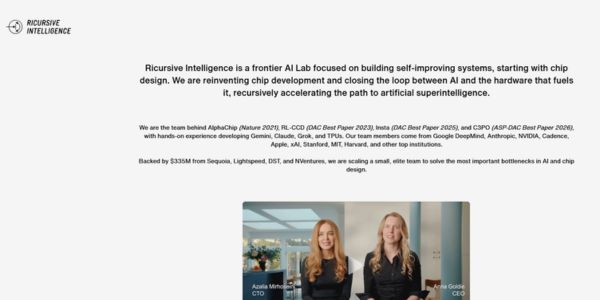
Excerpt: Ricursive Superintelligence has raised at least $500 million to build self‑improving AI, with GV and Nvidia backing a four‑month‑old lab at a $4 billion valuation. The deal crystallizes how quickly capital, talent and regulatory scrutiny are converging around autonomous AI research—and what that means for builders trying to compete outside the frontier club.

Brazilian startup BOND has raised US$2M to automate accounting for SMEs in Brazil’s complex tax system. Combining AI with human accountants, it targets a fragmented market of manual processes, aiming to turn back-office compliance into a faster, more strategic function for founders and operators.

Loop just raised a $95M Series C to expand its AI-native supply chain platform, turning messy logistics data into early disruption warnings and better financial outcomes for global operators and shippers.
Linkedin X-twitter-square Facebook-square Startups & Business News AI agents are finally moving from demos to the day-to-day stack of real
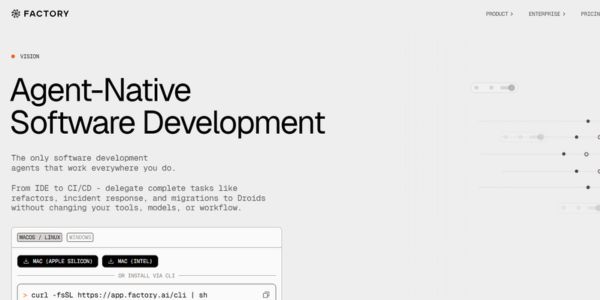
Factory has raised a $150M Series C at a $1.5B valuation to scale its autonomous “Droids” platform, betting that enterprises will standardize software engineering around agent‑native missions, governance and cost‑optimized AI infrastructure.

Solidroad has raised $25 million to bring AI-native quality assurance to every human and AI-powered customer interaction. The new funding will accelerate product development and expansion for support-heavy businesses leaning into automation.
futureTEKnow is focused on identifying and promoting creators, disruptors and innovators, and serving as a vital resource for those interested in the latest advancements in technology.
© 2026 All Rights Reserved.