
































Limassol, Cyprus
2024
Human Resources Technology, Recruitment Technology, Talent Acquisition, Business Software, Workforce Management
HireFox is an artificial intelligence recruitment platform that provides personalized AI hiring assistants for evaluating resumes, matching candidates to job openings, and managing recruitment workflows. Its software allows recruiters and hiring teams to configure assistants around their own evaluation criteria, scoring guidelines, and candidate selection rules.
The platform combines AI-powered resume analysis, candidate matching, searchable applicant records, and hiring pipeline management. Rather than applying only a fixed set of screening rules, HireFox allows recruitment teams to define how candidates should be assessed for different positions.
HireFox automates parts of the recruitment process by analyzing candidate resumes and comparing their qualifications with job requirements. Recruiters configure AI assistants using their preferred screening criteria, scoring methods, and decision rules, which the software applies during candidate evaluations.
The platform extracts information from CVs, identifies relevant qualifications, and generates candidate evaluation reports that include potential strengths, concerns, and suitability indicators. These reports help recruiters review applicant information without manually examining every resume from the beginning.
HireFox also provides a searchable resume repository where recruiters can organize candidate records and retrieve profiles using filtering tools. Its hiring pipeline features support tracking applicants as they progress through different recruitment stages, connecting initial screening with subsequent hiring activities.
HireFox uses AI-powered document analysis and configurable candidate evaluation to automate recruitment screening tasks. Its platform processes candidate resumes, extracts relevant information, and compares applicant qualifications against job-specific requirements and recruiter-defined assessment criteria.
A central component is its personalized AI assistant functionality. Recruiters configure evaluation criteria, scoring guidelines, and decision-making rules that determine how the software reviews candidates. These configurations allow different hiring teams to apply their own assessment methods rather than relying exclusively on predefined screening templates.
The platform’s candidate-to-job matching functionality evaluates applicant information against position requirements. HireFox presents its findings through structured candidate reports that highlight relevant qualifications and potential concerns, including indicators described as red and green flags.
HireFox also maintains a searchable CV repository with advanced filtering capabilities. This connects resume analysis with candidate record management, allowing previously evaluated applicants to be retrieved for subsequent recruitment searches.
Its hiring pipeline management functionality organizes candidate progress across recruitment stages. Together, these components provide an integrated workflow for document analysis, candidate comparison, evaluation reporting, and applicant tracking.
The company does not publicly identify the underlying foundation models, training methods, or complete technical architecture used by its AI assistants. Its available documentation primarily describes product functionality rather than model-level implementation.
Recruitment teams often evaluate large numbers of applicants across positions with different technical requirements, experience expectations, and hiring priorities. Manual screening requires recruiters to interpret resumes, compare qualifications, and document their assessments repeatedly.
HireFox addresses this process through configurable AI-assisted candidate evaluation. By allowing recruiters to define their own screening criteria, the platform connects automated analysis with the requirements of individual hiring teams.
Its searchable candidate repository and evaluation reports also support the reuse of applicant information across hiring activities, reducing the need to repeat initial document reviews.
The platform illustrates the growing use of personalized AI assistants in recruitment software. However, automated candidate assessments still require human oversight, particularly when evaluating qualifications, interpreting incomplete resumes, and identifying potential screening bias.
HireFox’s primary offering is its customizable AI hiring assistants. Recruiters define evaluation criteria, scoring guidelines, and candidate assessment rules that the assistants use to analyze resumes and compare applicants with open positions. The system is designed to reflect the screening preferences of individual recruiters and hiring teams.
The platform provides AI-assisted candidate matching that compares information extracted from resumes with job requirements. Matching results are based on the evaluation criteria and guidelines configured by the recruiter, supporting candidate prioritization for individual openings.
HireFox analyzes resumes to extract qualifications and generate structured candidate reports. Its evaluations highlight relevant information, potential strengths, and concerns through red-flag and green-flag indicators. These reports provide recruiters with a consolidated view of applicant qualifications for further review.
HireFox includes a centralized candidate resume database with advanced search and filtering capabilities. Recruiters can store applicant records, retrieve previously reviewed resumes, and identify candidates who may be relevant to new job opportunities.
The platform includes recruitment pipeline tools for organizing applicants and monitoring their progress through hiring stages. This functionality connects candidate evaluation with ongoing recruitment management.
AI Resume Screening: Analyzing candidate resumes to identify relevant qualifications, experience, and potential concerns.
Candidate-to-Job Matching: Comparing applicant backgrounds with job requirements using recruiter-defined evaluation criteria.
Recruitment Process Automation: Reducing repetitive work involved in initial resume reviews and candidate assessments.
Staffing Agency Recruitment: Supporting recruiters who evaluate candidates for multiple positions with different screening requirements.
Corporate Talent Acquisition: Providing internal hiring teams with structured applicant assessments and candidate management tools.
Candidate Database Management: Storing and searching previously submitted resumes to identify potential matches for future vacancies.
Recruitment Reporting: Generating AI-assisted candidate evaluation reports that recruiters can review when deciding which applicants should advance.
Yes. HireFox allows recruiters to configure AI assistants using their own evaluation criteria, scoring guidelines, and decision-making rules. These settings influence how candidates are analyzed and matched to jobs.
Yes. Its resume analysis functionality generates candidate evaluation reports with red-flag and green-flag indicators intended to highlight relevant qualifications and potential concerns for recruiter review.
Yes. HireFox provides a searchable CV repository that stores applicant information and supports advanced filtering to retrieve candidates from previous recruitment activities.
HireFox includes hiring pipeline management and candidate record organization. However, its public documentation does not establish whether it supports every function of a comprehensive applicant tracking system or integrates with specific third-party ATS products.
The platform’s publicly described features focus on resume analysis, candidate matching, evaluation reports, and hiring pipeline management. Automated interviewing is not clearly established as a current HireFox capability.
HireFox advertises the ability to create an account and try its platform for free. Specific usage limits, paid subscription plans, and commercial terms should be confirmed directly with the company.
Have an update, correction, or additional information about this company? Help us keep the futureTEKnow company database up to date by submitting the latest company information.

OpenAI’s Astra for Law combines GPT-6 Astra with specialized legal search, integrations, and governance controls. The launch shows how frontier AI is moving deeper into professional legal workflows.

AI projects often stall because business data isn’t consistent or trustworthy. Here’s how to identify data gaps before they become an AI roadblock.

EVAS Intelligence has raised 1.5 billion yuan to mass‑produce its RISC-V Epoch AI chips, deepen its full‑stack platform, and accelerate global expansion, signaling rising investor confidence in alternative AI compute.
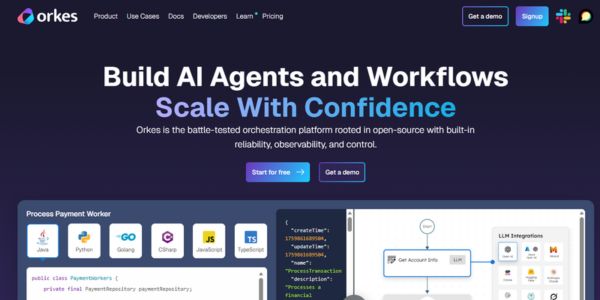
Orkes has raised 60 million dollars to turn its Netflix‑born workflow engine into a control plane for enterprise AI agents. The piece unpacks how its orchestration platform works, why investors are backing it now, and what this means for companies trying to move AI from pilots into production.

Paris-based Sillage has raised €1.7 million to launch an AI signal engine that helps enterprise sales teams follow the right buying signals, prioritize high-intent accounts, and improve pipeline efficiency without replacing human-led conversations.
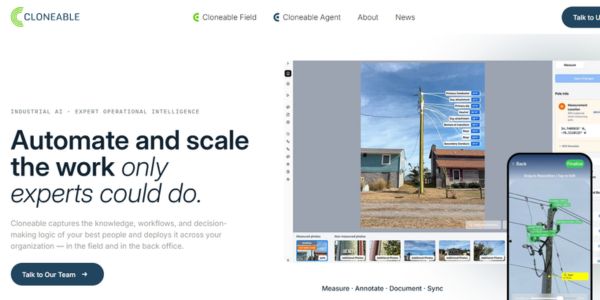
Cloneable is launching an agentic AI platform for infrastructure operations that captures institutional knowledge from retiring experts and turns it into scalable agents, targeting energy, utilities, and other asset-heavy sectors. The $4.6M seed-backed startup aims to connect field data capture with back-office execution so founders and operators can modernize infrastructure faster and with fewer bottlenecks.

Excerpt: Ricursive Superintelligence has raised at least $500 million to build self‑improving AI, with GV and Nvidia backing a four‑month‑old lab at a $4 billion valuation. The deal crystallizes how quickly capital, talent and regulatory scrutiny are converging around autonomous AI research—and what that means for builders trying to compete outside the frontier club.

Brazilian startup BOND has raised US$2M to automate accounting for SMEs in Brazil’s complex tax system. Combining AI with human accountants, it targets a fragmented market of manual processes, aiming to turn back-office compliance into a faster, more strategic function for founders and operators.

Loop just raised a $95M Series C to expand its AI-native supply chain platform, turning messy logistics data into early disruption warnings and better financial outcomes for global operators and shippers.
Linkedin X-twitter-square Facebook-square Startups & Business News AI agents are finally moving from demos to the day-to-day stack of real
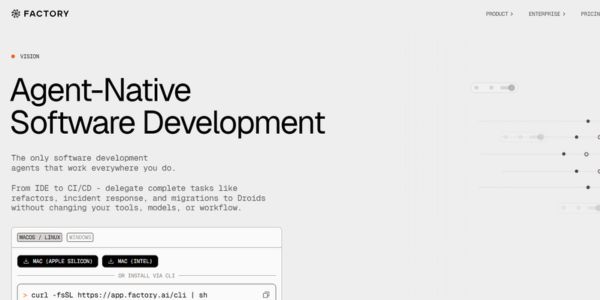
Factory has raised a $150M Series C at a $1.5B valuation to scale its autonomous “Droids” platform, betting that enterprises will standardize software engineering around agent‑native missions, governance and cost‑optimized AI infrastructure.

Solidroad has raised $25 million to bring AI-native quality assurance to every human and AI-powered customer interaction. The new funding will accelerate product development and expansion for support-heavy businesses leaning into automation.
futureTEKnow is focused on identifying and promoting creators, disruptors and innovators, and serving as a vital resource for those interested in the latest advancements in technology.
© 2026 All Rights Reserved.