


















Harmonic

Company Information

Learn about Harmonic, an AI company developing mathematical reasoning models and formal verification technology for software, hardware, and engineering applications.

Headquarters

Palo Alto, California, USA

Year Founded

2023

Industries

Artificial Intelligence Research, Software Development, Formal Verification, Semiconductor Design, Cybersecurity, Developer Tools

What Is Harmonic?

Harmonic is an artificial intelligence company developing mathematical reasoning systems capable of producing machine-checkable proofs. Its research focuses on combining advanced AI reasoning with formal mathematical methods to generate results that can be independently verified.

The company’s primary product, Aristotle, is an AI agent for mathematical theorem proving and formal verification of software and hardware. Harmonic’s technology uses formal logic and automated proof checking to distinguish mathematically established results from unsupported AI-generated conclusions.

What Does Harmonic Do?

Harmonic develops AI systems that solve mathematical problems, construct formal proofs, and verify properties of software and hardware designs. Its Aristotle agent translates reasoning tasks into formal representations and uses machine-checkable proofs to establish whether specified claims hold.

For software engineering, Aristotle analyzes source code and evaluates properties such as memory safety, undefined behavior, and functional correctness. In hardware development, it examines digital logic designs to verify specified behaviors and identify potential defects.

The platform also supports automated theorem proving and mathematical research, helping researchers formalize problems and develop proofs using Lean. Developers can access Aristotle through a web interface, API, command-line tools, and supported AI assistant integrations.

Join Our Newsletter

* indicates required

Intuit Mailchimp

ADVERTISEMENT
eMerge Americas 2027 Conference
ADVERTISEMENT
Submit Your Company | futureTEKnow

Harmonic Technology

Harmonic develops AI-powered mathematical reasoning and formal verification technology that combines advanced language-model reasoning with machine-checkable proof systems. Its Aristotle agent constructs formal arguments that can be evaluated by independent proof-checking software rather than relying exclusively on natural-language explanations.

The company’s research incorporates mathematical problem-solving, automated theorem proving, and formalization techniques. Aristotle uses the Lean proof assistant for mathematical reasoning, enabling it to represent definitions, theorems, and proof steps in a formal language whose logical validity can be checked mechanically.

For software verification, Aristotle can analyze C source code and evaluate properties expressed in natural language. It constructs formal models, attempts to prove the specified properties, and identifies counterexamples when claims are false. Its outputs distinguish between proved, refuted, and unresolved properties, while documenting assumptions and verification limitations.

The platform also supports hardware verification using Verilog and SystemVerilog designs. It can examine functional, safety, and liveness properties, helping engineers identify defects in digital logic before manufacturing or deployment.

Aristotle achieved gold-medal-level performance at the 2025 International Mathematical Olympiad, demonstrating the mathematical reasoning capabilities underlying the platform. Harmonic subsequently expanded its technology into practical verification workflows for engineering teams.

Why Harmonic Matters

AI systems increasingly generate software and technical designs, but producing plausible code or explanations does not establish that the results are correct. Errors in firmware, security software, and semiconductor designs can be expensive to detect and difficult to correct after deployment.

Harmonic addresses this challenge through mathematically verifiable AI reasoning. Its technology evaluates explicit properties using formal proofs, providing stronger evidence of correctness than conventional code review or testing alone for the properties successfully established.

The company’s approach could make formal verification more accessible to engineering teams that previously required specialized expertise and extensive manual proof development.

Harmonic also represents a significant direction in AI reliability and automated reasoning, where systems are evaluated not only by their ability to generate answers but also by their ability to demonstrate why particular conclusions are logically valid.

Harmonic Products & Platforms

Aristotle

Aristotle is Harmonic’s flagship AI-powered reasoning and formal verification agent. It develops machine-checkable mathematical proofs and analyzes software and hardware against specified properties. The system can prove a property, identify a counterexample when the property is false, or report that verification remains unresolved.

Aristotle Software Verification

Aristotle’s software verification capabilities analyze C source code for properties including functional correctness, memory safety, and undefined behavior. Engineers can describe requirements in natural language, review proposed verification properties, and examine formal proof results. The system can also investigate defects and propose verified code corrections for supported tasks.

Aristotle Hardware Verification

The hardware verification functionality analyzes Verilog and supported SystemVerilog designs to evaluate functional, safety, and liveness properties. It helps semiconductor engineers identify logic defects and establish mathematical evidence that specified hardware behaviors hold under defined assumptions.

Aristotle API and Developer Tools

Harmonic provides developer access to Aristotle through a web application, API, command-line interface, and MCP integration. These interfaces allow engineers and researchers to submit verification projects, monitor proof generation, retrieve results, and continue investigations. The platform also supports integration into existing software development workflows.

Harmonic Applications

Formal Software Verification: Proving specified properties of software implementations and identifying counterexamples when requirements are violated.

Semiconductor Design Verification: Analyzing digital logic and hardware description language implementations before chip manufacturing.

Firmware Engineering: Checking critical software properties in embedded systems where post-deployment corrections may be difficult.

Cybersecurity: Investigating software vulnerabilities and verifying selected memory safety and functional properties.

Mathematical Research: Generating, formalizing, and checking mathematical proofs using AI-assisted reasoning.

AI-Generated Code Verification: Evaluating code produced by AI coding assistants against explicit correctness requirements.

Continuous Integration: Incorporating formal property verification into development workflows to detect regressions affecting previously established guarantees.

Safety-Critical Engineering: Providing formal verification evidence for selected software and hardware properties in systems with demanding reliability requirements.

Latest Companies

ADVERTISEMENT
eMerge Americas 2027 Conference

Frequently Asked Questions

What is Harmonic’s Aristotle AI?

Aristotle is an AI reasoning agent that develops machine-checkable mathematical proofs and formally verifies specified properties of software and hardware designs.

How is Aristotle different from conventional AI coding assistants?

Conventional AI coding assistants primarily generate or modify source code. Aristotle focuses on establishing whether specified properties hold using mathematical proofs, identifying counterexamples, and documenting unresolved verification conditions.

Which programming languages does Aristotle support?

As of October 2026, Aristotle supports formal verification of C software and Verilog hardware designs, including supported SystemVerilog constructs. It also uses Lean for mathematical theorem proving.

Can Aristotle detect software vulnerabilities?

Yes. Aristotle can evaluate specified software safety properties and identify counterexamples when those properties fail. It can investigate certain classes of memory safety and functional correctness defects, although it does not guarantee detection of every vulnerability.

What is Lean, and why does Harmonic use it?

Lean is a formal programming language and proof assistant used to represent mathematical statements and verify proofs. Harmonic uses Lean-based reasoning to produce mathematical arguments that can be checked mechanically.

Did Harmonic achieve gold-medal-level performance at the International Mathematical Olympiad?

Yes. In 2025, Harmonic reported that Aristotle produced formally verified solutions to five of the six International Mathematical Olympiad problems, reaching gold-medal-equivalent performance.

Can developers access Aristotle through an API?

Yes. Harmonic provides Aristotle through a web interface, API, command-line tools, and supported AI assistant integrations. The service uses consumption-based pricing for commercial verification workflows.

Related Companies

Theorem

Axiom Math

Code Metal

Do You Have an Update for This Company?

Have an update, correction, or additional information about this company? Help us keep the futureTEKnow company database up to date by submitting the latest company information.

Update Company Information

Latest Articles

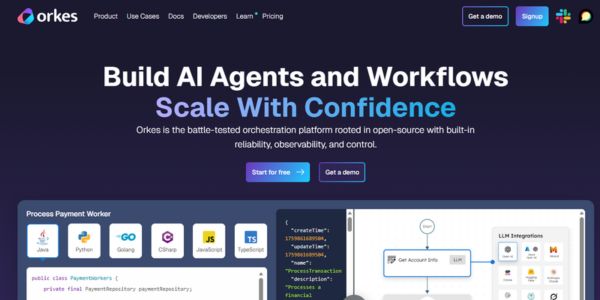
Orkes AI orchestration platform raises 60M dollars to help enterprises run reliable AI agents in production with durable workflows and governance.

Orkes Raises $60M to Orchestrate Enterprise AI Agents in Production

Orkes has raised 60 million dollars to turn its Netflix‑born workflow engine into a control plane for enterprise AI agents. The piece unpacks how its orchestration platform works, why investors are backing it now, and what this means for companies trying to move AI from pilots into production.
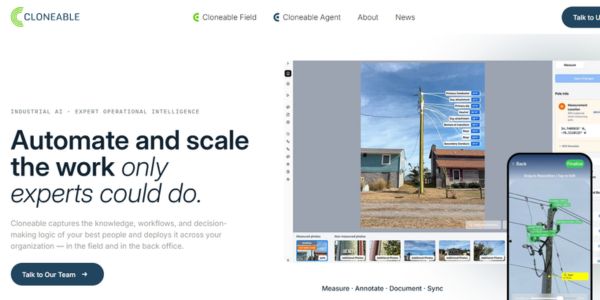
Cloneable’s agentic AI platform for infrastructure operations captures expert knowledge, automates back-office workflows, and targets aging grids, telecoms, and construction.

Cloneable’s agentic AI platform targets the infrastructure knowledge gap with $4.6M seed round

Cloneable is launching an agentic AI platform for infrastructure operations that captures institutional knowledge from retiring experts and turns it into scalable agents, targeting energy, utilities, and other asset-heavy sectors. The $4.6M seed-backed startup aims to connect field data capture with back-office execution so founders and operators can modernize infrastructure faster and with fewer bottlenecks.
futureTEKnow is focused on identifying and promoting creators, disruptors and innovators, and serving as a vital resource for those interested in the latest advancements in technology.

© 2026 All Rights Reserved.