





















London, England
2023
Productivity Software, Business Software, Workplace Collaboration, Meeting Technology, Knowledge Management
Granola is an artificial intelligence company developing an AI-powered meeting notepad that combines automatic transcription with notes written by meeting participants. Its software uses language models to transform conversations into structured records containing key discussion points, decisions, and follow-up information.
Unlike meeting assistants that join video conferences as separate participants, Granola captures meeting audio through the user’s device. The application works with video conferencing platforms such as Zoom, Google Meet, and Microsoft Teams, as well as in-person meetings through its mobile applications.
Granola uses speech transcription and generative AI to organize information from business meetings. Users can write notes during conversations, and the platform combines those notes with the meeting transcript to generate a more complete summary.
The software identifies discussion topics, decisions, and action items while allowing users to edit and customize the resulting notes. Its AI chat functionality also enables users to ask questions about individual meetings, retrieve information from previous conversations, and generate written content based on meeting history.
Granola supports shared folders, calendar synchronization, and integrations with business applications, allowing meeting information to be incorporated into team workflows and customer relationship management systems.
Granola combines automatic speech recognition, natural language processing, and large language models to convert spoken conversations into structured meeting documentation. Its software captures audio from a user’s device and processes the resulting transcript alongside notes entered during the meeting.
The platform uses language models to identify relevant discussion points, organize information, and generate summaries based on the context of each conversation. Its approach incorporates user-written notes as additional context, allowing the resulting documentation to reflect the topics the user considers important.
Granola also uses AI-powered retrieval and conversational interfaces to make historical meeting information searchable. Its integrations and MCP connector allow authorized meeting context to be accessed by compatible business applications and AI tools.
The platform supports desktop and mobile environments, with meeting transcription handled through device-based audio capture rather than a separate meeting bot. Granola states that it does not retain meeting audio recordings, although transcripts and notes are stored to support its features.
Business meetings generate information that is often distributed across personal notes, messaging applications, documents, and customer management systems. Important decisions and follow-up tasks can become difficult to retrieve when conversations are not consistently documented.
Granola applies generative AI to meeting documentation by combining automated transcription with user-directed note-taking. This approach preserves a role for human judgment while reducing the manual work involved in organizing discussions and producing meeting summaries.
Its conversational search and application integrations also demonstrate how AI-powered knowledge management can extend beyond individual meeting summaries. By connecting historical conversations with business workflows, the technology makes previously discussed information available for future decisions, planning, and collaboration.
Granola’s primary application is an AI-powered meeting notepad that captures conversations and combines automatic transcription with user-written notes. The software generates structured summaries and allows users to edit, organize, and share meeting information.
Granola Chat is a conversational AI interface that allows users to ask questions about meetings and retrieve information from previous discussions. It can identify decisions, summarize recurring topics, extract action items, and help draft documents or follow-up communications using meeting context.
Granola’s mobile applications extend meeting transcription and AI note-taking to in-person conversations and phone calls. Available on iOS and Android, they allow users to capture discussions outside traditional video conferencing environments.
Meeting Briefs uses information from previous conversations to prepare contextual summaries before upcoming meetings. The feature helps users review earlier discussions, outstanding topics, and relevant background information.
Granola provides shared folders and collaborative workspaces for organizing meeting notes across teams. Users can share selected conversations, access common meeting records, and search information from discussions made available to their workspace.
Granola connects meeting information with applications including Notion, Slack, HubSpot, Salesforce, and Zapier. Its Model Context Protocol (MCP) connector also allows compatible AI applications, including ChatGPT and Claude, to access authorized meeting notes and related context.
Meeting Documentation: Generating structured notes, summaries, decisions, and action items from business conversations.
Sales and Customer Management: Capturing customer discussions, documenting requirements, and transferring relevant meeting information into CRM systems.
Project Management: Recording project updates, decisions, responsibilities, and follow-up tasks discussed during team meetings.
Recruitment and Interviews: Organizing interview discussions, candidate feedback, and meeting notes for recruitment workflows.
Research and Product Development: Analyzing customer interviews, collecting product feedback, and identifying recurring themes across conversations.
Knowledge Management: Searching historical meeting records and retrieving information about previous decisions, discussions, and commitments.
Granola is an AI-powered meeting notepad that combines automatic speech transcription with user-written notes to generate structured summaries, document decisions, and organize follow-up tasks.
Granola captures meeting audio through a user’s device and converts conversations into text. Its AI combines the transcript with notes entered by the user to generate organized meeting summaries and action items.
No. Granola captures audio directly from the user’s device rather than joining video conferences as a separate meeting participant. It works with platforms including Zoom, Google Meet, and Microsoft Teams.
Yes. Granola Chat allows users to search meeting history, ask questions about previous discussions, identify decisions, and retrieve information from authorized meeting notes.
Yes. Granola supports integrations with applications such as Notion, Slack, HubSpot, Salesforce, and Zapier. Its MCP connector also allows compatible AI tools to access meeting information with appropriate permissions.
Yes. Granola is available on iOS and Android, as well as macOS and Windows. Its mobile applications support note-taking and transcription for in-person meetings and conversations away from a computer.
Granola offers a free Basic plan with AI meeting notes, limited meeting history, AI chat, and shared folders. Paid plans provide extended meeting history, advanced integrations, and additional collaboration and administration features.
Granola was founded in 2023 and is based in London, United Kingdom. Its AI-powered meeting notepad was publicly launched in May 2024.
Have an update, correction, or additional information about this company? Help us keep the futureTEKnow company database up to date by submitting the latest company information.

OpenAI’s Astra for Law combines GPT-6 Astra with specialized legal search, integrations, and governance controls. The launch shows how frontier AI is moving deeper into professional legal workflows.

AI projects often stall because business data isn’t consistent or trustworthy. Here’s how to identify data gaps before they become an AI roadblock.
EVAS Intelligence has raised 1.5 billion yuan to mass‑produce its RISC-V Epoch AI chips, deepen its full‑stack platform, and accelerate global expansion, signaling rising investor confidence in alternative AI compute.
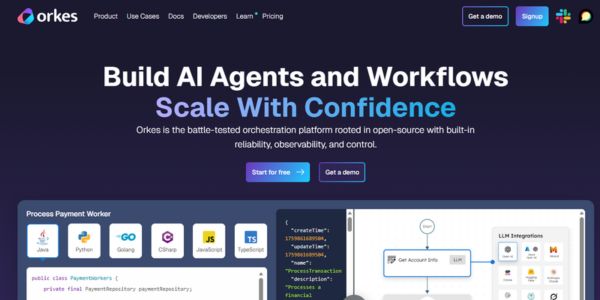
Orkes has raised 60 million dollars to turn its Netflix‑born workflow engine into a control plane for enterprise AI agents. The piece unpacks how its orchestration platform works, why investors are backing it now, and what this means for companies trying to move AI from pilots into production.

Paris-based Sillage has raised €1.7 million to launch an AI signal engine that helps enterprise sales teams follow the right buying signals, prioritize high-intent accounts, and improve pipeline efficiency without replacing human-led conversations.
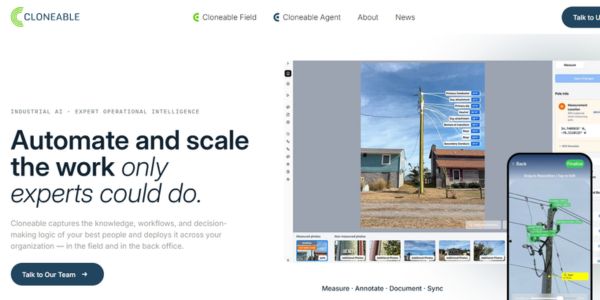
Cloneable is launching an agentic AI platform for infrastructure operations that captures institutional knowledge from retiring experts and turns it into scalable agents, targeting energy, utilities, and other asset-heavy sectors. The $4.6M seed-backed startup aims to connect field data capture with back-office execution so founders and operators can modernize infrastructure faster and with fewer bottlenecks.
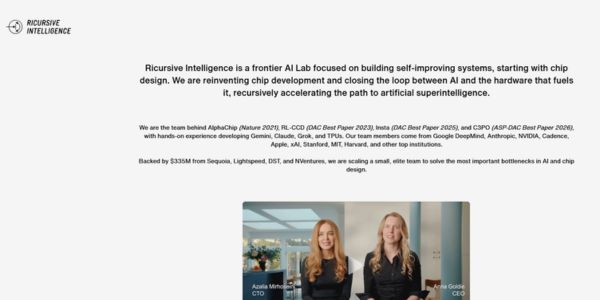
Excerpt: Ricursive Superintelligence has raised at least $500 million to build self‑improving AI, with GV and Nvidia backing a four‑month‑old lab at a $4 billion valuation. The deal crystallizes how quickly capital, talent and regulatory scrutiny are converging around autonomous AI research—and what that means for builders trying to compete outside the frontier club.

Brazilian startup BOND has raised US$2M to automate accounting for SMEs in Brazil’s complex tax system. Combining AI with human accountants, it targets a fragmented market of manual processes, aiming to turn back-office compliance into a faster, more strategic function for founders and operators.

Loop just raised a $95M Series C to expand its AI-native supply chain platform, turning messy logistics data into early disruption warnings and better financial outcomes for global operators and shippers.
Linkedin X-twitter-square Facebook-square Startups & Business News AI agents are finally moving from demos to the day-to-day stack of real
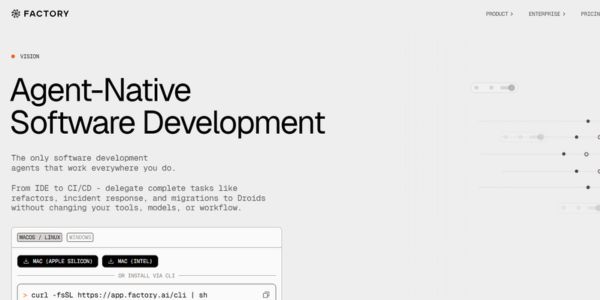
Factory has raised a $150M Series C at a $1.5B valuation to scale its autonomous “Droids” platform, betting that enterprises will standardize software engineering around agent‑native missions, governance and cost‑optimized AI infrastructure.

Solidroad has raised $25 million to bring AI-native quality assurance to every human and AI-powered customer interaction. The new funding will accelerate product development and expansion for support-heavy businesses leaning into automation.
futureTEKnow is focused on identifying and promoting creators, disruptors and innovators, and serving as a vital resource for those interested in the latest advancements in technology.
© 2026 All Rights Reserved.