


































Worldwide
2024
Generative AI, Video Production, Digital Media, Entertainment, Film Production, Content Creation, Advertising, Creative Software, AI Research
Everlyn AI is an artificial intelligence company developing generative AI models and software for video and image creation. Its technology converts text descriptions and still images into generated videos, while also supporting AI image generation and editing. The company focuses on making video generation faster and less computationally expensive through research into multimodal AI, autoregressive generation, and model efficiency. Everlyn also describes its broader technology as decentralized infrastructure for autonomous video AI, connecting generative media tools with its research into AI systems capable of creating and manipulating visual content.
Everlyn AI provides tools for generating videos and images from text prompts and visual inputs. Users can describe a scene, upload an image, or provide an existing visual reference to create new AI-generated content.
Its platform supports text-to-video and image-to-video generation, allowing users to turn written ideas or photographs into short video sequences. It also provides text-to-image and image-to-image capabilities for creating and modifying still images.
Everlyn focuses on reducing the processing time and cost associated with generative video production. Its website advertises video generation in approximately 15 seconds, although actual performance may vary depending on the model and generation settings.
The company also conducts research into multimodal models, video generation architectures, and AI-based visual editing. Its longer-term development includes autonomous video agents and interactive AI-generated environments.
Everlyn AI develops technology based on generative AI, multimodal machine learning, and autoregressive video generation. Its research focuses on producing visual content efficiently while improving consistency between generated video frames.
Autoregressive generation is an approach in which a model predicts successive elements of content based on previously generated information. In video generation, this can involve predicting visual representations across a sequence of frames.
Everlyn’s published research explores unstructured tokenization and masking techniques for autoregressive video generation. These methods examine how visual information can be represented and processed efficiently within multimodal models.
The company’s research also covers vector quantization, multimodal large language models, and multi-module video generation. Vector quantization helps represent complex visual information using compact numerical codes, potentially reducing the computational resources required for image and video processing.
Its VideoGen-of-Thought research explores a collaborative framework in which multiple modules contribute to generating longer or more complex video sequences.
Everlyn also investigates visual consistency in AI video editing, including methods for maintaining coherent objects, appearances, and scenes across generated content.
The consumer platform makes these technologies accessible through text-to-video, image-to-video, text-to-image, and image-to-image workflows. Users provide prompts or visual inputs, and the system generates new content without requiring traditional animation or video production software.
The company’s broader research direction includes autonomous video agents and interactive generated environments, although these should be distinguished from the capabilities currently available in its public generation platform.
Everlyn AI is relevant to the development of faster and more accessible generative video technology, an area where computational cost and generation time remain important technical challenges.
Creating video with AI requires generating sequences of visually consistent frames, making it more computationally demanding than producing individual images. Everlyn’s research into autoregressive generation, tokenization, and model efficiency addresses parts of this challenge.
Its emphasis on efficient multimodal AI architectures also reflects a broader effort to make advanced generative models practical for more users and applications.
Beyond conventional video creation, Everlyn is exploring autonomous video agents and interactive visual environments. This connects its work with emerging research into AI-generated worlds, multimodal reasoning, and systems that can create visual experiences dynamically rather than producing only fixed video clips.
The Everlyn AI Video Generator is the company’s main AI-powered video creation platform. Users can generate short videos from written descriptions or uploaded images. The platform supports different output resolutions, including 720p, and provides generation settings for video length and processing preferences. Its consumer interface offers credit-based video generation and downloadable results.
The Text-to-Video Agent converts natural language prompts into generated video sequences. Users describe characters, environments, actions, or visual styles, and the system creates a short video based on those instructions. This allows creators to experiment with scenes and visual concepts without filming or manually animating them.
The Image-to-Video Agent turns still images into animated video content. Users upload a photograph or generated image, and the AI produces motion based on the visual input and generation settings. This supports animated illustrations, creative visual effects, and short-form video production.
The Text-to-Image Agent generates still images from written descriptions. Users can create original visual concepts, characters, environments, and other digital artwork. These images can also serve as starting points for subsequent video generation.
Everlyn AI’s technology supports digital content creation, video production, advertising, and entertainment through automated image and video generation.
Content creators can use text-to-video tools to produce short visual sequences for social media, online publishing, and creative projects. Marketing teams can experiment with product concepts, promotional visuals, and advertising ideas without organizing a full video shoot for every variation.
In film and entertainment, its technology can support storyboarding, visual concept development, and scene experimentation, allowing creators to evaluate visual ideas before traditional production.
Designers and digital artists can generate illustrations, modify existing images, and animate static artwork.
Everlyn’s research into autonomous video agents also suggests potential future applications in interactive entertainment and AI-generated virtual environments, although these capabilities remain part of its developing technology roadmap.
Yes. Everlyn provides an Image-to-Video Agent that accepts uploaded images and generates short animated sequences. Users can turn photographs, illustrations, or other still images into AI-generated video content.
Everlyn supports five-second video generation, with ten-second generation available through certain paid plans. Available durations depend on the selected generation settings and subscription.
Everlyn-1 is a name used in the company’s research and technology presentations for its generative video AI work. Everlyn associates it with its development of AI-generated video and longer-term research into interactive visual environments. Detailed public specifications for a separately downloadable Everlyn-1 model are limited.
Everlyn describes original research into autoregressive video generation, multimodal models, tokenization, and video editing. Its research website lists technical papers related to these areas. The company does not fully document how each published research architecture corresponds to the models currently deployed in its consumer platform.
Everlyn advertises commercial-use licenses with its paid subscription plans. Users should review the applicable terms before using generated videos in advertising, client projects, or commercial productions, particularly when uploaded materials contain third-party intellectual property.
Have an update, correction, or additional information about this company? Help us keep the futureTEKnow company database up to date by submitting the latest company information.

OpenAI’s Astra for Law combines GPT-6 Astra with specialized legal search, integrations, and governance controls. The launch shows how frontier AI is moving deeper into professional legal workflows.

AI projects often stall because business data isn’t consistent or trustworthy. Here’s how to identify data gaps before they become an AI roadblock.
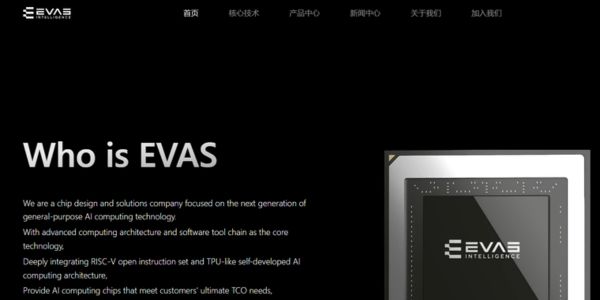
EVAS Intelligence has raised 1.5 billion yuan to mass‑produce its RISC-V Epoch AI chips, deepen its full‑stack platform, and accelerate global expansion, signaling rising investor confidence in alternative AI compute.

Orkes has raised 60 million dollars to turn its Netflix‑born workflow engine into a control plane for enterprise AI agents. The piece unpacks how its orchestration platform works, why investors are backing it now, and what this means for companies trying to move AI from pilots into production.

Paris-based Sillage has raised €1.7 million to launch an AI signal engine that helps enterprise sales teams follow the right buying signals, prioritize high-intent accounts, and improve pipeline efficiency without replacing human-led conversations.
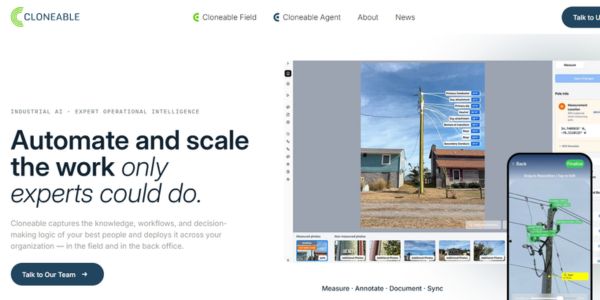
Cloneable is launching an agentic AI platform for infrastructure operations that captures institutional knowledge from retiring experts and turns it into scalable agents, targeting energy, utilities, and other asset-heavy sectors. The $4.6M seed-backed startup aims to connect field data capture with back-office execution so founders and operators can modernize infrastructure faster and with fewer bottlenecks.

Excerpt: Ricursive Superintelligence has raised at least $500 million to build self‑improving AI, with GV and Nvidia backing a four‑month‑old lab at a $4 billion valuation. The deal crystallizes how quickly capital, talent and regulatory scrutiny are converging around autonomous AI research—and what that means for builders trying to compete outside the frontier club.

Brazilian startup BOND has raised US$2M to automate accounting for SMEs in Brazil’s complex tax system. Combining AI with human accountants, it targets a fragmented market of manual processes, aiming to turn back-office compliance into a faster, more strategic function for founders and operators.

Loop just raised a $95M Series C to expand its AI-native supply chain platform, turning messy logistics data into early disruption warnings and better financial outcomes for global operators and shippers.

Linkedin X-twitter-square Facebook-square Startups & Business News AI agents are finally moving from demos to the day-to-day stack of real

Factory has raised a $150M Series C at a $1.5B valuation to scale its autonomous “Droids” platform, betting that enterprises will standardize software engineering around agent‑native missions, governance and cost‑optimized AI infrastructure.

Solidroad has raised $25 million to bring AI-native quality assurance to every human and AI-powered customer interaction. The new funding will accelerate product development and expansion for support-heavy businesses leaning into automation.
futureTEKnow is focused on identifying and promoting creators, disruptors and innovators, and serving as a vital resource for those interested in the latest advancements in technology.
© 2026 All Rights Reserved.