
























Strasbourg, France
2025
Sales Technology, Enterprise Software, Software as a Service, Marketing Technology, Business Services
Sillage is an artificial intelligence company developing a signal platform for enterprise sales teams. Its system helps sales organizations identify meaningful events occurring within target accounts and determine when those events may create an opportunity for outreach. Sillage combines account mapping, activity monitoring, signal-detection agents, and sales intelligence into a workflow that connects target companies with relevant decision makers and recent events. The platform sits within the emerging AI sales intelligence and go-to-market automation landscape.
Sillage helps enterprise sales teams monitor selected accounts and identify events that may indicate an appropriate time to engage. Users define a sales persona and a list of target accounts, after which Sillage maps those accounts to relevant people and collects company posts, job postings, and LinkedIn activity.
Its signal agents then analyze this information for events such as keyword mentions, hiring changes, competitor interactions, champion movements, funding announcements, and other account developments. Detected signals can be delivered through CRM integrations, Slack, the Sillage API, or an MCP connection. The system can also turn detected signals into contextual outreach that sales representatives can review and use.
Sillage combines AI signal-detection agents with account mapping and data collection to monitor enterprise accounts. Users establish a persona based on criteria such as job title, seniority, location, industry, and company size, then provide the accounts they want to monitor. Sillage maps those accounts to companies and relevant decision makers.
The platform collects company posts, job postings, and posts or comments from mapped decision makers. Its agents analyze this content for specific events and produce signals when predefined conditions are met. Signal types include keyword detection, job updates, competitor interactions, customer or partner activity, champion movements, and other account-level events.
Sillage also provides an API and MCP server that allow its signals and workspace data to be accessed by software applications and AI assistants. CRM integrations include HubSpot and Salesforce, allowing contacts, account information, and buying-intent data to move into existing sales workflows.
Sillage is relevant to the emerging AI sales intelligence market because it applies AI agents to the problem of identifying when an enterprise account changes in a meaningful way. Rather than relying only on static prospect lists, its system continuously monitors mapped accounts for events involving people, companies, competitors, hiring, funding, and other activity.
The technology also illustrates the convergence of AI agents, account intelligence, CRM automation, and real-time business signals. Its API, CRM integrations, and MCP support allow detected signals to become inputs for both human sales workflows and AI-driven systems.
The Signal Engine is the core system for creating and running agents that detect events across monitored accounts. Agents can identify signals such as keyword mentions, job changes, competitor interactions, champion movements, funding events, and other changes relevant to a sales team’s targeting strategy.
Sillage’s account mapping system connects target companies with the people who match a defined sales persona. It can identify relevant decision makers within target accounts and use that mapping as the foundation for subsequent content collection and signal detection.
Sillage integrates with HubSpot and Salesforce, allowing contacts, accounts, and buying-intent information to move into existing CRM workflows. The integrations provide controls over when information is synchronized and what data is written to the CRM.
The Sillage API provides programmatic access to workspace information, while its MCP server connects Sillage with AI assistants such as Claude and other MCP-compatible clients. This allows teams to access account and signal information through software or conversational AI interfaces.
Sillage is primarily applied to enterprise sales and go-to-market operations, where teams need to monitor a defined group of target accounts and identify relevant changes. Its technology can support account-based selling, sales prospecting, pipeline generation, customer expansion, and relationship management.
The platform can detect events such as new executives joining an account, changes in sales leadership, competitor engagement, hiring activity, funding announcements, and strategic business developments. These signals can then be delivered through CRM systems, Slack, APIs, or AI assistants for further sales action.
Sillage can detect signals including keyword mentions, job changes, competitor interactions, champion movements, funding announcements, leadership changes, hiring activity, and other account-level events.
Yes. Sillage’s Salesforce integration can push contacts, accounts, and buying-intent information into a Salesforce organization, with controls over synchronization and contact creation.
Yes. Sillage can push tracked contacts, companies, and intent data into HubSpot and can also provide workflows that respond to detected Sillage signals.
Yes. Sillage provides an MCP server that can connect its workspace to MCP-compatible AI clients, including Claude and Cursor. Its API also allows applications to access Sillage workspace data programmatically.
Account mapping is the process through which Sillage matches a target company to the relevant people who fit the sales persona defined by the user. The resulting mapping provides the people and account structure used for subsequent monitoring and signal detection.
Have an update, correction, or additional information about this company? Help us keep the futureTEKnow company database up to date by submitting the latest company information.

OpenAI’s Astra for Law combines GPT-6 Astra with specialized legal search, integrations, and governance controls. The launch shows how frontier AI is moving deeper into professional legal workflows.

AI projects often stall because business data isn’t consistent or trustworthy. Here’s how to identify data gaps before they become an AI roadblock.
EVAS Intelligence has raised 1.5 billion yuan to mass‑produce its RISC-V Epoch AI chips, deepen its full‑stack platform, and accelerate global expansion, signaling rising investor confidence in alternative AI compute.
Orkes has raised 60 million dollars to turn its Netflix‑born workflow engine into a control plane for enterprise AI agents. The piece unpacks how its orchestration platform works, why investors are backing it now, and what this means for companies trying to move AI from pilots into production.

Paris-based Sillage has raised €1.7 million to launch an AI signal engine that helps enterprise sales teams follow the right buying signals, prioritize high-intent accounts, and improve pipeline efficiency without replacing human-led conversations.
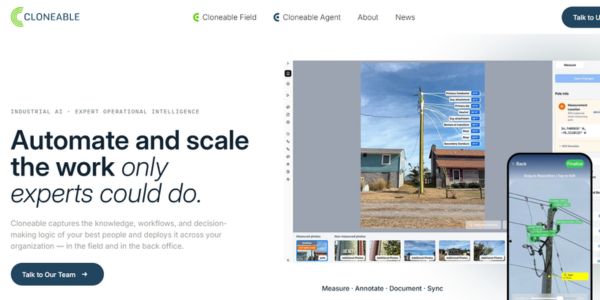
Cloneable is launching an agentic AI platform for infrastructure operations that captures institutional knowledge from retiring experts and turns it into scalable agents, targeting energy, utilities, and other asset-heavy sectors. The $4.6M seed-backed startup aims to connect field data capture with back-office execution so founders and operators can modernize infrastructure faster and with fewer bottlenecks.
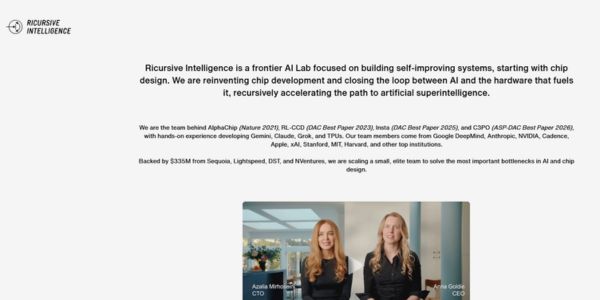
Excerpt: Ricursive Superintelligence has raised at least $500 million to build self‑improving AI, with GV and Nvidia backing a four‑month‑old lab at a $4 billion valuation. The deal crystallizes how quickly capital, talent and regulatory scrutiny are converging around autonomous AI research—and what that means for builders trying to compete outside the frontier club.

Brazilian startup BOND has raised US$2M to automate accounting for SMEs in Brazil’s complex tax system. Combining AI with human accountants, it targets a fragmented market of manual processes, aiming to turn back-office compliance into a faster, more strategic function for founders and operators.

Loop just raised a $95M Series C to expand its AI-native supply chain platform, turning messy logistics data into early disruption warnings and better financial outcomes for global operators and shippers.
Linkedin X-twitter-square Facebook-square Startups & Business News AI agents are finally moving from demos to the day-to-day stack of real
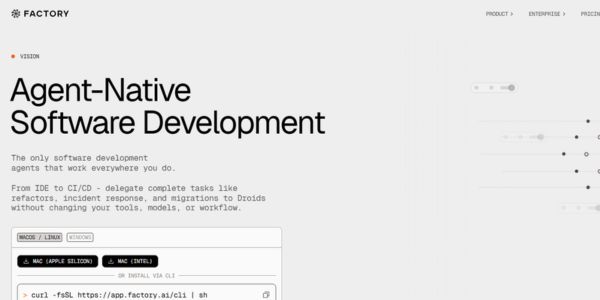
Factory has raised a $150M Series C at a $1.5B valuation to scale its autonomous “Droids” platform, betting that enterprises will standardize software engineering around agent‑native missions, governance and cost‑optimized AI infrastructure.

Solidroad has raised $25 million to bring AI-native quality assurance to every human and AI-powered customer interaction. The new funding will accelerate product development and expansion for support-heavy businesses leaning into automation.
futureTEKnow is focused on identifying and promoting creators, disruptors and innovators, and serving as a vital resource for those interested in the latest advancements in technology.
© 2026 All Rights Reserved.