
Startups & Business News
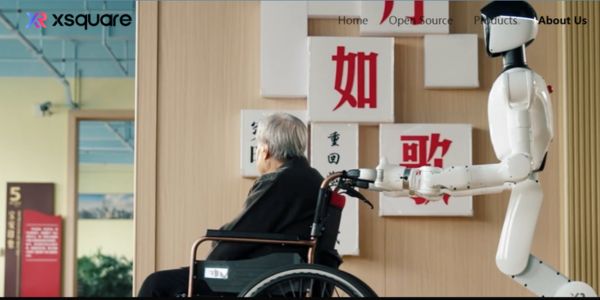
On a recent afternoon in Beijing, an engineer at X Square Robot steered a wheeled humanoid through a cramped apartment kitchen, asking it to wipe down a counter it had never “seen” before. The robot paused, scanned the room with cameras and depth sensors, and then quietly went to work, its movements still tentative but improving with every task. For the startup behind it, those shaky motions now carry the weight of nearly 2 billion renminbi in new expectations.
A young startup with heavyweight backers
Founded in December 2023, X Square Robot has raced from lab prototype to one of China’s most heavily funded embodied AI contenders. The company just closed a Series B round of roughly 276 million dollars, co-led by Xiaomi’s strategic investment arm and Sequoia China. The new money lands only months after a 138 million dollar A++ round announced in January, a pace of financing that would be aggressive even by consumer internet standards.
The cap table now reads like a who’s who of Chinese internet power: Alibaba, ByteDance, Meituan, and Xiaomi have all taken stakes, making X Square Robot the rare startup backed by all four giants. For corporate strategists, the bet is clear: if general-purpose robots are the next computing platform, they want a claim on the underlying operating system.
Why embodied AI is drawing this much capital
Unlike chatbots and image generators, embodied AI systems must reason not just over text and pixels but over friction, gravity, and cluttered living rooms. Investors have watched U.S. and European humanoid projects attract attention; now they are hunting for domestic champions who can pair large-scale AI models with China’s manufacturing base and service economy.
X Square Robot’s pitch is that the next platform will not sit on a desk or in a pocket but roll across the floor. Its robots, branded Quantum-1 and Quantum-2, are general-purpose wheeled humanoids, designed first for household chores and later for factories, warehouses, and eldercare facilities. The same foundation model, executives argue, should eventually orchestrate all of those behaviors.
Inside WALL-A, a proprietary foundation model
Where many robotics teams fine-tune open-source language or vision models, X Square Robot is taking a more self-reliant route. Its core system, called “WALL-A,” is a proprietary, end-to-end foundation model built on a Transformer architecture that ingests visual, linguistic, and tactile signals at once.
In practice, that means the model doesn’t just read a natural-language instruction like “clean under the table.” It simultaneously processes camera frames, force feedback from the robot’s arms, and past interaction history in a single network, rather than stitching together separate perception and control stacks. Engineers say this reduces information loss and makes it easier to learn complex behaviors, from grasping a fragile glass to navigating a crowded hallway.
The approach also has strategic implications. By avoiding dependence on third-party models, the company keeps more control over performance, safety constraints, and data. In a climate of tightening export controls and rising concern about model provenance, that autonomy is part of the product.
Training on the job in Chinese homes
The robots are not staying in the lab. To accelerate learning, X Square Robot has launched a robotic cleaning service with home-services platform 58 Home, sending machines into real apartments under supervised conditions. Each deployment generates streams of “messy” data: unusual floor plans, cluttered surfaces, inconsistent lighting, and unpredictable human behavior.
Executives describe the model as “training upon deployment,” turning every job into a data point that flows back into WALL-A. It is a classic data flywheel: the more homes the robots visit, the more edge cases they see; the more edge cases they see, the more capable and marketable they become. For household customers, the promise is convenience; for the startup and its investors, it is a compounding advantage that is hard for latecomers to replicate.
The strategy also surfaces familiar tensions. Labor advocates in other markets have warned that cleaning and maintenance jobs could be automated away; privacy advocates worry about mobile cameras roaming through private spaces. Regulators, still grappling with text-based AI, will need new guardrails for robots that collect multimodal data inside homes and workplaces.
Beyond the home: factories, logistics, and care
X Square Robot’s roadmap reaches far beyond kitchen floors. The company plans to apply the same embodied intelligence stack to industrial manufacturing, logistics, and elderly care, seeking out environments where repetitive physical tasks and safety constraints dominate. In factories, a wheeled humanoid that can safely maneuver around people and adapt to new workflows without extensive reprogramming could appeal to manufacturers facing demographic and wage pressures.
In eldercare, the pitch is more delicate: assistive robots that can help with daily tasks or monitor for falls, without replacing human caregivers altogether. Policymakers and health systems will scrutinize these deployments closely, balancing cost savings and coverage against questions of dignity, reliability, and liability when machines fail.
China’s race for general-purpose robots
For China’s tech giants, embodied AI is emerging as a strategic arena alongside cloud, chips, and large language models. Xiaomi has already experimented with its own robots; backing X Square Robot lets it plug into a specialized team and a maturing platform. Alibaba, ByteDance, and Meituan bring distribution, data, and application scenarios, from e-commerce fulfillment to food delivery networks.
Whether X Square Robot can convert that backing into durable leadership is far from settled. The hardware remains fragile, the models are still prone to surprising errors, and the economics of large-scale deployment are unproven. Yet the size and speed of the company’s funding signal that in the eyes of China’s most powerful tech firms, the question is no longer whether embodied AI will matter, but who will own the stack when these machines finally move with confidence.

Kenji Sato is a Staff Writer at futureTEKnow, writing about perception, control, and the next generation of robots emerging from labs and startups across Asia‑Pacific.
Discover the companies and startups shaping tomorrow — explore the future of technology today.
Trending Companies
Latest Articles
futureTEKnow is focused on identifying and promoting creators, disruptors and innovators, and serving as a vital resource for those interested in the latest advancements in technology.
© 2026 All Rights Reserved.
8 Responses
The investment by X Square Robot in embodied AI is intriguing, especially considering the implications for general-purpose robotics in China. I wonder how this will influence the future development of automation in various sectors.
The discussion about China’s advancements in general-purpose robots and how X Square Robot is investing significantly in embodied AI is fascinating. It highlights the shifting landscape of technology and the potential economic impacts.
The investment in embodied AI seems to highlight a significant shift towards automation in various sectors, particularly with the emphasis on general-purpose robots in China. It’s fascinating to see how companies like X Square Robot are envisioning the future of robotics and their applications.
The financial commitment towards embodied AI and the push for general-purpose robotics in China is both ambitious and intriguing. It’ll be interesting to see how this shapes the future of automation and its applications across various industries.
The potential investment in embodied AI seems like a strategic move for X Square Robot, especially with the growth of general-purpose robots in China. It’s fascinating to think about how these advancements could reshape various industries.
The discussion about X Square Robot’s investment in embodied AI is particularly intriguing, especially in the context of China’s advancements in general-purpose robots. It’s fascinating to see how these technologies could revolutionize industries and everyday life.
The investment in embodied AI is fascinating, particularly how it relates to the growing demand for general-purpose robots in diverse sectors. It’ll be interesting to see how X Square Robot leverages this funding in practical applications throughout China.
This is where embodied AI gets really interesting. Robots are starting to move from demos into something much more practical.