

By futureTEKnow | Editorial Team
Tucked away on the outskirts of Hangzhou, Liangzhu has quietly become the epicenter of China’s artificial intelligence (AI) boom. Once a tranquil suburb, it now buzzes with the energy of young coders, ambitious founders, and tech investors. The transformation is so profound that Liangzhu is often compared to Silicon Valley—but with a distinctly Chinese twist.
Government support: Over the past decade, local authorities have rolled out tax breaks and subsidies to attract startups, fueling an explosion of innovation.
Proximity to tech giants: Liangzhu’s location near companies like Alibaba, DeepSeek, and NetEase has made it a magnet for talent.
Startup culture: On any given weekend, you’ll find aspiring entrepreneurs pitching ideas in backyards, coders collaborating in coffee shops, and investors scouting the next big thing.
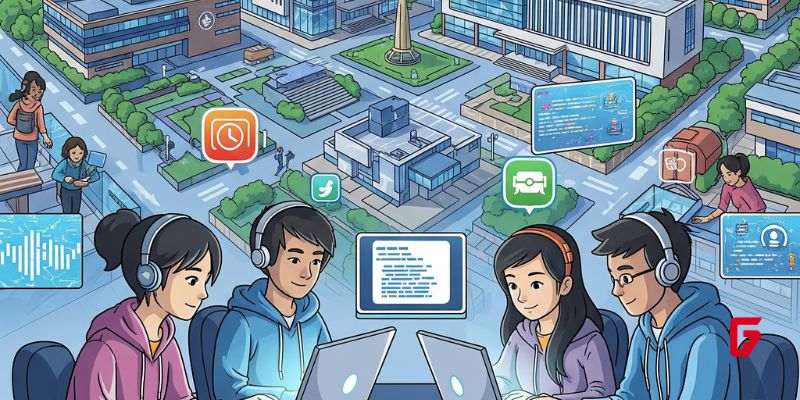
Liangzhu’s tech community calls themselves “villagers”—a nod to their collaborative spirit and shared ambition. Most are in their 20s and 30s, many are alumni of Zhejiang University, and they’re united by a passion for pushing the boundaries of AI.
Daytime: Writing code, building prototypes, and networking in local cafés.
Nighttime: Gaming sessions, brainstorming, and plotting the launch of new ventures.
Aspirations: Many are biding their time, waiting for noncompete clauses to expire so they can start their own companies.
Local talent and universities are central to fueling Liangzhu’s AI ecosystem. The area attracts a steady influx of young engineers and tech workers, many of whom are recent graduates from top institutions like Zhejiang University. These individuals gather in informal settings—cafes, backyards, and coworking spaces—to collaborate on building AI startups, inspired by the success of major tech companies such as Alibaba.
Universities play a critical role by supplying a pipeline of highly skilled graduates and fostering a culture of research and innovation. The technical expertise and fresh ideas generated in academic settings directly feed into local startups, helping them develop cutting-edge AI models and products. This academic-to-industry flow is a key driver behind the rapid emergence of Liangzhu as a tech hub.
Additionally, government policies in Hangzhou—including subsidies and incentives for college graduates—have made the region even more attractive to young talent. These measures ensure that the best minds are not only trained locally but also retained, further strengthening the AI scene in Liangzhu.
DeepSeek: This AI startup made waves by releasing a powerful open-source model at a fraction of the cost of Western equivalents.
Alibaba: Continues to be a major force, nurturing talent and innovation.
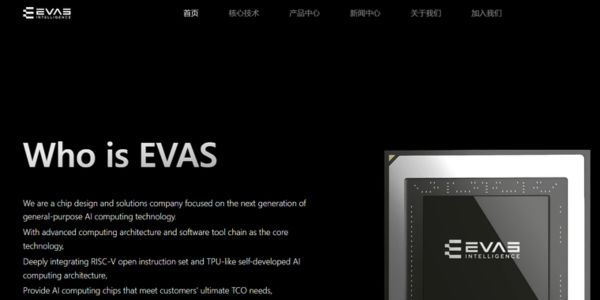
Six Tigers of Hangzhou: DeepSeek and other robotics and AI startups are collectively known as the “six tigers,” each making headlines for breakthroughs in AI and robotics.
Foreign investment hurdles: While government funding has spurred growth, it has also made it harder for startups to attract international capital.
Chip shortages: US export controls on high-performance semiconductors have forced Chinese firms to accelerate domestic chip development.
Talent wars: Engineers are in such high demand that moves between companies like DeepSeek, Xiaomi, and ByteDance become major news.
Liangzhu isn’t just another tech hub—it’s a symbol of China’s determination to lead in AI. The village’s unique blend of grassroots innovation, institutional support, and youthful ambition is setting the pace for the next wave of global AI development.
Liangzhu’s rise is a testament to the power of community, creativity, and relentless pursuit of innovation. As the world watches the AI race unfold, this coder village is proving that the next tech revolution might just begin in the most unexpected places.

AWS frontier agents introduce a new era of autonomous AI coders that can build, secure, and run applications for days at a time, acting like virtual teammates across dev, security, and DevOps while engineers retain final control over production changes.

Explore the cutting-edge ways AI is enhancing Lean Six Sigma, from real-time process insights to predictive controls, ushering in a new era of operational excellence and efficiency.

Facing supply chain challenges in 2025? High-performing teams leverage AI for risk management, demand forecasting, supplier analytics, and end-to-end visibility to ensure business continuity and resilience.

Craft an AI-powered supply chain Center of Excellence that unifies control tower visibility, analytics, and inventory optimization into one strategic hub. Explore this blueprint to learn how a modern supply chain CoE drives resilience, smarter decisions, and operational excellence in the age of AI.

Supply chain leadership is being redefined by AI, intelligent automation, and agentic decision-making, demanding leaders who can engineer end-to-end intelligence rather than simply manage workflows. This article explores how next-generation supply chain leaders will combine data, algorithms, and human judgment to build resilient, adaptive, and high-performing global operations.

Bridgit Mendler’s Northwood Space is pioneering mass-produced ground stations, enabling scalable, high-speed connectivity for the new era of satellite networks and megaconstellations.

SpaceX aims to nearly double launches from Vandenberg in 2025, facing support from federal agencies but strong objections from the state and local communities.

Traditional Medicare will pilot AI-assisted prior authorization in 2026 across six states, focusing on high-risk outpatient services. Clinicians retain final say, but incentives and access concerns loom as CMS tests fraud reduction and “gold card” exemptions. Here’s what providers and patients should know.

OpenArt’s new “one-click story” compresses scripting, visuals, and edits into ready-to-post short videos—fueling viral growth and a fresh IP debate. We break down how it works, adoption signals, what’s next (multi-character, mobile), and practical guardrails creators and brands should follow to stay original and compliant.

OpenAI’s o3 swept the Kaggle AI chess tournament, defeating xAI’s Grok 4–0. The victory fueled the intense rivalry between Altman and Musk, reshaping AI benchmarks.

NASA and Google’s AI-powered Crew Medical Officer Digital Assistant enables autonomous diagnoses for astronauts on Mars missions, redefining remote healthcare for space and Earth.

Pinterest’s CEO confirms that fully agentic AI shopping is years away, as the platform invests in AI-powered tools to enhance discovery, inspiration, and personalized shopping experiences for millions.
To provide the best experiences, we use technologies like cookies to store and/or access device information. Consenting to these technologies will allow us to process data such as browsing behavior or unique IDs on this site. Thanks for visiting futureTEKnow.