Meta is making headlines again with a game-changing announcement: the company will invest hundreds of billions of dollars to construct some of the world’s largest AI data centers, aiming to push the boundaries of artificial intelligence and edge closer to superintelligence.
“We’re also going to invest hundreds of billions of dollars into compute to build superintelligence. We have the capital from our business to do this.” — Mark Zuckerberg
Unveiling the Next-Level Data Giants
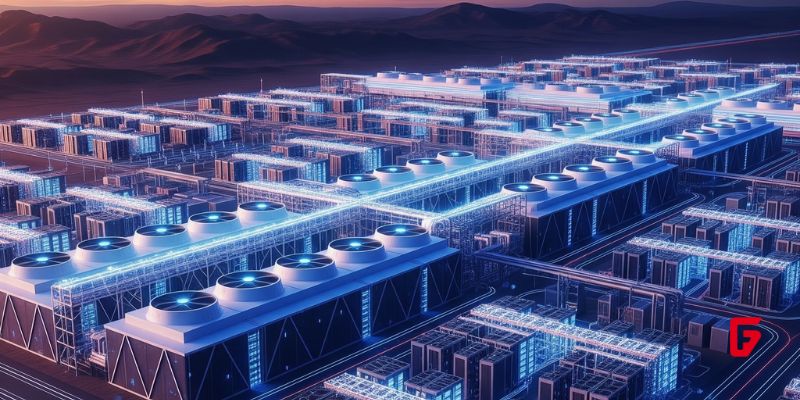
Mark Zuckerberg revealed two high-profile projects—Prometheus, set to launch in 2026 in Ohio, and Hyperion, which is expected to scale up to an astonishing 5 gigawatts and be operational in Louisiana by 2030. To put it in perspective, Zuckerberg stated that just one of these clusters will cover a land area nearly the size of Manhattan—around 59 square kilometers (22.8 square miles).
These aren’t just data centers; they’re titan clusters designed as the computational backbone for Meta’s aggressive pursuit of artificial general intelligence (AGI) and next-generation open-source AI models like the Llama family.
Why Gigawatt-Scale Matters
The scale here is unprecedented. A 5-gigawatt facility outclasses the majority of existing tech infrastructure. For context, even a single gigawatt can power hundreds of thousands of homes—multiply that by five, and you start to grasp the magnitude. These data supercenters will provide the massive amounts of compute power necessary for AI training, research, and innovation on a global scale.
A Race Among Tech Titans
Meta’s move isn’t happening in isolation. The AI race among Big Tech is accelerating, with Meta, OpenAI, Google DeepMind, and Anthropic locked in fierce competition for talent, resources, and AI dominance. Industry analysts predict that Meta could become the first to deploy a gigawatt-plus supercluster, leaping ahead of its rivals.
Investing in Superintelligence
Zuckerberg’s vision is clear: build the most talent-dense team in the industry and equip them with unparalleled compute resources. Recent reports show Meta’s capital spending climbing rapidly—from $35-40 billion last year to a projected $60-65 billion in 2025 alone, with total investments soaring even higher over the coming years.
This isn’t just about infrastructure; it’s a push to lead in AI research, attract the world’s best engineers, and open the door for novel breakthroughs in machine intelligence.
The Global Impact
Such colossal infrastructure projects will have far-reaching consequences:
AI Research Acceleration: More computing power means faster development of advanced AI models and capabilities.
Job Creation: Thousands of engineers, researchers, and data center specialists will be needed.
Geographic Shifts: New Albany, Ohio, and Louisiana are set to become hotspots for cutting-edge technology development.
Energy and Sustainability Challenges: Powering a 5GW data center is a massive undertaking, raising important questions about energy sourcing and environmental impact.
Looking Forward
Mark Zuckerberg’s bet is bold, high-stakes, and may redefine what’s possible in AI and cloud infrastructure. Whether this massive investment will deliver rapid profits is up for debate—the pace of spending and scale far exceeds Meta’s previous projects in VR and the metaverse. But the ambition is unmistakable: Meta wants to be at the heart of the next technological revolution.
In this unfolding era, gigawatt-scale isn’t just a number—it’s the new benchmark for ambition in AI’s future.