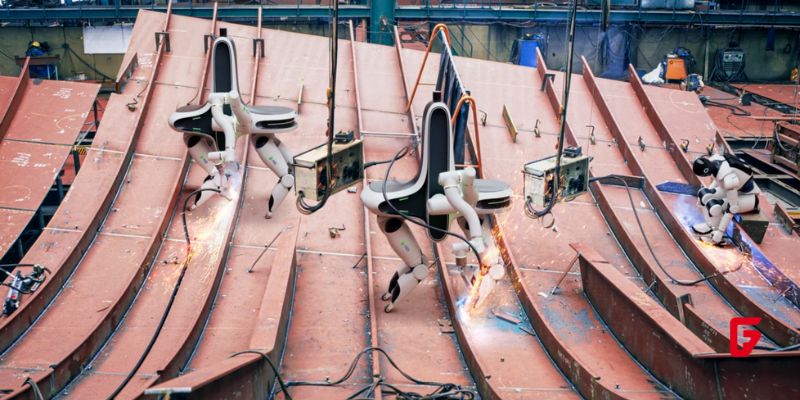
The robotics world just witnessed a major power move. NEURA Robotics, a German pioneer in cognitive robotics, has announced a strategic partnership with HD Hyundai Samho and Hyundai Robotics. This collaboration aims to transform the global shipbuilding industry by integrating advanced robotics and AI into shipyard operations.
Why This Partnership Matters
This isn’t just another handshake between tech companies. HD Hyundai Samho is one of the world’s top shipyards, while Hyundai Robotics leads in industrial automation. By teaming up with NEURA, they’re setting the stage for a new era of intelligent, automated shipbuilding.
The partnership’s primary focus is to deploy cognitive robots—machines that can perceive, learn, and adapt—to handle demanding tasks in shipyards. These robots are designed to operate safely alongside human workers, boosting productivity and safety standards.
Key Highlights of the Collaboration
Cognitive Robotics Integration: NEURA’s robots will be introduced to Hyundai’s shipyards, taking on tasks like welding, painting, and heavy lifting. These are jobs that typically require precision and are often hazardous for humans.
AI-Driven Efficiency: The robots use advanced AI to interpret their environment, make decisions in real time, and work collaboratively with human teams.
Safety and Productivity: By automating high-risk tasks, the partnership aims to reduce workplace accidents and improve overall efficiency in shipbuilding processes.
Global Impact: This move could set a new benchmark for robotics adoption in heavy industries, especially in sectors where safety and scale are critical.
David Reger, Founder and CEO of NEURA Robotics, said: “This strategic partnership once again demonstrates the versatility of cognitive robots – even in one of the most demanding industrial environments in the world. Together with Hyundai, we are laying the groundwork for entirely new paths in intelligent automation.”
What Makes NEURA’s Technology Stand Out?
Unlike traditional industrial robots, NEURA’s machines are built with a cognitive architecture. This means they can:
Understand complex environments
Adapt to new tasks without extensive reprogramming
Collaborate safely with people
This flexibility is essential in shipyards, where every vessel is unique and workflows can change rapidly.
The Bigger Picture: Robotics in Heavy Industry
This partnership signals a broader trend: robotics and AI are becoming central to the future of manufacturing and heavy industry. As labor shortages and safety concerns grow, companies are looking for smarter, more adaptable automation solutions.
NEURA Robotics, HD Hyundai Samho, and Hyundai Robotics are positioning themselves at the forefront of this shift. Their collaboration could accelerate the adoption of cognitive robots across global shipyards, setting new standards for efficiency and safety.
What to Watch Next
Deployment Timeline: The first NEURA robots are expected to roll out in Hyundai’s shipyards soon, with pilot projects already in the pipeline.
Industry Ripple Effects: Success here could inspire similar partnerships in other sectors, from construction to energy.
Workforce Transformation: As robots take on more complex tasks, the role of human workers will evolve—focusing more on oversight, problem-solving, and innovation.
This partnership isn’t just about building better ships; it’s about building a smarter, safer, and more efficient future for heavy industry worldwide.