

































Long Beach, California, USA
2015
Aerospace, Space Launch Services, Reusable Launch Vehicles, Rocket Propulsion, Additive Manufacturing, Industrial Robotics, Advanced Manufacturing, Satellite Deployment, Space Transportation
Relativity Space is an aerospace technology company developing reusable orbital launch vehicles and rocket propulsion systems. Its primary program is Terran R, a two-stage rocket designed to transport commercial, scientific, and government satellites into orbit. The company combines conventional aerospace manufacturing with metal additive manufacturing to produce rocket engines and structural components. Its technologies include the Aeon R and Aeon V methane-fueled engines, large-scale manufacturing systems, and reusable launch vehicle architecture designed to support satellite constellation deployment and other space transportation missions.
Relativity Space designs, manufactures, tests, and develops orbital rockets intended to transport satellites and other payloads into space. Its current launch vehicle, Terran R, is being developed for medium-to-heavy payload missions, including satellite constellation deployment, dedicated commercial launches, and government space programs.
The company develops liquid oxygen and methane rocket engines, including the Aeon R engines used on Terran R’s first stage and the Aeon V engine designed for its upper stage. Its engineering activities cover propulsion, avionics, flight software, structural design, cryogenic fluid systems, and reusable rocket recovery technology.
Relativity Space also operates advanced rocket manufacturing facilities where it produces engine components, propellant tanks, and other vehicle structures. Its production methods combine metal 3D printing, CNC machining, and friction stir welding.
The company conducts engine and stage testing at NASA’s Stennis Space Center in Mississippi and is developing launch infrastructure at Launch Complex 16 at Cape Canaveral Space Force Station in Florida.
Its earlier Terran 1 program demonstrated the use of large-scale additive manufacturing in rocket production. After the vehicle’s first flight in March 2023, Relativity retired Terran 1 to concentrate its engineering and manufacturing resources on Terran R.
Relativity Space develops reusable launch vehicle technology using liquid rocket propulsion, advanced structural manufacturing, and automated production systems. Its primary vehicle, Terran R, is a two-stage rocket designed to carry large satellite payloads while recovering and reusing its first stage.
Terran R measures approximately 86.6 meters in height and 5.4 meters in diameter. Its current design targets a payload capacity of 23,500 kilograms to low Earth orbit with downrange first-stage recovery, or 33,500 kilograms in an expendable configuration. The rocket is also designed to transport approximately 5,500 kilograms to geosynchronous transfer orbit with first-stage recovery.
The first stage uses 13 Aeon R rocket engines, each generating approximately 269,000 pounds-force of thrust at sea level. Together, they provide approximately 3.5 million pounds-force of liftoff thrust. The upper stage uses a single vacuum-optimized Aeon V engine producing approximately 323,000 pounds-force of thrust.
Both engine types use liquid oxygen and methane propellants and operate through a high-pressure gas-generator cycle. The engines incorporate turbomachinery, combustion chambers, propellant control systems, and other components designed and manufactured by Relativity Space.
For rocket manufacturing, the company combines metal additive manufacturing and conventional fabrication. Its Aeon engines use powder-bed fusion and other additive processes to produce complex metal components, while the rocket’s primary structures use high-strength aluminum alloys joined through friction stir welding.
Relativity also develops large-scale additive manufacturing technology through its Stargate platform. The company’s manufacturing research includes robotic printing systems, materials engineering, automated fabrication, and simulation tools. These technologies were central to the earlier Terran 1 program and continue to support selected Terran R components.
Terran R’s reusable first stage is designed with grid fins, thermal protection, landing legs, and controlled engine burns for recovery. After stage separation, the booster is intended to return through the atmosphere and land on an offshore recovery platform. These capabilities remain to be demonstrated in flight.
As of August 2026, Relativity had installed all 13 first-flight Aeon R engines onto the first-stage thrust structure. The company was also preparing the second stage for integrated testing and continuing development of launch and recovery infrastructure at Cape Canaveral.
Satellite constellations, communications networks, and government space programs require launch vehicles capable of transporting increasingly large payloads into orbit. Relativity Space is developing reusable medium-to-heavy-lift launch technology to serve these missions.
Its manufacturing approach combines advanced metal printing with established aerospace production methods. This allows engineers to use additive manufacturing for complex engine components while relying on conventional fabrication for large rocket structures where appropriate.
The development of reusable rocket stages and methane-fueled propulsion is also relevant to the space industry’s efforts to improve launch economics and increase the frequency of satellite deployment.
Relativity’s progress in engine qualification, structural testing, and launch infrastructure represents significant development activity. However, Terran R must still demonstrate orbital flight and first-stage recovery before its planned operational capabilities can be evaluated through actual missions.
Terran R is Relativity Space’s reusable two-stage orbital launch vehicle under development. The rocket is approximately 86.6 meters tall and uses liquid oxygen and methane propulsion. It is designed to transport 23,500 kilograms to low Earth orbit with first-stage recovery, or up to 33,500 kilograms in an expendable configuration. Its first orbital flight is planned for late 2026, subject to completion of vehicle testing and launch preparations.
Aeon R is a methane-fueled rocket engine developed for Terran R’s first stage. Each engine generates approximately 269,000 pounds-force of thrust at sea level and uses a high-pressure gas-generator cycle. Terran R incorporates 13 Aeon R engines, providing approximately 3.5 million pounds-force of combined liftoff thrust. The engines use additively manufactured components and have undergone development, qualification, and acceptance testing.
Aeon V is a vacuum-optimized rocket engine designed for Terran R’s second stage. It produces approximately 323,000 pounds-force of thrust and uses liquid oxygen and methane propellants. The engine shares design features and manufacturing processes with Aeon R, supporting commonality across the vehicle’s propulsion systems.
Stargate is Relativity Space’s large-scale metal additive manufacturing technology. It combines robotic manufacturing equipment, metal deposition processes, materials engineering, and software-controlled fabrication. The platform was used extensively in the Terran 1 program and continues to support manufacturing research and selected rocket components. Relativity also uses powder-bed fusion and conventional manufacturing processes for Terran R.
Terran 1 was Relativity Space’s earlier two-stage launch vehicle, developed to demonstrate large-scale 3D printing in rocket manufacturing. It used Aeon 1 engines powered by liquid oxygen and methane. The rocket completed its first flight in March 2023, passing through maximum aerodynamic pressure before an upper-stage anomaly prevented it from reaching orbit. The program was subsequently retired as Relativity shifted development to Terran R.
Launch Complex 16 is Relativity Space’s launch facility at Cape Canaveral Space Force Station in Florida. The company is developing the site for Terran R launch operations, including vehicle integration, propellant handling, launch control, and ground support infrastructure. Additional facilities are planned to support future vehicle processing and recovery operations.
Terran R’s first-stage recovery architecture combines aerodynamic control surfaces, thermal protection, landing legs, and rocket-powered descent maneuvers. The booster is designed to return through the atmosphere and land on an offshore platform for potential refurbishment and reuse. This capability remains under development and has not yet been demonstrated during an orbital mission.
Relativity Space is developing commercial and government satellite launch services using Terran R. The vehicle is designed to support large satellite deployments, constellation missions, dedicated launches, and rideshare payloads. The company has secured launch service agreements with commercial and institutional customers, although operational Terran R flights have not yet begun.
Relativity Space’s technology is being developed for satellite constellation deployment and commercial space transportation. Terran R is designed to carry communications satellites, Earth observation spacecraft, and other payloads into low Earth orbit and geosynchronous transfer orbit.
The vehicle is also intended to support government and national security launches, including missions requiring substantial payload capacity and dedicated access to orbit. Its reusable first-stage architecture is designed to support repeated launch operations after successful recovery and refurbishment.
Beyond launch services, Relativity’s additive manufacturing and propulsion technologies support rocket engine production, aerospace materials development, automated manufacturing, and reusable vehicle engineering. These capabilities contribute to the design and production of launch systems for future commercial and scientific space missions.
Relativity Space launched its Terran 1 rocket in March 2023. The vehicle passed through maximum aerodynamic pressure, but an upper-stage anomaly prevented it from reaching orbit. The company retired Terran 1 and is developing Terran R, which has not yet completed its first orbital flight.
No. Terran R combines metal additive manufacturing with conventional aerospace production techniques. Its rocket engines incorporate additively manufactured components, while major structural elements use high-strength aluminum alloys, machining, and friction stir welding. This differs from the company’s earlier Terran 1 program, which placed greater emphasis on large-scale 3D-printed structures.
Terran R is designed to transport approximately 23,500 kilograms to low Earth orbit with first-stage recovery, or up to 33,500 kilograms in an expendable configuration. It also targets approximately 5,500 kilograms to geosynchronous transfer orbit with downrange first-stage recovery. These are design specifications that have not yet been demonstrated through orbital flight.
Terran R uses 13 Aeon R engines on its first stage and one Aeon V engine on its second stage. Both engine types use liquid oxygen and methane propellants. The first-stage engines collectively produce approximately 3.5 million pounds-force of thrust at liftoff.
Relativity Space has identified late 2026 as the planned period for Terran R’s first flight from Launch Complex 16 at Cape Canaveral Space Force Station. As of October 2026, the company was continuing vehicle integration, stage testing, and launch infrastructure development. The launch date remains subject to testing and operational readiness.
Have an update, correction, or additional information about this company? Help us keep the futureTEKnow company database up to date by submitting the latest company information.

Turion Space has raised more than $75 million in Series B funding to scale its Starfire platform and satellite fleet, betting that space domain awareness is the next critical defense infrastructure layer. The piece unpacks Turion’s business model, contracts, and risks for operators and investors watching the new space intelligence stack.

Pulsar Fusion’s Sunbird fusion rocket has achieved first plasma, validating its exhaust architecture and edging a reusable “space tug” concept toward sub‑six‑month Mars transfers. Drawing on multiple reports, this piece breaks down how the Dual Direct Fusion Drive works, what the 2027 in‑orbit demo must prove, and which technical and regulatory hurdles still stand between Sunbird and operational deep‑space logistics.

Aetherflux is betting that orbital data centers can power the next wave of AI, shifting from laser power beaming to space-based compute as it targets a $2 billion valuation. For founders and investors, the company’s 2027 satellite plans highlight how quickly space infrastructure is converging with AI demand and reshaping the deep-tech funding landscape.
Sierra Space’s $550 million Series C round, valuing the company at $8 billion, signals a decisive shift toward defense-tech space. This feature unpacks the hardware, strategy, and risks shaping the next decade of orbital infrastructure.

Axiom Space has locked in a fresh $350M raise to push its commercial space station and NASA lunar spacesuits toward launch, signaling growing investor faith in private orbital infrastructure.
Morpheus Space secures $15M funding for GO-2 electric propulsion mass production. Learn how this boosts satellite mobility with efficient thrusters.

Stoke Space extended its Series D funding to $860 million, fueling Nova’s full-reuse rocket production at Cape Canaveral. Backed by founders from Blue Origin, this pushes total capital to $1.34B.

Tomorrow.io has closed a $175 million equity round to deploy DeepSky, its AI-native weather satellite constellation designed to make global atmospheric data far more precise, frequent, and useful for businesses, governments, and communities facing extreme weather.

Stay ahead of AI and space tech wars: OpenAI vs Google AI, SpaceX and Blue Origin’s race for orbital data centers, Meta’s AI strategy shift, and key robotics breakthroughs reshaping industry.

Bridgit Mendler’s Northwood Space is pioneering mass-produced ground stations, enabling scalable, high-speed connectivity for the new era of satellite networks and megaconstellations.
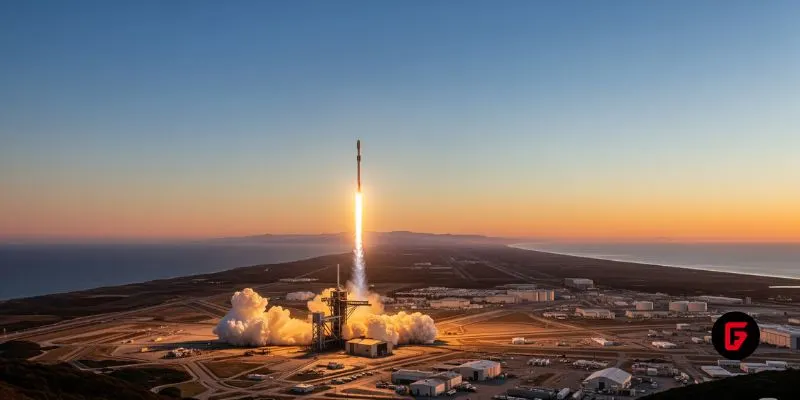
SpaceX aims to nearly double launches from Vandenberg in 2025, facing support from federal agencies but strong objections from the state and local communities.

NASA and Google’s AI-powered Crew Medical Officer Digital Assistant enables autonomous diagnoses for astronauts on Mars missions, redefining remote healthcare for space and Earth.
futureTEKnow is focused on identifying and promoting creators, disruptors and innovators, and serving as a vital resource for those interested in the latest advancements in technology.
© 2026 All Rights Reserved.