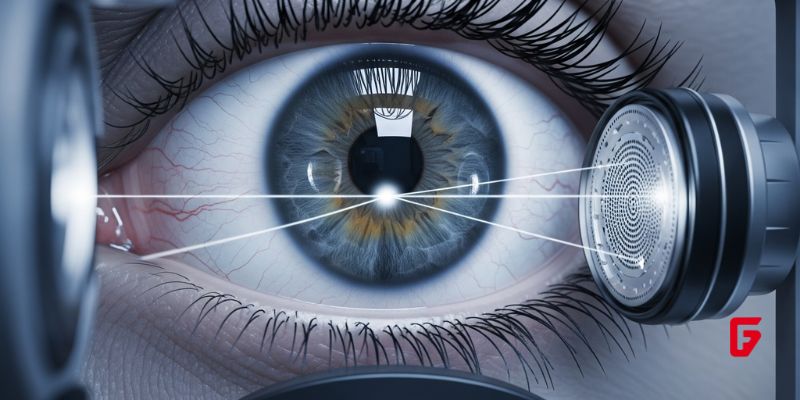
Preventable blindness is a growing challenge, but a new wave of healthtech innovation is making early detection more accessible than ever.
Skleo Health, a Düsseldorf-based startup, has just raised €3 million in seed funding to expand its AI-powered eye screening network across Germany. The investment, led by Sanoptis—a major ophthalmology services provider—alongside Antler and several angel investors, is set to accelerate the fight against preventable blindness.
“Every day in the clinic, I witnessed the profound impact of late-stage diagnosis, where treatment options are often limited and the outcomes are uncertain. We founded Skleo Health to fundamentally change this reality. By bringing certified, medically validated screenings into everyday life, we are replacing reactive treatment with proactive prevention.
This funding allows us to build a new standard of care where early detection is the norm, not the exception, ensuring we can save the sight of millions.”
- Dr. Künzel, Skleo Health’s co-founder, emphasizes the mission:
Tackling a Major Public Health Gap
In Germany, 9.7 million people are affected by preventable eye conditions, including glaucoma, diabetic eye disease, and macular degeneration. Long wait times—averaging 56 days for a specialist appointment—mean that 31% of patients receive care too late, often when treatment options are limited.
Skleo Health’s solution: a platform that brings preventive eye screenings into everyday locations like opticians, pharmacies, retail stores, and company offices. Each screening takes just six minutes and is performed at a partner site. Results are first analyzed by a CE-certified AI system and then confirmed by a licensed eye doctor, ensuring both speed and medical accuracy.
Rapid Growth and Real-World Impact
Since its founding in March 2024, Skleo Health has expanded to the 50 largest cities in Germany, screening over 11,000 people and detecting more than 3,000 cases requiring medical attention. The company’s rapid scaling is supported by partnerships with leading organizations, including Mister Spex, a growing network of pharmacies, and corporate partners. A collaboration with a major retail group is also on the horizon.
Backed by Expertise and Academic Rigor
The founding team brings together deep expertise:
Dr. Steffen E. Künzel: Ophthalmologist and researcher, formerly at Charité University Hospital.
Fabien Vogl: Engineer with an MBA, healthcare and digitization background.
Dr. Alex Hein: Mathematician and economist, former consultant at Boston Consulting Group.
Skleo Health’s approach is further validated by support from Charité University Clinic Berlin, UCL London, and Yale University.
Funding to Scale and Innovate
The new capital will be used to:
Expand the partner network and boost screening capacity to 30,000 per month.
Build a nationwide platform connecting patients with specialist eye doctors.
Advance the proprietary AI diagnostic system for even greater accuracy and efficiency.
The partnership with Sanoptis is key, providing access to a vast clinical network and expertise spanning over 450 ophthalmology locations across Europe.
Why This Matters
Early detection saves sight and reduces the burden on healthcare systems.
AI-powered screenings make preventive care faster, more accurate, and accessible.
Strategic partnerships are accelerating the rollout, ensuring more people benefit from timely interventions.
As Skleo Health scales, it’s setting a new benchmark for proactive, patient-centered eye care—and offering a model that could be replicated far beyond Germany’s borders.