

Startups & Business News
The healthcare industry has always struggled with the challenge of making appointment scheduling seamless, accessible, and efficient for both patients and providers. In 2025, the partnership between Synthflow and Krisp.ai is setting a new standard for what’s possible in healthcare communications—combining AI-driven voice automation with advanced noise cancellation to deliver a frictionless, multilingual, and always-available scheduling experience.
Traditional appointment scheduling is notorious for bottlenecks: long hold times, language barriers, and administrative overload. Patients often face delays, especially after office hours or during peak times, while staff are bogged down by repetitive tasks and manual data entry. These inefficiencies result in missed appointments, frustrated patients, and wasted resources.
Synthflow’s AI voice agents are designed to tackle these issues head-on. Unlike legacy phone trees or basic chatbots, Synthflow uses large language models to deliver natural, real-time conversations—handling everything from appointment booking to follow-ups and patient screening. The platform’s multilingual capability (supporting 15+ languages) ensures that patients can interact in their preferred language, eliminating communication barriers and improving accessibility.
What sets Synthflow apart is its ability to operate 24/7. Patients can book, reschedule, or cancel appointments at any time, even outside regular office hours. This round-the-clock availability means no more missed calls or lost opportunities, and staff are freed up to focus on patient care instead of administrative chores.
Healthcare environments are rarely quiet—think busy waiting rooms, bustling clinics, and remote staff working from home. That’s where Krisp.ai’s noise cancellation comes in. By integrating with Synthflow, Krisp.ai filters out background noise on both ends of the call, ensuring that every conversation is crystal clear, no matter the environment.
This is a game-changer for both patient experience and operational efficiency, especially as telehealth and remote work become more common.
The impact of Synthflow and Krisp.ai’s combined solution is already visible in real-world deployments. Medbelle, a leading healthcare provider, saw a 60% increase in scheduling efficiency and 2.5x more booked appointments after adopting Synthflow’s AI voice assistant. Automated reminders and follow-ups have helped reduce no-shows, while real-time integration with calendars and CRMs keeps records accurate and up-to-date.
Synthflow also prioritizes data privacy and security, with SOC 2 and HIPAA compliance built in—crucial for handling sensitive patient information in a regulated industry.
One of the biggest strengths of this solution is its flexibility. Synthflow integrates easily with existing calendar systems, CRMs, and telephony providers, making it suitable for clinics of all sizes.
Whether you’re a solo practitioner or a large hospital network, the platform scales to meet your needs, and pricing adjusts as your business grows.
The combination of Synthflow’s conversational AI and Krisp.ai’s noise cancellation is more than just a technological upgrade—it’s a shift toward patient-centered, accessible healthcare. By automating routine tasks, breaking down language barriers, and ensuring every call is heard loud and clear, this partnership is helping healthcare providers deliver better service, improve outcomes, and reclaim valuable time.
As AI continues to evolve, expect to see even more innovation in how we communicate, schedule, and deliver care. For now, Synthflow and Krisp.ai are leading the way—one clear, intelligent conversation at a time.

Editorial Team
futureTEKnow is a leading source for Technology, Startups, and Business News, spotlighting the most innovative companies and breakthrough trends in emerging tech sectors like Artificial Intelligence (AI), Robotics, and the Space Industry.
Discover the companies and startups shaping tomorrow — explore the future of technology today.

Yuanjie Semiconductor’s photonic chips have gone from niche components to strategic assets in the AI data center race. This feature

Nvidia-backed Reflection AI is seeking a $2.5B round at a $25B valuation to build open-weight coding models as a U.S.

Pulsar Fusion’s Sunbird fusion rocket has achieved first plasma, validating its exhaust architecture and edging a reusable “space tug” concept

Aetherflux is betting that orbital data centers can power the next wave of AI, shifting from laser power beaming to

Harvey has raised $200M at an $11B valuation to scale more than 25,000 custom AI agents across law firms and

Mirage, the company behind the Captions app, has raised $75M from General Catalyst’s Customer Value Fund to build new AI
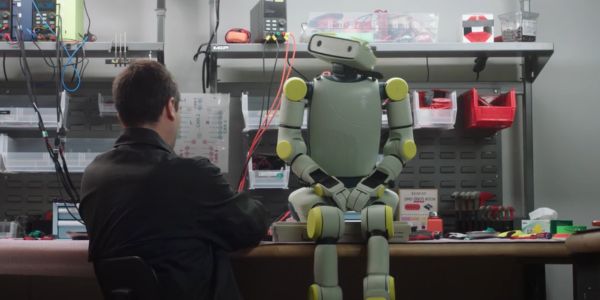
Amazon’s acquisition of Fauna Robotics brings the Sprout humanoid development platform into its Personal Robotics Group, highlighting a safety-first, developer-led
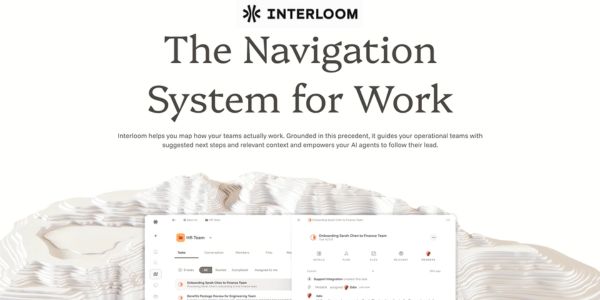
Interloom has raised $16.5M to build an enterprise memory layer that captures expert decisions and gives AI agents the context
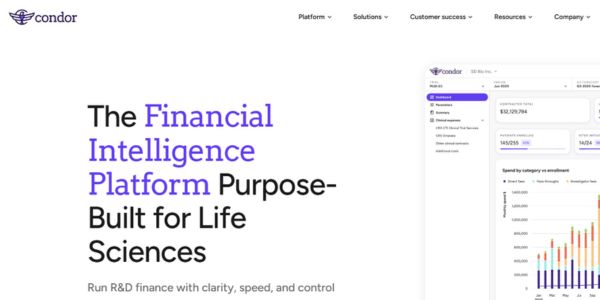
Condor Software has raised $24M to expand an AI-powered financial intelligence platform for life sciences, connecting clinical, operational and financial
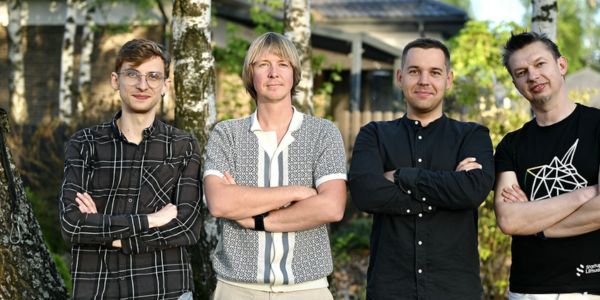
WhiteBridge AI has raised a $3M seed round to advance its AI-powered people search and research engine. The platform turns
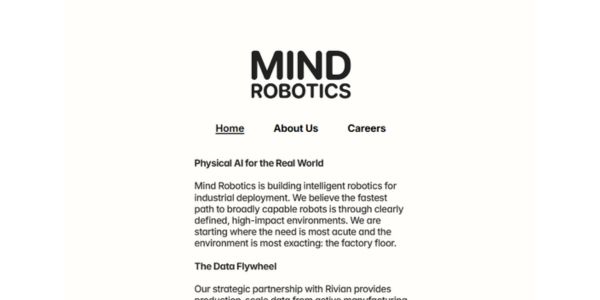
Mind Robotics has raised a $500 million Series A to build an AI-driven industrial automation platform trained on Rivian’s production

Legora has raised a $550M Series D at a $5.55B valuation to expand its collaborative AI platform for lawyers across
futureTEKnow is focused on identifying and promoting creators, disruptors and innovators, and serving as a vital resource for those interested in the latest advancements in technology.
© 2026 All Rights Reserved.