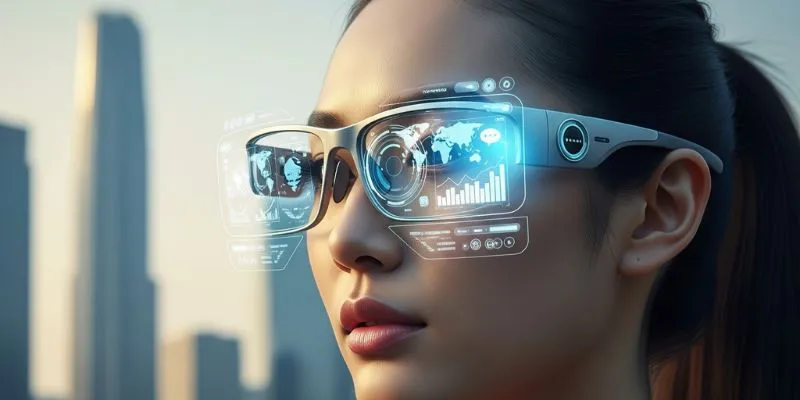
Alibaba’s unveiling of the Quark AI Glasses at the World Artificial Intelligence Conference (WAIC) in Shanghai signals a pivotal shift in the smart glasses arena. For the first time, the Chinese tech titan is stepping directly into a market long dominated by players like Meta and Xiaomi. These glasses, powered by Alibaba’s Qwen large language model and the intuitive Quark AI assistant, are set to debut in China by the end of 2025, making them one of the most anticipated tech launches this year.
What Sets Quark AI Glasses Apart?
What makes these glasses a standout in a crowded market is their seamless integration with Alibaba’s digital ecosystem. Equipped with the Snapdragon AR1 chip and a dual-operating system setup, these glasses are engineered for performance and all-day practicality. The design is strikingly lightweight and slim—reportedly, the arms are 40% thinner than most industry counterparts, blending comfort and style without compromise.
Key features include:
Real-time translation for international travel and business.
Hands-free calling and music streaming.
Live transcription of meetings.
Built-in camera for first-person capture.
Alipay payments and price comparison on Taobao.
Navigation via Amap, with voice-command access to Alibaba’s entire suite of services.
Market Positioning: More Than Just a Gadget
Alibaba isn’t just releasing a new gadget—it is throwing down the gauntlet. Unlike Meta’s Ray-Ban collaboration, which leans into entertainment and social media, Quark AI Glasses are crafted for professionals, travelers, and tech enthusiasts who want enhanced daily productivity. Business users, in particular, will appreciate features like real-time meeting transcriptions and instant translation—addressing common challenges in today’s fast-paced digital economy.
By leveraging its ecosystem synergy, Alibaba ensures users can scan QR codes to make payments, compare prices instantly, or get directions, all while barely lifting a finger. This level of integration isn’t just convenient—it’s transformative for users accustomed to living inside Alibaba’s commerce and services universe.
The Competitive Landscape: Chinese Titans Face Off
Alibaba’s launch heats up an already volatile sector. Domestic competitors like Xiaomi and Xreal, as well as international giants like Meta, are vying for leadership in this next computing frontier. Recent market data shows AI smart glasses are on an explosive growth trajectory, with global sales expected to reach 5.5 million units by year-end 2025—a 216% year-over-year surge. The Chinese market, in particular, stands out for its rapid adoption and strong emphasis on enterprise applications.
The $53 Billion Bet on AI
Beneath the hardware, Alibaba’s broader strategy is even more ambitious. Backed by a $53 billion AI infrastructure investment, the company aims to not only compete—but lead—by aligning its cloud, ecosystem, and AI hardware for dominance in both local and global markets. Early financial signals are promising: Alibaba’s stock is up over 40% this year, buoyed by investor confidence in its multi-year AI roadmap and the anticipated impact of the Quark AI Glasses.
A Strategic Leap into Wearable Intelligence
The unveiling of the Quark AI Glasses marks Alibaba’s boldest hardware play yet. With practical features, deep integration into daily routines, and an ambitious investment in AI, Alibaba is positioning itself to become the vanguard of smart eyewear adoption—not just in China, but worldwide. If it can deliver on its promises, the Quark AI Glasses will do more than challenge the current leaders—they just might redefine how we experience technology throughout our day.