


futureTEKnow
Editorial Team







AI-Enabled Process Engineering & Continuous Improvement: Designing Systems That Learn
Explore how AI transforms process engineering and continuous improvement into self-learning systems. This article explains how organizations can design operations

Ouster Acquires StereoLabs: Unified Physical AI Sensing Platform Launches
Ouster’s $35M StereoLabs acquisition fuses lidar and ZED cameras into end-to-end Physical AI sensing. Founders Cecile Schmollgruber and team drive

Bretton AI Lands $75M Series B Funding to Scale AI Agents for Financial Crime and AML/KYC Compliance
Bretton AI’s $75M Series B modernizes AML KYC compliance via AI agents, slashing staffing costs for banks and fintechs like
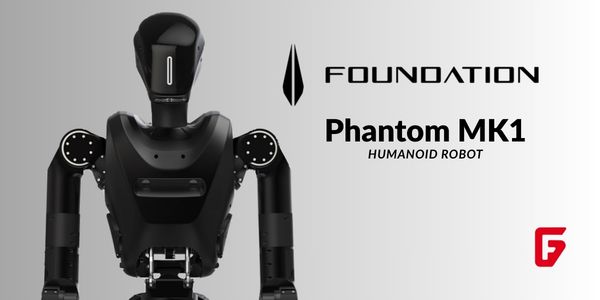
Foundation Humanoid Robot: Phantom MK1 Overview, Military Plans, and Factory Deployments
Foundation’s Phantom MK1 humanoid robot hits factories and eyes military use. Check specs, pilots, and bold 50k goal by 2027.

Morpheus Space Raises $15M for GO-2 Electric Propulsion Mass Production
Morpheus Space secures $15M funding for GO-2 electric propulsion mass production. Learn how this boosts satellite mobility with efficient thrusters.

Designing Warehouse Automation Through Operating Strategy
Discover how leading companies design warehouse automation through integrated operating strategies. Learn how AI, robotics, and adaptability drive efficiency and
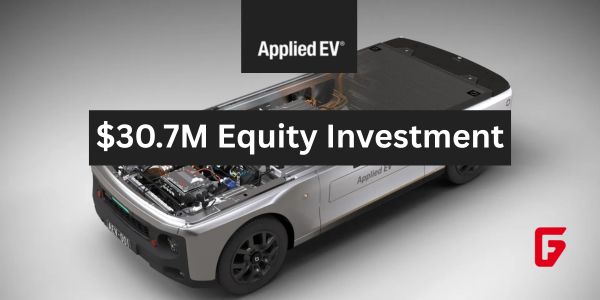
Applied EV secures $30.7M to scale Blanc Robot autonomous delivery EVs for logistics, mining and last‑mile freight
Discover how Applied EV’s $30.7M NRF investment boosts Blanc Robot EVs for tough jobs in mining and logistics. Founders reveal

Why Digital Twins Are Becoming Essential in Automated Distribution Centers
As distribution centers scale automation, the real advantage shifts from machinery to decision confidence. This article explains how digital twins
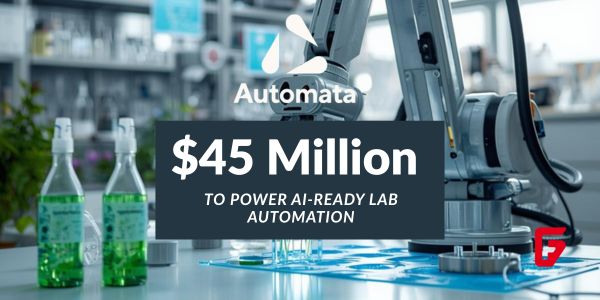
Automata Raises $45M to Power AI‑Ready Lab Automation with Danaher Backing
Automata has closed a $45M Series C round, led by Dimension with Danaher Ventures joining as a strategic investor, to

AI Didn’t Fail; Your Data Warehouse Did
After decades in IT project management and business analysis, one truth has stayed constant: when AI projects fail, it’s rarely

Surgerii Robotics Secures $100M Series D Funding Round
Beijing’s Surgerii Robotics lands $100M Series D for SHURUI single-port robot growth. Funding fuels global push in minimally invasive surgery—details
Generative Bionics: The Italian Humanoid Robotics Spin-Out Bringing Physical AI to the Factory Floor
Generative Bionics, an Italian spin-out from IIT, is building Physical AI–powered humanoid robots to tackle labor gaps and modernize industrial