


































Starbase, Texas, USA
2002
Aerospace, Space Launch Services, Reusable Launch Vehicles, Rocket Propulsion, Satellite Communications, Spacecraft Manufacturing, Human Spaceflight, Space Transportation, Space Exploration, Defense & Security
SpaceX, formally Space Exploration Technologies Corp., is an aerospace company developing rockets, spacecraft, satellite systems, and space transportation technologies. Its operations include reusable orbital launch vehicles, human spaceflight, satellite deployment, and space-based communications. The company develops the Falcon rocket family, Dragon spacecraft, Starship transportation system, and Starlink satellite network. SpaceX operates within the commercial space industry, combining aerospace engineering, propulsion systems, autonomous flight controls, and satellite communications infrastructure to support missions in Earth orbit and the development of transportation capabilities for destinations beyond Earth.
SpaceX designs, manufactures, launches, and operates rockets and spacecraft for commercial organizations, government agencies, and scientific missions. Its Falcon 9 and Falcon Heavy rockets transport satellites, research payloads, and other spacecraft into orbit. The company’s reusable rocket technology allows Falcon boosters to return after launch and fly on subsequent missions, reducing the need to manufacture a new first stage for every flight.
SpaceX also operates Dragon spacecraft for astronaut transportation and cargo missions, including flights supporting the International Space Station. Through Starlink, the company provides satellite-based internet connectivity using a constellation of satellites in low Earth orbit. Its Starship development program focuses on a fully reusable transportation system designed for larger payloads, orbital operations, and future lunar and interplanetary missions.
SpaceX develops aerospace technologies centered on rocket propulsion, reusable launch systems, spacecraft engineering, autonomous flight control, and satellite communications. Its Falcon rockets use liquid oxygen and rocket-grade kerosene propulsion, with Merlin engines powering Falcon 9 and Falcon Heavy. The rockets incorporate autonomous guidance, navigation, and control systems that manage ascent, orbital insertion, and booster recovery.
A central component of SpaceX technology is propulsive rocket landing and reuse. Falcon boosters perform controlled atmospheric reentry and landing maneuvers using engine burns, aerodynamic grid fins, and onboard flight computers. This enables recovered first stages to undergo inspection, refurbishment, and subsequent flights.
The Dragon spacecraft integrates life-support equipment, autonomous docking capabilities, thermal protection, and reentry systems for transporting astronauts and cargo. SpaceX also develops the Starship system, which uses methane-fueled Raptor engines and stainless-steel structures. Starship is being developed for full reusability, including controlled recovery of its Super Heavy booster and upper-stage spacecraft.
For satellite communications, SpaceX operates the Starlink low Earth orbit satellite constellation. The network combines satellites, ground infrastructure, phased-array antennas, and optical inter-satellite links to deliver broadband connectivity. These technologies connect SpaceX’s launch capabilities with its satellite communications operations.
SpaceX is relevant to the development of commercial space infrastructure because it has demonstrated the operational use of reusable orbital-class rocket boosters across repeated launches. This approach changes how launch vehicles can be manufactured, maintained, and operated, supporting more frequent access to orbit.
The company also connects space transportation with satellite communications through Starlink, creating a relationship between launch services and orbital network deployment. Its Dragon spacecraft provides an operational commercial system for transporting astronauts to and from orbit.
SpaceX’s ongoing Starship development program is also significant for research into larger reusable launch vehicles, lunar transportation, and future deep-space missions. These activities make the company relevant to emerging technologies involving propulsion, spacecraft autonomy, satellite infrastructure, and space transportation.
Falcon 9 is a two-stage orbital rocket designed to transport satellites, spacecraft, and other payloads into orbit. Its reusable first-stage booster can return to designated landing zones or autonomous drone ships for recovery and subsequent missions.
Falcon Heavy is a heavy-lift launch vehicle built around three Falcon-derived first-stage cores. It provides high-payload-capacity launch services for large commercial, government, and scientific spacecraft, including missions requiring substantial orbital energy.
Dragon is a spacecraft designed to transport astronauts and cargo to orbital destinations. It supports human spaceflight and space station resupply, incorporating autonomous docking, environmental control, and atmospheric reentry capabilities.
Starship is a launch and spacecraft system under development consisting of the Super Heavy booster and Starship upper stage. Powered by Raptor engines, the system is designed for fully reusable space transportation, large payload delivery, and future missions to the Moon and Mars.
Starlink is a satellite communications network providing broadband internet through spacecraft operating in low Earth orbit. The system uses satellite-based broadband connectivity, ground terminals, and inter-satellite communications to serve residential, commercial, maritime, aviation, and other users.
SpaceX technology supports commercial satellite deployment, government space missions, astronaut transportation, scientific research, and global telecommunications. Its Falcon rockets launch communications satellites, Earth observation spacecraft, research instruments, and national security payloads into orbit.
The Dragon spacecraft supports human spaceflight and orbital cargo transportation, including missions involving the International Space Station. Starlink provides internet connectivity for residential users, businesses, aircraft, ships, and locations where terrestrial communications infrastructure is limited.
SpaceX is also developing Starship for large-scale space transportation, including future lunar missions, orbital cargo delivery, and deep-space exploration. These applications span aerospace, telecommunications, scientific research, defense, and emerging commercial space infrastructure.
Falcon 9 boosters use controlled engine burns, aerodynamic grid fins, and onboard navigation systems to return after separating from the upper stage. Depending on the mission, the booster lands on a ground-based landing pad or an autonomous drone ship at sea.
Falcon 9 is an operational two-stage rocket with a reusable first stage and an expendable upper stage. Starship is a larger transportation system under development, designed to make both the Super Heavy booster and Starship upper stage reusable while supporting heavier payloads and missions beyond Earth orbit.
Starship uses Raptor rocket engines powered by liquid methane and liquid oxygen. These engines use a full-flow staged-combustion cycle designed to support high-performance propulsion and repeated operation in a reusable launch system.
Starlink uses satellites in low Earth orbit to communicate with customer terminals on the ground. Its network combines satellite communications, ground gateways, and optical inter-satellite links to route data between users and internet infrastructure, reducing dependence on local fiber or cellular networks.
NASA selected SpaceX to develop a lunar version of Starship as a Human Landing System for Artemis missions. The spacecraft is intended to transport astronauts between lunar orbit and the Moon’s surface. The lunar landing system remains part of SpaceX’s ongoing development and testing activities.
Have an update, correction, or additional information about this company? Help us keep the futureTEKnow company database up to date by submitting the latest company information.

Turion Space has raised more than $75 million in Series B funding to scale its Starfire platform and satellite fleet, betting that space domain awareness is the next critical defense infrastructure layer. The piece unpacks Turion’s business model, contracts, and risks for operators and investors watching the new space intelligence stack.

Pulsar Fusion’s Sunbird fusion rocket has achieved first plasma, validating its exhaust architecture and edging a reusable “space tug” concept toward sub‑six‑month Mars transfers. Drawing on multiple reports, this piece breaks down how the Dual Direct Fusion Drive works, what the 2027 in‑orbit demo must prove, and which technical and regulatory hurdles still stand between Sunbird and operational deep‑space logistics.
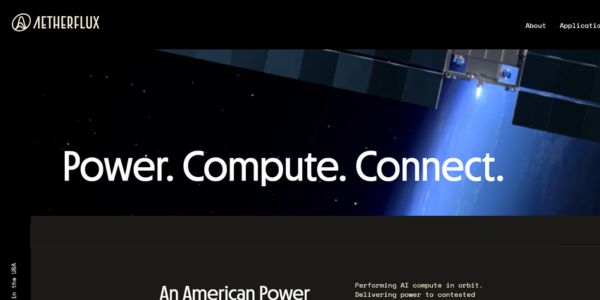
Aetherflux is betting that orbital data centers can power the next wave of AI, shifting from laser power beaming to space-based compute as it targets a $2 billion valuation. For founders and investors, the company’s 2027 satellite plans highlight how quickly space infrastructure is converging with AI demand and reshaping the deep-tech funding landscape.
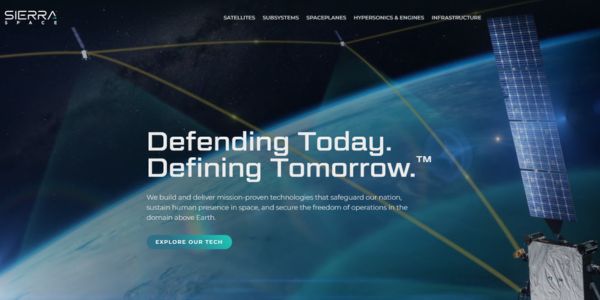
Sierra Space’s $550 million Series C round, valuing the company at $8 billion, signals a decisive shift toward defense-tech space. This feature unpacks the hardware, strategy, and risks shaping the next decade of orbital infrastructure.
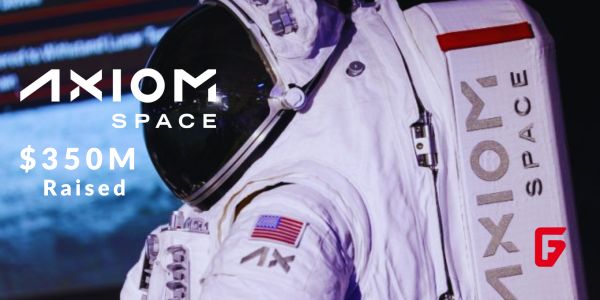
Axiom Space has locked in a fresh $350M raise to push its commercial space station and NASA lunar spacesuits toward launch, signaling growing investor faith in private orbital infrastructure.
Morpheus Space secures $15M funding for GO-2 electric propulsion mass production. Learn how this boosts satellite mobility with efficient thrusters.

Stoke Space extended its Series D funding to $860 million, fueling Nova’s full-reuse rocket production at Cape Canaveral. Backed by founders from Blue Origin, this pushes total capital to $1.34B.

Tomorrow.io has closed a $175 million equity round to deploy DeepSky, its AI-native weather satellite constellation designed to make global atmospheric data far more precise, frequent, and useful for businesses, governments, and communities facing extreme weather.

Stay ahead of AI and space tech wars: OpenAI vs Google AI, SpaceX and Blue Origin’s race for orbital data centers, Meta’s AI strategy shift, and key robotics breakthroughs reshaping industry.

Bridgit Mendler’s Northwood Space is pioneering mass-produced ground stations, enabling scalable, high-speed connectivity for the new era of satellite networks and megaconstellations.
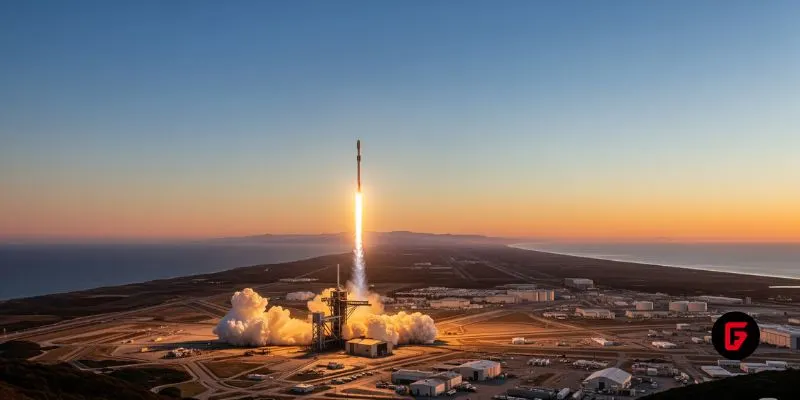
SpaceX aims to nearly double launches from Vandenberg in 2025, facing support from federal agencies but strong objections from the state and local communities.
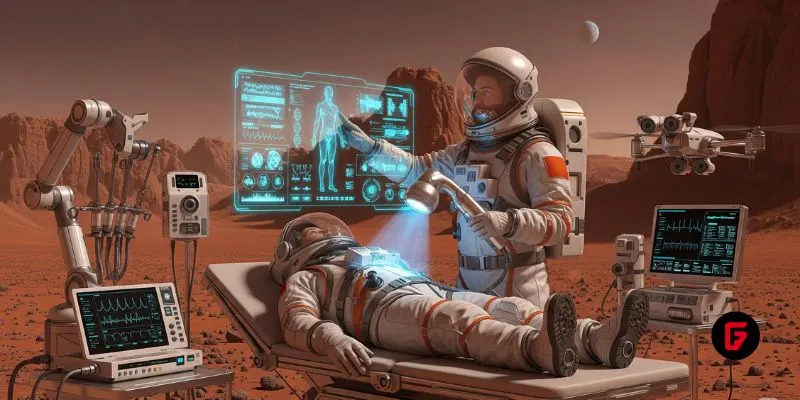
NASA and Google’s AI-powered Crew Medical Officer Digital Assistant enables autonomous diagnoses for astronauts on Mars missions, redefining remote healthcare for space and Earth.
futureTEKnow is focused on identifying and promoting creators, disruptors and innovators, and serving as a vital resource for those interested in the latest advancements in technology.
© 2026 All Rights Reserved.