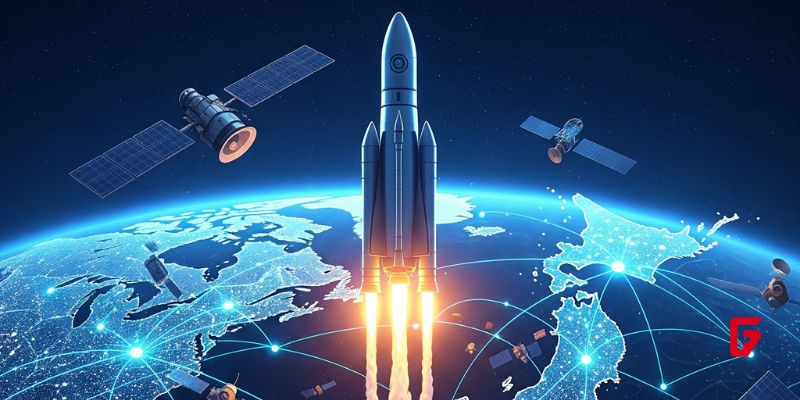
The venture capital landscape just got a major shakeup with Geodesic Capital’s announcement of a new $250 million fund laser-focused on the US-Japan alliance and the next wave of space and deep tech startups. For founders and tech-watchers alike, this move signals more than just fresh capital—it’s a strategic push to fuse innovation, security, and economic resilience across two of the world’s most dynamic tech ecosystems.
Why This Fund Matters
Geodesic Capital’s new Geodesic Alliance Fund isn’t your typical VC play. The fund is designed to back early-stage US startups working in national security sectors—think artificial intelligence, space, cybersecurity, autonomy, and dual-use deep tech. What sets it apart is its cross-border mission: not just seeding companies, but actively helping them scale into Japan, with all the regulatory, talent, and partnership support that entails.
For context, Geodesic has already built a track record since 2015, raising nearly $1 billion across multiple funds and supporting high-growth names like Databricks and Scale AI. The new fund doubles down on this model, but with a sharper focus on sectors where US-Japan collaboration can move the needle on both commercial and strategic fronts.
The US-Japan Tech Alliance: More Than Just Money
This isn’t happening in a vacuum. The US and Japan have been ramping up their technology and innovation partnership, especially around AI, quantum, and space. Recent government-level collaborations have aimed to build shared standards, research initiatives, and even cross-border startup ecosystems. The Geodesic Alliance Fund is a private sector extension of this trend, bringing major Japanese corporations and government institutions on board as limited partners.
“The Geodesic Alliance Fund is a new model for cross-border venture—where commercial success and strategic alignment go hand-in-hand,” said John Roos, Geodesic founding partner and former US ambassador to Japan.
What Startups Get (Beyond the Check)
Strategic Guidance: Navigating the maze of regulations, especially in sectors like space and AI, is no small feat. Geodesic’s team brings deep expertise and connections on both sides of the Pacific.
Market Access: Portfolio companies get introductions to customers, partners, and talent in Japan—a notoriously tough market to crack without the right support.
Dual-Use Focus: The fund’s emphasis on dual-use technologies (commercial and defense applications) is timely, as the line between the two continues to blur in space and AI.
Who’s Steering the Ship?
The fund will be led by Tom Gillespie (ex-In-Q-Tel) and Rayfe Gaspar-Asaoka (formerly of Canaan Partners), both seasoned in deep tech and venture investing. Their leadership signals a strong intent to bridge the worlds of commercial innovation and national security.
Why Now?
The timing is no accident. Venture investment in space and deep tech has rebounded after a brief lull, with 2024 seeing nearly $10 billion invested in space startups alone. Falling launch costs, increased defense interest, and the maturing of dual-use applications are driving a new wave of opportunity. The Geodesic Alliance Fund is poised to capitalize on this momentum, with an eye on both financial returns and strategic impact.
For US startups in AI, space, and security, Geodesic Capital’s new fund is more than just another VC check—it’s a launchpad into Japan and a vote of confidence in the power of cross-border innovation. As the US and Japan double down on their tech alliance, expect to see more funds and founders following this playbook, turning geopolitical partnership into real-world breakthroughs.