
Startups & Business News
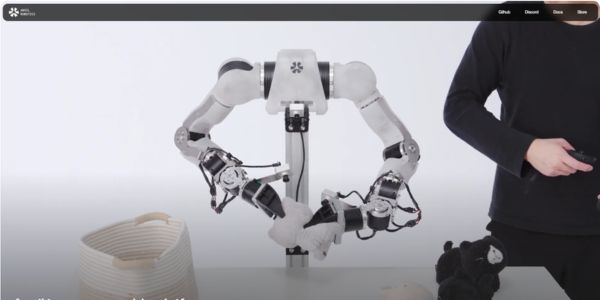
When robotics founders talk about “physical AI,” the conversation often stalls at the same point: too many teams are still rebuilding the same low-level stack before they can ship anything useful. That redundancy slows down progress on humanoids, warehouse systems, and mobile manipulators just as capital and customer expectations are shifting toward production deployments, not lab demos.
Anvil Robotics is positioning itself squarely in that infrastructure gap with a modular hardware–software stack aimed at physical AI teams that want to assemble, iterate, and deploy systems without reinventing controllers, teleop rigs, and data pipelines. The company has raised 6.5 million dollars in funding to take this composable modules platform from devkits into a more complete product line.
Funding to build a composable physical AI stack
Anvil’s latest round totals 6.5 million dollars, led by Matter Venture Partners and Humba Ventures, with participation from Supercharge.vc, Spacecadet, and Position Ventures. The raise gives the young company capital to productize what it describes as an “out-of-the-box” platform for physical AI development.
The pitch is straightforward: instead of each startup stitching together cobot arms, controllers, grippers, teleoperation systems, and data infrastructure from scratch, Anvil wants teams to plug into a pre-integrated stack. That stack combines open, builder-friendly hardware with modular software components that can be configured to support very different robot form factors and workloads.
For investors, the thesis mirrors what cloud-native platforms did for software: abstract away common, non-differentiating infrastructure to let small teams move like much larger organizations. For founders and operators, the question now is whether Anvil can make that abstraction practical at the level of torque, latency, and uptime that real-world deployments require.
What Anvil is actually building
Anvil describes its offering as a composable modules platform spanning hardware, software, and data tools. On the hardware side, the company emphasizes open designs without tightly controlled vendor lock-in, giving builders more flexibility to mix and match actuators, sensors, and end effectors.
On the software side, Anvil is developing:
Robot controllers that can be dropped into new platforms with minimal customization.
Teleoperation tools that allow remote supervision and intervention across heterogeneous robots.
Data collection and pipeline components to capture, label, and route interaction data for training and evaluation.
Founder and CEO Mike Xia has framed the goal as giving “every physical AI team access to the same state-of-the-art stack” that previously required a large, experienced engineering group to assemble. He argues that the kind of robotics setup that once demanded serious headcount and capital should now be within reach of a grad student with lab funding.
That ambition lines up with a broader shift toward modularity across industrial automation and mobile robotics, where integrators increasingly want interoperable components rather than closed, monolithic systems. If Anvil can keep interfaces stable while iterating underneath, it could become a default choice for teams that care more about application logic than low-level plumbing.
Deployment realities for robotics builders
In practice, most physical AI teams today spend a disproportionate amount of time building and maintaining basic infrastructure layers that don’t differentiate their product in the market. These include motion control, safety interlocks, teleop bridges, data logging, and replay systems needed for training and regression testing.
Anvil’s value proposition is to offload that work so founders can focus on:
Task-specific behaviors and workflows for target industries.
Integration with customer systems such as WMS, MES, or farm management platforms.
Reliability, safety, and service models that translate prototypes into contract-worthy deployments.
For integrators, a composable modules platform could shorten project timelines if it provides predictable interfaces across different robot bodies and environments. A standardized controller and data stack can also simplify support, because issues can be diagnosed against a known reference architecture instead of a one-off integration.
However, success will hinge on how well Anvil handles edge cases: mixed-vendor fleets, harsh environments, and legacy equipment that does not neatly fit into a clean modular model. Integrators will expect clear documentation, field-hardened diagnostics, and alignment with existing safety and communication standards, not just developer-friendly APIs.
Where humanoids and NVIDIA fit into the ecosystem
The rise of general-purpose humanoid platforms and NVIDIA’s growing influence in robotics compute is reshaping expectations for what a physical AI stack should look like. NVIDIA has been working with robotics companies to provide accelerated computing, simulation, and edge AI capabilities that support sim-first development and large-scale training. These efforts aim to tackle challenges like running massive simulations, training advanced policies, and deploying high-performance edge compute for robots operating around people.
Humanoid developers are using this stack to prototype systems in simulation before moving to hardware, with NVIDIA’s tools handling rendering, physics, and learning loops. As humanoids progress toward alpha prototypes and early field trials, the need for robust controllers, teleop systems, and telemetry pipelines will only increase.
A modular platform like Anvil’s could sit alongside NVIDIA’s simulation and compute ecosystem, bridging from policy and perception down into actuators, safety layers, and operator tools. That combination—standardized infrastructure plus high-performance AI—could accelerate time-to-deployment for teams working on humanoids, mobile manipulators, and other high-DOF systems.
Implications for vendors, integrators, and end users
For robotics vendors, Anvil’s approach offers a way to de-risk early platform decisions by adopting a common stack instead of building every subsystem in-house. This could be especially attractive to teams in logistics, manufacturing, and agriculture that want to test new robot form factors without committing to a proprietary infrastructure backbone.
Systems integrators may view Anvil as a lever to standardize their internal toolkit across multiple customers and robot platforms. If the modules prove reliable and configurable, integrators can spend more time on process engineering and less on rebuilding controllers and data plumbing for each project.
End users—operators in warehouses, plants, or fields—ultimately benefit if modular infrastructure lets vendors iterate faster while maintaining predictable behavior and support. A common stack also makes it easier to benchmark performance across different robots, because they share similar telemetry and control abstractions.
The flip side is that a widely adopted platform becomes part of the critical path when something breaks, so Anvil will have to prove its reliability and responsiveness as more deployments depend on its stack. Governance, update policies, and long-term support commitments will matter as much as clever module design.
What comes next for Anvil and physical AI infrastructure
The 6.5 million dollar round gives Anvil a runway to refine its composable platform, expand its module catalog, and deepen integrations with upstream and downstream partners. Expect the company to target early adopters among fast-moving research labs and venture-backed robotics teams that need to ship pilots in months, not years.
For founders, the key questions to ask as this ecosystem matures include:
Which parts of the stack are truly non-differentiating and safe to outsource?
How well do modular platforms integrate with existing simulation and AI toolchains, including NVIDIA-based workflows?
What is the long-term cost and lock-in profile compared with building in-house?
Physical AI is moving from prototype demos into live environments that demand uptime, safety, and clear ROI. Platforms like Anvil’s—and the broader NVIDIA-centered robotics ecosystem—will play a significant role in determining which teams can make that transition efficiently and which are left maintaining brittle, one-off stacks.

David Lin is a Staff Writer at futureTEKnow, focusing on robotics software stacks, integration, and the systems that keep fleets running reliably.
Discover the companies and startups shaping tomorrow — explore the future of technology today.
Most Popular
Trending Companies
Latest Articles
futureTEKnow is focused on identifying and promoting creators, disruptors and innovators, and serving as a vital resource for those interested in the latest advancements in technology.
© 2026 All Rights Reserved.