






















Startups & Business News
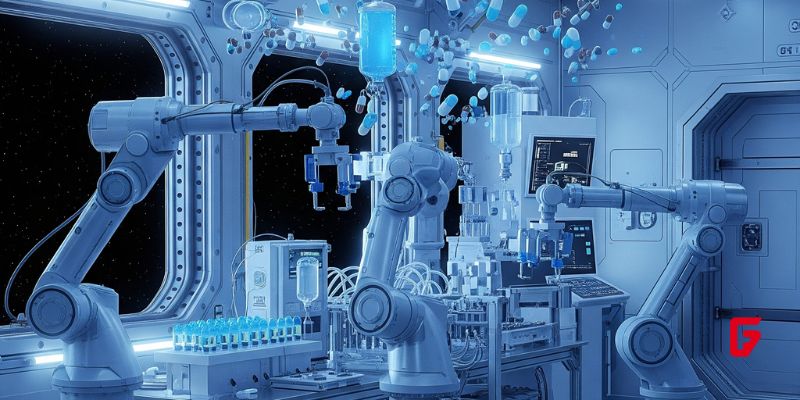
The landscape of space manufacturing is rapidly evolving, and few companies are pushing the boundaries quite like Varda Space Industries. In a recent interview, Varda’s CEO Will Bruey and co-founder Delian Asparouhov offered a rare glimpse into their ambitious plans following a major Series C funding round. Their mission? To revolutionize pharmaceutical manufacturing in low Earth orbit—and, in the process, reshape how we think about both medicine and aerospace technology.
“Microgravity allows us to create new drug formulations that otherwise would be impossible to create on Earth. That’s the whole purpose of Varda.” — Will Bruey
At the heart of Varda’s strategy is the unique environment of microgravity. On Earth, gravity limits the ways molecules can interact, often restricting the complexity or purity of pharmaceutical compounds. In orbit, however, microgravity enables the creation of medicines with properties and effectiveness that simply can’t be replicated on the ground. This opens the door to entirely new classes of drugs—a game-changer for biotech and healthcare.
With fresh capital, Varda is expanding its biologics lab to prepare and vet drug formulations before sending them to space. The company is moving away from relying on third-party launch providers and is now internalizing its manufacturing and launch cadence. This shift means:
More frequent launches: Varda plans to quadruple its flight rate next year, with ambitions to double that cadence annually.
Full control over the supply chain: Owning more of the process allows for greater flexibility and innovation in biopharmaceutical production.
Lower costs and higher reliability: Operating smaller, non-human-rated reentry vehicles keeps costs down and increases mission frequency.
One of the most technically demanding aspects of Varda’s operation is returning payloads from orbit. Their spacecraft reenters Earth’s atmosphere at Mach 25—about 25 times the speed of sound—creating a spectacular plasma trail as it streaks across the sky. This high-speed reentry is not just a spectacle; it’s a crucial phase for safely delivering space-manufactured pharmaceuticals back to Earth.
Varda’s technology isn’t just about medicine. The U.S. Department of Defense and other government agencies are keenly interested in the company’s capabilities. Varda’s reentry vehicles function as hypersonic wind tunnels, allowing the military to test new materials, sensors, and navigation systems under extreme conditions—faster and more affordably than traditional methods. This helps the U.S. keep pace with, and potentially surpass, near-peer competitors in hypersonic technology.
Unlike larger players such as SpaceX or Boeing, Varda’s vehicles are smaller, higher cadence, and not designed for human passengers. This makes them uniquely suited for frequent, cost-effective missions focused on manufacturing and research, rather than transporting astronauts. The main challenge ahead? Scaling up launch frequency to meet the growing demand from the pharmaceutical industry, which cares less about the journey and more about the quality and novelty of the drugs delivered.
Varda’s rise is made possible by advances in reusable rocket technology, notably SpaceX’s Falcon 9. The availability of regular, affordable launches has created a new infrastructure layer—much like the mobile app store did for Uber and Airbnb—enabling entirely new business models in space.
In the long term, pharmaceutical companies stand to gain the most from Varda’s innovations, integrating space-manufactured drugs into the global supply chain. Meanwhile, the defense sector benefits from rapid, real-world testing of next-generation aerospace technologies. With its fleet of small, high-frequency reentry vehicles, Varda is poised to serve both markets as a critical infrastructure provider for the new space economy.

Editorial Team
futureTEKnow is a leading source for Technology, Startups, and Business News, spotlighting the most innovative companies and breakthrough trends in emerging tech sectors like Artificial Intelligence (AI), Robotics, and the Space Industry.
Discover the companies and startups shaping tomorrow — explore the future of technology today.

Loop just raised a $95M Series C to expand its AI-native supply chain platform, turning messy logistics data into early

Linkedin X-twitter-square Facebook-square Startups & Business News AI agents are finally moving from demos to the day-to-day stack of real

Factory has raised a $150M Series C at a $1.5B valuation to scale its autonomous “Droids” platform, betting that enterprises

Solidroad has raised $25 million to bring AI-native quality assurance to every human and AI-powered customer interaction. The new funding

Turion Space has raised more than $75 million in Series B funding to scale its Starfire platform and satellite fleet,

Mintlify just raised a $45M Series B led by a16z and Salesforce Ventures to turn software documentation into core AI

nEye.ai has raised an $80 million Series C to scale optical circuit switching for AI data centers. This feature unpacks

Bluefish has raised a $43 million Series B to expand its agentic marketing platform, giving Fortune 500 brands new tools

Anvil Robotics is building a physical AI modular robotics platform that replaces fragmented, bespoke stacks with composable hardware, software, and

London-based Sona has raised a $45M Series B to turn its AI-native workforce platform into core infrastructure for frontline enterprises,

San Francisco-based Noon has raised $44M to build an AI-native product design platform that sits directly on live code, promising

Copenhagen-based Financial News Systems has raised €1.5M to build a fully AI-driven financial newsroom with no journalists in the loop.
futureTEKnow is focused on identifying and promoting creators, disruptors and innovators, and serving as a vital resource for those interested in the latest advancements in technology.
© 2026 All Rights Reserved.