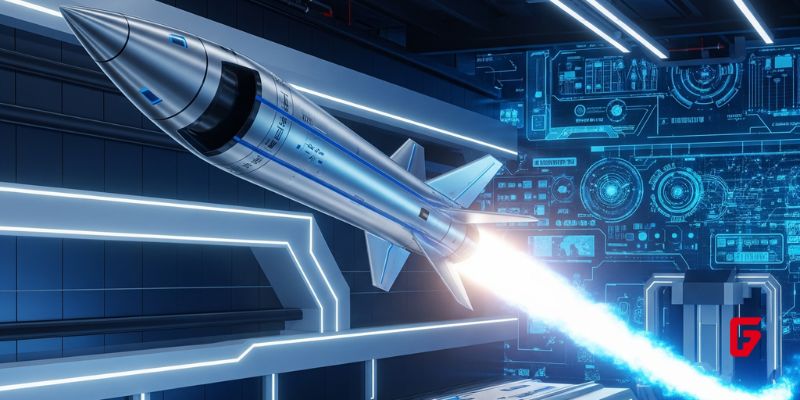
The world of defense technology just got a major jolt. Castelion, a California-based startup founded by former SpaceX engineers, has secured a massive $350 million Series B funding round. This investment, led by Lightspeed Venture Partners and Altimeter Capital, pushes Castelion’s valuation into the billions and signals a new era for hypersonic missile development.
From Stealth Mode to Industry Disruptor
Castelion only emerged from stealth in late 2023, but its trajectory has been nothing short of meteoric. The team, led by Bryon Hargis, Sean Pitt, and Andrew Kreitz, is on a mission to revolutionize the production of hypersonic missile systems. Their approach borrows heavily from the SpaceX playbook: rapid development cycles, frequent testing, and vertical integration to keep costs down and innovation up.
Why Hypersonics, Why Now?
Hypersonic weapons—capable of flying at speeds exceeding Mach 5—are at the center of a new global arms race. The U.S. is racing to catch up with China and Russia, both of whom have already demonstrated or even deployed hypersonic capabilities. The Pentagon’s demand is clear: affordable, scalable hypersonic solutions that can be deployed quickly and in volume.
Castelion’s answer? The Blackbeard Ground Launch (GL) system, designed to deliver about 80% of the performance of current long-range systems but at a much lower cost. This “good enough” approach could allow the U.S. Army to field more missiles, faster, and at a fraction of the price of legacy systems.
Breaking the Mold: Rapid Iteration and Cost Efficiency
Traditional defense contractors like Lockheed Martin and Raytheon are known for their long development timelines and high unit costs. Castelion is flipping that model by:
Using non-traditional supply chains.
Rapid hardware iteration based on real-world testing data.
In-house development of key components like solid rocket motors and custom avionics.
Proprietary thermal protection materials.
This strategy enables lower unit economics per missile and the ability to build up stockpiles quickly—critical in a world where the “cost-exchange dilemma” means every dollar saved on offense forces adversaries to spend much more on defense.
Backing from the Pentagon and Beyond
The U.S. Army has already earmarked $25 million in its 2026 budget for Castelion’s Blackbeard system, with a roadmap that includes a prototype demo in 2026 and the delivery of additional units in 2027. If all goes according to plan, full-scale deployment could begin as early as 2028.
The Bigger Picture: A Shifting Defense Landscape
With the global hypersonic missile market projected to grow from $8.5 billion in 2024 to $30 billion by 2034, Castelion’s timing couldn’t be better. The company’s focus on speed, affordability, and scalability positions it as a serious challenger to industry giants and a potential game-changer in how the U.S. and its allies approach next-generation deterrence.
For tech watchers, Castelion is more than just another defense startup. It’s a case study in how Silicon Valley-style innovation is reshaping even the most entrenched sectors. As geopolitical tensions rise and the demand for rapid, tactical strike capabilities grows, keep an eye on Castelion—they’re just getting started.