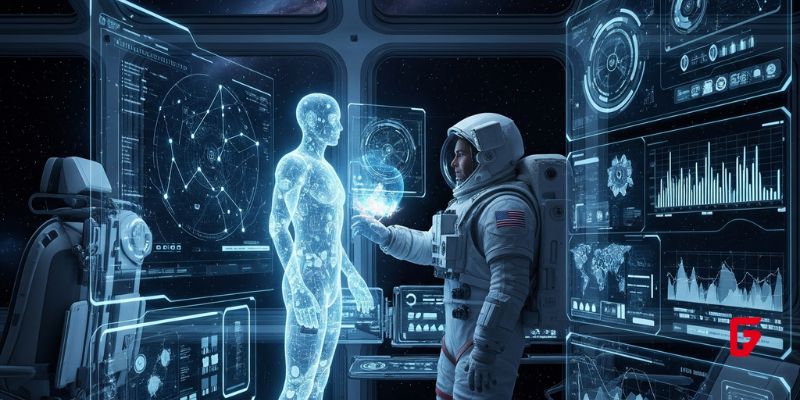
As humanity sets its sights on Mars and beyond, one challenge looms large: how do astronauts handle emergencies when Earth is out of reach? Communication blackouts during long-duration missions mean mission control can’t always step in. Enter Daphne-AT, a virtual assistant developed by Texas A&M University, designed to be the always-on problem-solver for astronauts venturing far from home.
What Is Daphne-AT?
Daphne-AT is not your average digital assistant. Think less “Siri, play my playlist,” and more “Daphne, why is the oxygen level dropping and what do I do about it?” The system continuously monitors real-time data from a spacecraft’s environmental and life support systems—tracking vital metrics like oxygen, carbon dioxide, and trace contaminants. When something drifts outside safe parameters, Daphne-AT immediately alerts the crew and provides clear, step-by-step guidance for troubleshooting.
How Does Daphne-AT Work?
Real-time anomaly detection: Daphne-AT uses a blend of logic-based and data-driven decision-making to spot anomalies as they happen.
Root cause analysis: The assistant hypothesizes what’s causing the issue by analyzing data streams from multiple onboard systems.
Actionable guidance: Instead of just flagging problems, Daphne-AT offers astronauts established operational procedures to resolve issues quickly and calmly—even under pressure.
Tested in Simulated Space—And Real-World Analogues
Initial lab tests put Daphne-AT in a virtual reality simulation modeled after NASA’s Human Exploration Research Analog (HERA) facility. The results were promising: participants using Daphne-AT resolved spacecraft anomalies faster and reported less mental workload, regardless of their aerospace experience.
However, when tested with seasoned NASA engineers and pilots in the actual HERA habitat, the time savings were less dramatic—likely because these professionals already excel at handling emergencies. Still, the assistant proved it could keep pace with highly trained crews and maintain situational awareness.
Why Does This Matter for Future Space Missions?
The farther we travel from Earth, the more we need autonomous solutions. Mars missions will face communication delays of up to 40 minutes round-trip—or total blackouts. In these scenarios, astronauts must act independently. Daphne-AT’s ability to diagnose problems and guide responses could be the difference between a minor hiccup and a mission-ending crisis.
Beyond Space: Broader Implications
The technology behind Daphne-AT isn’t limited to space. Its developers see potential applications for emergency responders, firefighters, and other high-stakes professions where rapid, informed decisions are critical. As AI becomes more deeply embedded in mission-critical operations, tools like Daphne-AT could redefine how we approach safety and autonomy—not just in orbit, but here on Earth.
Daphne-AT represents a major leap for astronaut autonomy, blending real-time data analysis with expert guidance. As we prepare for the next era of deep space exploration, AI copilots like Daphne-AT will be essential partners—ensuring that when Houston can’t hear you, you’re not alone.