By futureTEKnow | Editorial Team
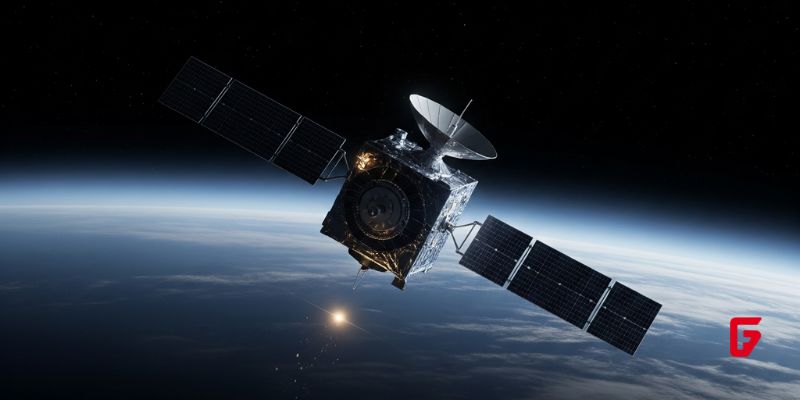
The world of satellite tech just hit a major speed bump. An $88 million methane-tracking satellite, funded in part by Jeff Bezos, has gone dark after losing contact in June. For those following the intersection of climate tech, space, and big-name backers, this is a story that blends high ambitions with the harsh realities of space.
This wasn’t just another satellite launch. The mission was designed to track methane emissions from space—a crucial tool in the fight against climate change. Methane is a potent greenhouse gas, and being able to pinpoint leaks from oil, gas, and agricultural operations is a game-changer for regulators and environmentalists alike.
The satellite, backed by Bezos, represented a new wave of private investment in environmental monitoring. The hope was that with better data, governments and companies could take faster, more targeted action to reduce emissions.
After a successful launch, the satellite operated normally for a short period before suddenly losing contact in June. Attempts to reestablish communication have so far failed, and the mission is now at risk of being written off as a loss. Details about the technical failure are still sparse, but this kind of silence is often the result of a critical systems malfunction—anything from a power failure to a software glitch.
Space is unforgiving. Even with the best engineering and deep pockets, satellites can and do fail. This incident is a reminder that the path to real-time, global environmental monitoring is still fraught with technical and operational challenges.
For the climate tech community, the loss stings. The satellite’s data would have filled gaps in our understanding of methane emissions, potentially influencing policy and industry practices worldwide. For investors and founders, it’s a case study in the risks inherent to space hardware—where a single point of failure can mean the end of a multi-million dollar project.
The team behind the satellite is still working to reestablish contact, but the odds are not in their favor. Meanwhile, the need for accurate, timely methane data hasn’t gone away. Expect to see renewed urgency—and perhaps even more investment—in backup plans and next-gen satellites.
If you’re building in the emerging tech space, this story is a reality check: innovation at the frontier is never easy, and even the most headline-grabbing projects can hit the void—literally. But setbacks like this also fuel the next wave of breakthroughs. The race to monitor our planet from above is far from over.

Founded in 2018, futureTEKnow is a global database dedicated to capturing the world’s most innovative companies utilizing emerging technologies across five key sectors: Artificial Intelligence (AI), immersive technologies (MR, AR, VR), blockchain, robotics, and the space industry. Initially launched as a social media platform to share technology news, futureTEKnow quickly evolved into a comprehensive resource hub, spotlighting the latest advancements and groundbreaking startups shaping the future of tech.

AWS frontier agents introduce a new era of autonomous AI coders that can build, secure, and run applications for days at a time, acting like virtual teammates across dev, security, and DevOps while engineers retain final control over production changes.

Explore the cutting-edge ways AI is enhancing Lean Six Sigma, from real-time process insights to predictive controls, ushering in a new era of operational excellence and efficiency.

Facing supply chain challenges in 2025? High-performing teams leverage AI for risk management, demand forecasting, supplier analytics, and end-to-end visibility to ensure business continuity and resilience.

Craft an AI-powered supply chain Center of Excellence that unifies control tower visibility, analytics, and inventory optimization into one strategic hub. Explore this blueprint to learn how a modern supply chain CoE drives resilience, smarter decisions, and operational excellence in the age of AI.

Supply chain leadership is being redefined by AI, intelligent automation, and agentic decision-making, demanding leaders who can engineer end-to-end intelligence rather than simply manage workflows. This article explores how next-generation supply chain leaders will combine data, algorithms, and human judgment to build resilient, adaptive, and high-performing global operations.

Bridgit Mendler’s Northwood Space is pioneering mass-produced ground stations, enabling scalable, high-speed connectivity for the new era of satellite networks and megaconstellations.

SpaceX aims to nearly double launches from Vandenberg in 2025, facing support from federal agencies but strong objections from the state and local communities.

Traditional Medicare will pilot AI-assisted prior authorization in 2026 across six states, focusing on high-risk outpatient services. Clinicians retain final say, but incentives and access concerns loom as CMS tests fraud reduction and “gold card” exemptions. Here’s what providers and patients should know.

OpenArt’s new “one-click story” compresses scripting, visuals, and edits into ready-to-post short videos—fueling viral growth and a fresh IP debate. We break down how it works, adoption signals, what’s next (multi-character, mobile), and practical guardrails creators and brands should follow to stay original and compliant.

OpenAI’s o3 swept the Kaggle AI chess tournament, defeating xAI’s Grok 4–0. The victory fueled the intense rivalry between Altman and Musk, reshaping AI benchmarks.

NASA and Google’s AI-powered Crew Medical Officer Digital Assistant enables autonomous diagnoses for astronauts on Mars missions, redefining remote healthcare for space and Earth.

Pinterest’s CEO confirms that fully agentic AI shopping is years away, as the platform invests in AI-powered tools to enhance discovery, inspiration, and personalized shopping experiences for millions.
To provide the best experiences, we use technologies like cookies to store and/or access device information. Consenting to these technologies will allow us to process data such as browsing behavior or unique IDs on this site. Thanks for visiting futureTEKnow.