
Startups & Business News
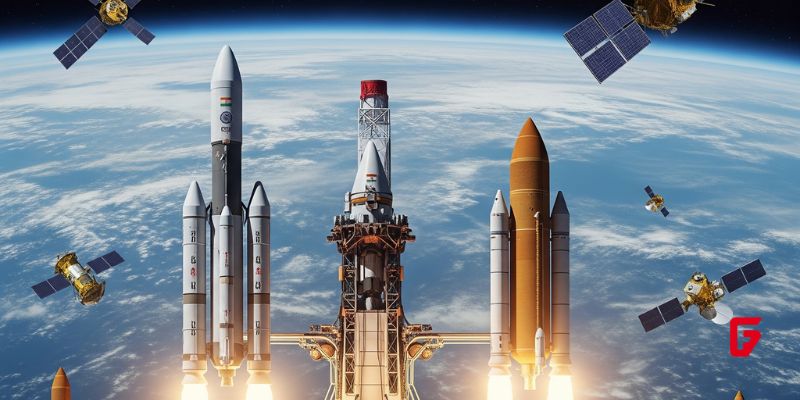
India is no longer just a participant in the space race—it’s fast becoming a major player in the global space industry. Recent milestones, like the successful Chandrayaan-3 lunar landing and the launch of its first solar observatory, have put India’s space ambitions in the global spotlight. But beyond the headlines, there’s a deeper story: India is building a robust commercial space ecosystem that’s set to challenge established players and attract global investment.
Why India’s Space Sector Is Booming
Several factors are fueling India’s rapid rise in space:
Cost-effective launches: India’s space agency, ISRO, has mastered the art of affordable missions, making it a go-to partner for countries and companies seeking reliable, budget-friendly launches.
Private sector surge: A wave of Indian space startups—from satellite makers to launch service providers—are scaling up, thanks to government reforms and easier access to capital.
Government backing: Recent policy changes have opened the door for private companies to operate ground stations, build satellites, and even launch their own rockets.
The result? India’s share of the global satellite launch market is growing, and its space startups are attracting international clients and investors.
The New Space Economy: Startups, Satellites, and Global Ambitions
India’s new space economy is powered by a mix of homegrown innovation and global collaboration. Key trends include:
Satellite manufacturing: Indian companies are now building advanced satellites for communication, navigation, and earth observation—serving both domestic and international markets.
Launch services: With its proven record, India is launching payloads for countries across Asia, Africa, and even Europe.
Space-tech startups: From data analytics to in-orbit servicing, startups are developing solutions that go beyond traditional satellite launches.
This ecosystem is supported by a growing pool of STEM talent, competitive costs, and a regulatory environment that encourages experimentation.
Why is India's rise in space technology significant for the international market
India’s rise in space technology is significant for the international market due to its unique combination of cost-effective innovation, reliable launch capabilities, and an increasingly open ecosystem for global collaboration.
Affordable Access to Space: India’s ability to deliver cost-effective satellite launches—especially through ISRO’s Polar Satellite Launch Vehicle (PSLV)—has made it a preferred partner for countries and companies seeking dependable, budget-friendly access to orbit. This affordability is crucial as the demand for small and nano-satellites grows globally, particularly for communication, navigation, and Earth observation.
Private Sector Innovation: Regulatory reforms and government incentives have spurred a surge of Indian space startups developing advanced technologies like hyperspectral imaging satellites, customizable launch vehicles, and 3D-printed rocket engines. These innovations are not only serving domestic needs but are also being exported, increasing India’s footprint in the global space supply chain.
Strategic Digital Infrastructure: India’s satellite communication services and Earth observation capabilities are helping bridge the digital divide, especially in underserved regions of Africa, Southeast Asia, and Latin America. This positions India as a provider of essential digital infrastructure for emerging economies, reducing reliance on traditional space powers.
International Partnerships: India has established collaborations with over 60 countries and multinational bodies, and is a signatory to global initiatives like the Artemis Accords. These partnerships foster technology transfer, joint missions, and shared use of space assets—broadening the international market’s access to Indian expertise and infrastructure.
Market Expansion and Strategic Opportunity: With the global space economy projected to exceed $1 trillion by 2035, India aims to capture a much larger share, leveraging its strengths in affordability, reliability, and innovation. The recent reduction in Russia’s participation due to sanctions gives India a strategic opening to fill critical gaps in the international market.
Broad Sector Impact: India’s space advancements benefit multiple industries worldwide, including telecommunications, agriculture, disaster management, and climate monitoring, by providing accessible and scalable satellite-based services.
The Road Ahead: Challenges and Opportunities
Despite its momentum, India faces hurdles:
Global competition: Established players like the US, China, and Europe are investing heavily in new tech.
Infrastructure gaps: Scaling up launch capacity and satellite manufacturing will require sustained investment.
Regulatory clarity: As the sector grows, clear rules on spectrum allocation, data privacy, and international collaboration will be essential.
Still, the trajectory is clear: India is poised to become a key player in the global space economy, with the potential to shape the next decade of space exploration and commercialization.
India’s journey from budget launches to global leadership is a case study in how emerging economies can leapfrog into high-tech industries—and how smart content creators can ride the wave of new search and answer paradigms.

futureTEKnow
Editorial Team
Discover the companies and startups shaping tomorrow — explore the future of technology today.
Most Popular



Trending Companies
Latest Articles
futureTEKnow is focused on identifying and promoting creators, disruptors and innovators, and serving as a vital resource for those interested in the latest advancements in technology.
© 2026 All Rights Reserved.