




























Isar Aerospace

Company Information

Isar Aerospace provides affordable and reliable access to space for small satellites, enabling earth observation, and telecommunications.

Headquarters

Ottobrunn, Bavaria, Germany

Year Founded

2018

Website

Sector

Industries

Aerospace, Satellite Communications, Earth Observation, Defense, Scientific Research, Space Transportation

What Is Isar Aerospace?

Isar Aerospace is a space technology company developing and operating launch vehicles for small and medium-sized satellites. The company specializes in orbital rocket technology and commercial satellite launch services, providing transportation for spacecraft and satellite constellations into Earth orbit. Its primary launch vehicle, Spectrum, is a two-stage rocket powered by liquid oxygen and propane. Isar Aerospace combines rocket propulsion, aerospace manufacturing, and launch operations to support commercial, institutional, and government organizations requiring access to space.

What Does Isar Aerospace Do?

Isar Aerospace designs, manufactures, tests, and launches orbital rockets used to transport satellites into space. Its primary vehicle, Spectrum, supports dedicated satellite launches, shared missions, and rideshare opportunities for customers requiring access to low Earth orbit and sun-synchronous orbit.

The company develops its own rocket engines, propulsion systems, lightweight structures, and flight control technologies. Its manufacturing activities include producing rocket components, integrating vehicle stages, testing propulsion systems, and preparing launch vehicles for flight.

Isar Aerospace operates launch infrastructure at Andøya Spaceport in Norway, where Spectrum completed its first test flight in March 2025 and successfully deployed customer payloads during its second flight in September 2026.

Customers use its satellite launch services to transport spacecraft for Earth observation, communications, scientific research, technology demonstrations, and orbital infrastructure missions.

Join Our Newsletter

* indicates required

Intuit Mailchimp

ADVERTISEMENT
eMerge Americas 2027 Conference
ADVERTISEMENT
Submit Your Company | futureTEKnow

Isar Aerospace Technology

Isar Aerospace develops orbital launch technology centered on its Spectrum rocket, a two-stage launch vehicle designed for small and medium-sized satellites. The rocket uses liquid oxygen and liquid propane propulsion, combining high-pressure turbopump-fed engines with lightweight spacecraft structures and integrated flight control systems.

Spectrum is powered by ten Aquila engines, with nine engines installed on the first stage and one vacuum-optimized engine on the second stage. The first-stage engines produce approximately 75 kilonewtons of thrust each, while the upper-stage engine produces approximately 95 kilonewtons. The second stage supports multiple engine ignitions, providing flexibility when placing payloads into designated orbits.

The company’s Aquila rocket engines are developed and manufactured internally, allowing Isar Aerospace to control propulsion design, production, testing, and integration. Its engineering also includes turbopump systems, propellant management, thrust vector control, and automated manufacturing processes.

Spectrum incorporates carbon composite structures to reduce vehicle mass while maintaining the strength required during launch. The rocket measures approximately 28 meters in length and 2 meters in diameter, with a designed payload capacity of 1,000 kilograms to low Earth orbit and 700 kilograms to sun-synchronous orbit.

Isar Aerospace combines these technologies with guidance, navigation, and control systems that manage rocket orientation, flight trajectories, stage separation, and orbital insertion. Its manufacturing approach emphasizes repeatable production and internal development of critical launch vehicle components.

Why Isar Aerospace Matters

The expansion of commercial satellite constellations has increased demand for launch vehicles capable of delivering spacecraft into specific orbits. Isar Aerospace addresses this requirement through dedicated and shared satellite launch services designed for smaller payloads.

In September 2026, the company’s Spectrum rocket successfully deployed customer satellites into orbit during its second flight, demonstrating an important step in the development of European commercial launch capabilities.

Isar Aerospace also contributes to the expansion of independent European access to space, providing an additional launch option for commercial satellite operators, research institutions, and government organizations. Its combination of in-house propulsion development, automated manufacturing, and dedicated launch infrastructure supports the growing demand for repeatable orbital transportation services.

Isar Aerospace Products & Platforms

Spectrum

Spectrum is Isar Aerospace’s two-stage orbital launch vehicle designed to transport small and medium-sized satellites into Earth orbit. The 28-meter rocket uses liquid oxygen and propane propulsion and can carry up to 1,000 kilograms to low Earth orbit or 700 kilograms to sun-synchronous orbit. Spectrum successfully deployed its first customer payloads into orbit in September 2026.

Aquila Rocket Engines

Aquila is Isar Aerospace’s family of liquid-propellant rocket engines developed for Spectrum. The first stage uses nine turbopump-fed engines producing approximately 75 kilonewtons of thrust each, while the second stage uses a vacuum-optimized engine producing approximately 95 kilonewtons. Both configurations operate with liquid oxygen and propane.

Dedicated Launch Services

Isar Aerospace provides dedicated launch missions that allow satellite operators to select launch schedules and orbital destinations according to their spacecraft requirements. These services support customers requiring greater control over launch timing and orbital insertion.

Lead and Rideshare Launch Services

The company offers shared satellite launch configurations, including lead missions and rideshare services. Lead customers can define mission destinations and launch timing while sharing capacity with other payloads. Rideshare customers use scheduled launches to predetermined orbits.

Isar Aerospace Applications

Isar Aerospace technology supports commercial, scientific, and government satellite missions requiring transportation into Earth orbit. Its Spectrum launch vehicle can deploy Earth observation and satellite communications spacecraft used for environmental monitoring, geospatial data collection, telecommunications, and other space-based services.

The company’s launch services also support satellite constellations and technology demonstrations, allowing organizations to deploy multiple spacecraft or test new equipment in orbit. Its September 2026 mission carried university CubeSats and a technology demonstration payload.

Additional applications include scientific research, national security missions, and orbital infrastructure deployment. Isar Aerospace’s launch configurations allow customers to select dedicated or shared transportation services based on mission requirements.

Latest Companies

ADVERTISEMENT
Track AI, Robotics & Space Startups

Frequently Asked Questions

What fuel does Isar Aerospace’s Spectrum rocket use?

Spectrum uses liquid oxygen as its oxidizer and liquid propane as its fuel. Its Aquila rocket engines use turbopump systems to deliver propellants into the combustion chambers.

Has Isar Aerospace successfully launched satellites into orbit?

Yes. On September 9, 2026, Isar Aerospace successfully deployed customer payloads into orbit during Spectrum’s second flight, called Onward and Upward. The mission carried five CubeSats and a technology demonstration payload from European organizations.

How much payload can Spectrum carry into space?

Spectrum is designed to carry up to 1,000 kilograms into low Earth orbit and 700 kilograms into sun-synchronous orbit. Its payload capacity supports small satellites, medium-sized spacecraft, and multi-satellite missions.

Where does Isar Aerospace launch its rockets?

Isar Aerospace operates a dedicated launch complex at Andøya Spaceport in northern Norway. The company has also announced plans for launch operations from Spaceport Nova Scotia in Canada.

What is the difference between Isar Aerospace’s dedicated, lead, and rideshare launches?

Dedicated launches give one customer control over the mission’s orbital destination and schedule. Lead launches allow a primary customer to determine those requirements while sharing capacity with other payloads. Rideshare missions transport multiple customers’ satellites to a predetermined orbit.

Related Companies

Rocket Factory Augsburg

HyImpulse

HyPrSpace

Do You Have an Update for This Company?

Have an update, correction, or additional information about this company? Help us keep the futureTEKnow company database up to date by submitting the latest company information.

Update Company Information

Latest Articles

Fusion rocket Sunbird ignites in a first plasma test, putting Pulsar Fusion’s high‑efficiency fusion rocket Sunbird closer to sub‑6‑month Mars missions.

Fusion rocket Sunbird ignites: Pulsar Fusion’s plasma breakthrough for faster deep-space travel

Pulsar Fusion’s Sunbird fusion rocket has achieved first plasma, validating its exhaust architecture and edging a reusable “space tug” concept toward sub‑six‑month Mars transfers. Drawing on multiple reports, this piece breaks down how the Dual Direct Fusion Drive works, what the 2027 in‑orbit demo must prove, and which technical and regulatory hurdles still stand between Sunbird and operational deep‑space logistics.
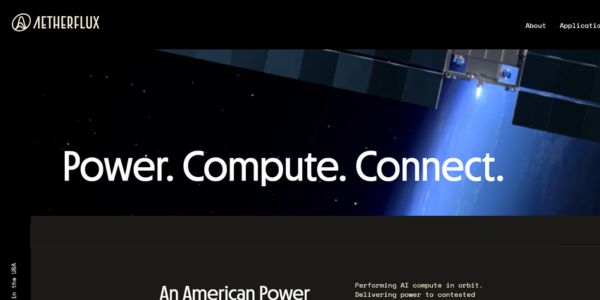
Aetherflux orbital data center plans target a $2B valuation as the startup pivots from laser power beaming to space-based AI compute.

Aetherflux’s $2B orbital bet: space data centers for the AI age

Aetherflux is betting that orbital data centers can power the next wave of AI, shifting from laser power beaming to space-based compute as it targets a $2 billion valuation. For founders and investors, the company’s 2027 satellite plans highlight how quickly space infrastructure is converging with AI demand and reshaping the deep-tech funding landscape.
futureTEKnow is focused on identifying and promoting creators, disruptors and innovators, and serving as a vital resource for those interested in the latest advancements in technology.

© 2026 All Rights Reserved.