
Startups & Business News
OpenArt’s ‘One-Click Story’ Is Turning Prompts Into Viral Videos—And Forcing a New Debate on IP and Creators
KEY POINTS
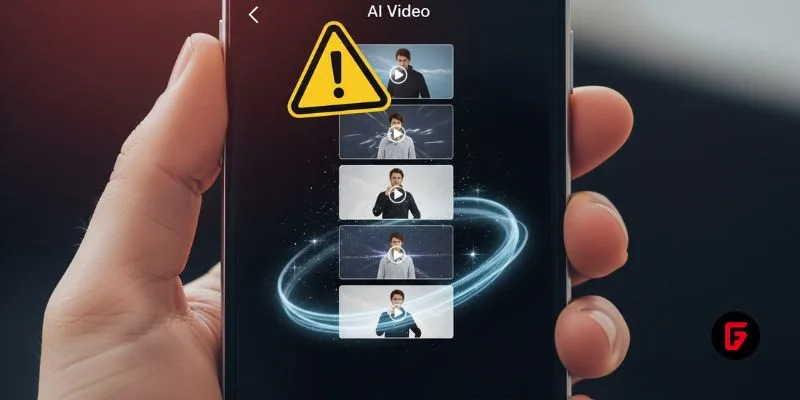
OpenArt’s new one-click story tool turns text, scripts, or songs into one-minute, ready-to-post videos with motion, music, and narrative.
Three templates—Character Vlog, Music Video, Explainer—streamline short-form production; scene-by-scene edits keep control in the creator’s hands.
Rapid adoption: millions of monthly users and a credit-based subscription model; expansion plans include multi-character interactions and mobile.
Legal risk looms as studios escalate IP lawsuits against AI generators; OpenArt says it filters known characters, though some slips still occur.
Why is this exploding now?
Lower friction, higher iterations: removing prompt-engineering gymnastics expands the creator base and speeds the “idea → publish” loop.
Format-native results: the templates map cleanly to how people already consume short video—narratives that resolve in under a minute.
Model liquidity: coordinating multiple leading models behind one interface gives users quality without model roulette.
What are the trade-offs?
Intellectual property risk: The same ease that enables fast storytelling can also tempt users to generate content with recognizable, protected characters. OpenArt says its filters try to block that, but edge cases slip through. Meanwhile, Hollywood is escalating: Disney and Universal have sued AI generators over outputs mimicking their IP—a sign that enforcement is shifting from rhetoric to courtrooms. If you publish, the liability may follow the user, not just the platform. Stay original.
Commoditization pressure: As one-click pipelines proliferate, differentiation shifts from technical capability to taste—concepts, characters, pacing, and voice. Tools converge; creators diverge.
What does this mean for startups, media teams, and solo creators?
Speed becomes strategy: When production cycles collapse from days to minutes, the moat is your editorial sensibility—your recurring characters, story “formats,” and a recognizable style that audiences can spot in two seconds.
“One-minute arcs” are the new minimum viable narrative: Opening hook, character intention, complication, resolution. Even explainer videos benefit when framed as micro-stories rather than info dumps.
Compliance is a workflow, not an afterthought: Build prompts and brand assets around original characters, distinct visual motifs, and licensed audio. Treat IP filters as a guardrail, not a permission slip.
What is OpenArt’s “one-click story,” and how does it actually work?
Input: a sentence, script, or song; optionally upload a character image.
Select a template: Character Vlog, Music Video, or Explainer.
Generate: the system composes multi-scene video with motion, sound, and a narrative spine.
Refine: use the storyboard to edit individual scenes—tweak prompts, pacing, or visuals—then export.
Signals of momentum—and what’s next
Adoption: OpenArt reports millions of monthly active users and a credit-based subscription lineup, a sign this isn’t just a demo—people are paying to publish.
Roadmap: Multi-character interactions and a mobile app are on deck, which could push the product from “creation tool” to a full mobile-first workflow. Expect better lip-sync, camera control, and character dialogue as the stack matures.
Market context: As lawsuits test the boundaries of training data and outputs, expect platforms to harden filters and offer clearer “safe lanes” for commercial use. The winners will balance frictionless creation with trustworthy compliance.
How to get the most out of tools like this—without stepping on a legal rake
Develop original IP: nameable characters, signature color palettes, repeatable worlds. Treat your shorts like a serialized universe.
Keep a prompt library: version your best-performing stories and iterate systematically rather than starting cold every time.
Document rights: track your inputs (text, images, audio), use licensed assets, and keep receipts. If you collaborate, contract clearly around ownership and usage.
Pilot in public, package later: use the speed to test premises quickly on Shorts/Reels; scale hits into multi-part series or long-form.

Jason Miller is a Staff Writer at futureTEKnow, focusing on AI infrastructure, MLOps, and the platforms that help teams run models reliably at scale.
Discover the companies and startups shaping tomorrow — explore the future of technology today.
Most Popular




Trending Companies
Latest Articles
futureTEKnow is focused on identifying and promoting creators, disruptors and innovators, and serving as a vital resource for those interested in the latest advancements in technology.
© 2026 All Rights Reserved.