
Startups & Business News
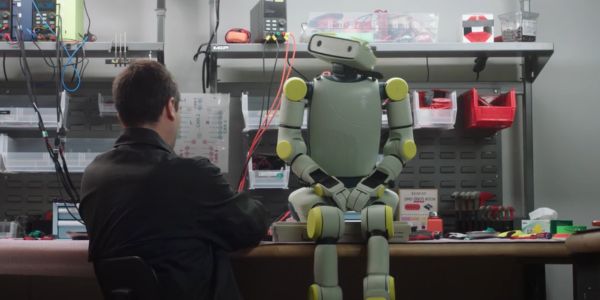
Amazon’s latest robotics deal is a bet that humanoids designed to be safe and approachable around people will matter as much as heavy-duty warehouse arms and mobile platforms. Less than a week after buying quadruped delivery startup RIVR, the company has agreed to acquire New York-based humanoid developer Fauna Robotics and its Sprout platform, folding the team into a new Personal Robotics Group.
Inside Amazon’s Fauna Robotics deal
Amazon confirmed that it is acquiring Fauna Robotics, a young humanoid startup based in New York City. Roughly 50 employees, including co-founders Rob Cochran and Josh Merel, will join Amazon as part of the transaction, which will see the company rebranded as “Fauna, an Amazon company.”
Financial terms were not disclosed, but the strategic intent is clear. Fauna’s small, developer-focused humanoid gives Amazon a ready-made platform and team to explore personal and social robotics beyond its existing logistics, fulfillment, and devices efforts.
An Amazon spokesperson said the company is enthusiastic about Fauna’s vision to build capable, safe, and enjoyable robots for a broad audience. The spokesperson framed the acquisition as a way to combine Amazon’s experience in robotics and consumer trust with Fauna’s embodied platform to “make our customers’ lives better and easier.”
What Sprout is – and isn’t
Fauna’s flagship product is Sprout, a compact humanoid robot aimed squarely at research and development, not at replacing household chores tomorrow. The system, released earlier this year, is marketed as a “modern platform for robotics development” with built-in movement, control, and social behaviors, but leaves application development to customers.
Fauna has positioned Sprout as a tool for researchers, developers, and early adopters exploring how humanoid form factors and embodied AI behave in everyday environments. Rather than a task-specific industrial machine, Sprout is designed to operate around people in homes, schools, labs, and offices where safety, interaction quality, and approachability matter as much as payload or speed.
When Fauna introduced Sprout, Cochran emphasized that the company wanted to give people the tools to build their own applications on top of the base platform. That developer-first philosophy aligns with how Amazon has historically built ecosystems around cloud, devices, and services, suggesting the company sees Sprout as an experimentation vehicle rather than a finished consumer product.
Safety-first design in a humanoid form factor
Humanoid robots built for factories or warehouses usually optimize for strength, reach, and uptime. Sprout, by contrast, has been designed to be small, lightweight, and soft to the touch, with minimized pinch points to reduce injury risk when operating near people.
Those design choices are still unusual in the humanoid category, where many platforms rely on rigid structures, exposed joints, and higher mass to achieve performance targets. For Amazon, which is under constant scrutiny around workplace safety and consumer trust, a humanoid designed from the start for human environments offers a different risk profile than industrial-grade systems.
The safety-centric approach also complements Amazon’s broader work in home and service devices. As the company explores where humanoid form factors might make sense in homes, stores, or customer-facing operations, proving that robots can operate safely and comfortably around people becomes a core technical and regulatory requirement.
Amazon’s mixed track record in home robotics
Amazon’s push into home robotics has been uneven so far. The company’s Astro robot, introduced in 2021 as a mobile security and remote care device, has yet to see meaningful mainstream adoption despite integrations with the company’s broader smart-home ecosystem.
In 2024, Amazon also walked away from a planned acquisition of robotic vacuum maker iRobot, citing antitrust concerns. That decision left the company without a flagship home cleaning robot at a time when competitors continue to add intelligence and connectivity to floor-care platforms.
Against that backdrop, the Fauna deal looks less like a quick consumer push and more like a long-term platform play. Instead of buying an appliance-style robot with a single use case, Amazon is taking on a small humanoid R&D platform that can be shaped in-house as it evaluates where personal robots genuinely add value.
How Fauna fits into Amazon’s robotics stack
Amazon already operates one of the world’s largest fleets of autonomous systems in its fulfillment centers, from mobile robots to robotic arms. The acquisition of Fauna, coming just days after the purchase of quadruped delivery startup RIVR, rounds out a broader portfolio that spans warehouse automation, last‑meter delivery, and now human-centered humanoids.
Fauna will sit inside Amazon’s Personal Robotics Group, signaling that its roadmap will focus on in-home or customer-facing experiences rather than heavy industrial roles. Amazon has stated that it is taking a “well thought-out and measured approach to truly understand the potential of personal robots,” and that it plans to keep learning from the creator community as they use Sprout.
For founders and operators building humanoids, the deal underscores how large buyers are thinking about the category. Rather than jumping directly to humanoids replacing warehouse workers or field technicians, Amazon is starting with a small, developer-friendly platform that prioritizes safety, interaction, and software extensibility.
Questions for Amazon’s next moves
What Amazon ultimately does with Fauna remains open. The company has not said whether Sprout will evolve into a commercially available home robot, remain a research and developer platform, or simply inform internal efforts to design new embodied systems.
Several strategic paths are plausible:
Use Sprout as a testbed for embodied AI, navigation, and interaction models that can later migrate into new device categories.
Offer Sprout more broadly as a developer kit to universities, labs, and partners, creating an ecosystem of applications around Amazon-powered humanoids.
Integrate Fauna’s safety and interaction concepts into future products that may not resemble Sprout’s current form factor at all.
Amazon has indicated that Fauna will continue to seek new business as it does today, suggesting that, at least for now, external customers can still work with the Sprout platform. That continuity could be important for researchers and early adopters who have already standardized on the system for their own projects.
What the deal signals for humanoid startups
For the broader humanoid ecosystem, Amazon’s move sends several signals. First, major buyers are interested in humanoids that can safely share space with people, not just high-spec industrial machines designed for cages or controlled cells. Second, developer-first platforms that let customers build their own applications can be attractive strategic assets, especially when paired with a strong software and AI story.
It also reinforces that exit paths may come earlier than full commercial maturity, particularly for companies that can deliver a credible platform and team but have not yet scaled deployments. Amazon’s pattern of acquisitions across logistics, delivery, and now humanoids shows that large operators are willing to buy capabilities that complement their in-house engineering and accelerate learning cycles.
For founders, the Fauna acquisition underlines the importance of safety, human factors, and developer experience as differentiators in a crowded humanoid field. For investors, it is another data point that large platforms are actively shopping the segment, not just watching from the sidelines.

Michael “Mike” Cole is a Senior Staff Writer at futureTEKnow, bringing decades of reporting experience on industrial automation, robotics, and manufacturing technology.
Discover the companies and startups shaping tomorrow — explore the future of technology today.
Most Popular
Trending Companies
Latest Articles
futureTEKnow is focused on identifying and promoting creators, disruptors and innovators, and serving as a vital resource for those interested in the latest advancements in technology.
© 2026 All Rights Reserved.