

































Long Beach, California, USA
2006
Aerospace, Satellite Manufacturing, Satellite Communications, Earth Observation, Defense, Space Transportation, Scientific Research
Rocket Lab is an aerospace technology company providing satellite launch services, spacecraft manufacturing, and space systems for commercial, government, and defense missions. Its Electron rocket launches small satellites into orbit, while its HASTE vehicle supports suborbital hypersonic testing. The company is also developing Neutron, a reusable medium-lift launch vehicle. Beyond rockets, Rocket Lab manufactures spacecraft platforms, satellite components, solar power systems, and mission software, providing integrated space mission capabilities from satellite design and production to launch and orbital operations.
Rocket Lab designs, manufactures, and launches orbital rockets while producing satellites and the hardware required to operate them in space. Its launch services support dedicated satellite deployments, rideshare missions, government payloads, and responsive space operations.
The company’s Electron launch vehicle carries small spacecraft into low Earth orbit and other mission-specific trajectories. Rocket Lab operates launch facilities in New Zealand and Virginia, allowing customers to select launch locations and orbital destinations according to mission requirements.
Rocket Lab also operates HASTE, a modified Electron-derived rocket designed for suborbital hypersonic technology testing. The vehicle supports defense research programs requiring high-speed flight environments and specialized test trajectories.
Through its Space Systems business, Rocket Lab manufactures complete spacecraft using platforms such as Photon, Pioneer, Lightning, and Explorer. It produces solar cells, satellite separation systems, star trackers, reaction wheels, radios, propulsion components, and flight software.
The company provides spacecraft integration, environmental testing, mission planning, ground software, and satellite operations services. Its capabilities allow customers to purchase individual components, complete satellites, launch services, or integrated missions combining several of these activities.
Rocket Lab is expanding its launch capabilities through Neutron, a reusable rocket designed for larger satellite constellations, government missions, and cargo transportation. The vehicle’s first flight is currently expected in 2027.
Rocket Lab develops space transportation and spacecraft technologies covering rocket propulsion, satellite manufacturing, avionics, flight software, and orbital mission operations. Its primary operational launch vehicle is Electron, a two-stage liquid-propellant rocket designed for dedicated small-satellite missions.
Electron uses nine Rutherford engines on its first stage and a vacuum-optimized Rutherford engine on its second stage. The engines burn liquid oxygen and kerosene and use electrically driven turbopumps rather than conventional gas-generator turbomachinery. Rutherford also incorporates metal additively manufactured components, including parts of its combustion system.
The vehicle can deploy satellites using a configurable Kick Stage, which provides additional propulsion and precise orbital insertion. Rocket Lab has also developed recovery methods for Electron’s first stage, including parachute-assisted ocean recovery and refurbishment of selected hardware.
For larger missions, Rocket Lab is developing Neutron, a reusable medium-lift launch vehicle designed to transport approximately 13,000 kilograms to low Earth orbit in its reusable configuration. The rocket uses liquid oxygen and methane propellants and incorporates a reusable first stage, integrated payload fairing architecture, and controlled landing systems.
Neutron’s first stage is designed around nine Archimedes engines, while its upper stage uses a vacuum-optimized Archimedes engine. The engines employ an oxidizer-rich staged-combustion cycle. Neutron remains in development, with its first flight currently expected in 2027.
Rocket Lab’s spacecraft engineering includes configurable satellite platforms for Earth orbit, lunar missions, and interplanetary exploration. Photon provides an integrated launch and spacecraft architecture, Pioneer supports maneuverable spacecraft and specialized missions, Lightning supports higher-power satellites, and Explorer is designed for missions beyond conventional low Earth orbit.
The company manufactures satellite subsystems including star trackers for spacecraft orientation, reaction wheels for attitude control, radios for communications, and separation systems for payload deployment. Its space solar technologies include high-efficiency solar cells and integrated solar power assemblies.
Rocket Lab also develops flight and ground software for spacecraft control, mission simulation, navigation, and constellation operations. These systems connect satellite hardware with ground-based operators and support spacecraft commissioning, monitoring, and maneuvering.
Its vertically integrated manufacturing approach combines propulsion engineering, spacecraft assembly, electronics production, environmental testing, and launch operations. This allows Rocket Lab to develop complete missions using hardware and software produced across its own facilities.
Satellite operators require access to launch services, spacecraft hardware, and reliable mission operations. Rocket Lab provides these capabilities through a combination of operational launch vehicles and satellite manufacturing.
Electron enables dedicated launches for small spacecraft, giving satellite operators greater control over launch schedules and orbital destinations than may be available through larger shared missions.
Rocket Lab’s spacecraft platforms and satellite components also support missions launched by other providers, extending the company’s role beyond its own rockets.
The development of Neutron and reusable launch technology would expand Rocket Lab’s ability to serve larger satellite constellations and government missions if the vehicle successfully completes development and flight qualification.
Its combination of launch, spacecraft production, and mission operations provides an alternative to using separate contractors for every stage of a space mission. The company’s successful 2026 VICTUS HAZE mission demonstrated this integrated approach through spacecraft manufacturing, rapid launch, commissioning, and orbital maneuvering for the U.S. Space Force.
Electron is Rocket Lab’s operational small-satellite launch vehicle, designed for dedicated and rideshare orbital missions. The 18-meter rocket uses carbon-composite structures and liquid oxygen and kerosene propulsion. It can transport approximately 300 kilograms to low Earth orbit and incorporates an optional Kick Stage for precise satellite deployment. Electron launches from New Zealand and Virginia.
Neutron is a reusable medium-lift rocket under development for satellite constellations, government missions, and planetary exploration. The 43-meter vehicle is designed to carry approximately 13,000 kilograms to low Earth orbit with downrange first-stage recovery. It uses methane and liquid oxygen propulsion, carbon-composite structures, and an integrated reusable payload fairing. Its first flight is currently expected in 2027.
HASTE is a suborbital launch vehicle derived from Electron. It provides flight environments for testing hypersonic vehicles, sensors, materials, and defense technologies. The system supports government and commercial research programs requiring high-speed trajectories and specialized test conditions.
Rutherford is Rocket Lab’s electric-pump-fed rocket engine used on Electron. It burns liquid oxygen and kerosene and uses electrically driven turbopumps to deliver propellants into its combustion chamber. The engine incorporates 3D-printed metal components and is manufactured in sea-level and vacuum-optimized configurations.
Archimedes is a methane-fueled rocket engine developed for Neutron. It uses an oxidizer-rich staged-combustion cycle and is designed to generate approximately 165,000 pounds-force of thrust in its sea-level configuration. Neutron will use nine Archimedes engines on its first stage and a vacuum-optimized version on its upper stage.
Photon is Rocket Lab’s integrated launch and spacecraft platform derived from Electron’s Kick Stage. It combines propulsion, power, communications, avionics, and spacecraft control systems. Photon supports orbital technology demonstrations, small satellite missions, and responsive space operations.
Pioneer is a maneuverable spacecraft platform designed for specialized orbital missions. It supports payloads up to approximately 120 kilograms and can provide propulsion, power, communications, and attitude control. Pioneer has been used for Varda Space Industries’ in-space manufacturing missions and the U.S. Space Force’s VICTUS HAZE mission.
Lightning is a high-power satellite platform designed for long-duration missions in low Earth orbit. It supports approximately 3 kilowatts of spacecraft power and incorporates redundant subsystems for communications and remote sensing missions. The platform forms the basis of spacecraft being developed for Globalstar and the U.S. Space Development Agency.
Explorer is a spacecraft platform developed for missions beyond conventional low Earth orbit. It incorporates propulsion, deep-space avionics, communications, and navigation capabilities for lunar and planetary missions. Explorer technology supported NASA’s CAPSTONE lunar mission and forms the basis of Rocket Lab’s ESCAPADE spacecraft for Mars exploration.
Flatellite is a scalable satellite platform developed for large constellations. Its architecture supports communications, remote sensing, and national security missions requiring multiple spacecraft operating together. The platform is designed for deployment using medium- and heavy-lift launch vehicles.
Rocket Lab manufactures spacecraft components and integrated subsystems, including reaction wheels, star trackers, radios, separation systems, solar cells, solar panels, propulsion hardware, avionics, and optical systems. These products are supplied to satellite manufacturers and incorporated into Rocket Lab’s own spacecraft platforms.
Rocket Lab manufactures high-efficiency space solar cells, coverglass-interconnected cells, solar panels, and solar arrays. Its solar technologies provide electrical power for commercial, civil, and government spacecraft operating in Earth orbit and beyond.
Rocket Lab develops software for spacecraft guidance, navigation, control, mission simulation, ground operations, and satellite constellation management. Its software products support spacecraft commissioning, telemetry processing, commanding, orbital maneuvering, and operational monitoring.
Rocket Lab provides spacecraft design, manufacturing, assembly, integration, environmental testing, launch coordination, and on-orbit operations. Customers can obtain individual satellite subsystems or complete spacecraft missions that combine manufacturing, launch, ground infrastructure, and operational support.
Rocket Lab’s technology supports satellite deployment and constellation operations for communications, Earth observation, scientific research, and commercial space services. Electron provides dedicated launches for smaller spacecraft, while Neutron is being developed for larger payloads and multi-satellite missions.
Its spacecraft platforms support national security, space exploration, and orbital operations. Applications include rapid-response satellite deployment, proximity operations, space domain awareness, lunar exploration, Mars science missions, and in-space manufacturing.
Additional applications include hypersonic flight testing, satellite communications infrastructure, spacecraft power generation, precision attitude control, payload separation, and mission software. Rocket Lab supplies both complete space systems and individual components to commercial, scientific, and government organizations.
Electron is an operational small-satellite rocket designed to carry approximately 300 kilograms to low Earth orbit. It uses liquid oxygen and kerosene propulsion. Neutron is a reusable medium-lift rocket under development, designed to carry approximately 13,000 kilograms to low Earth orbit using liquid oxygen and methane propulsion. Neutron’s first flight is expected in 2027.
As of October 21, 2026, Rocket Lab had completed 98 Electron launches. Its 98th mission deployed three HawkEye 360 satellites into low Earth orbit. The mission was also Rocket Lab’s 19th successful launch of 2026.
Yes. Rocket Lab manufactures complete spacecraft using platforms such as Photon, Pioneer, Lightning, and Explorer. It also produces satellite components, solar power systems, propulsion hardware, flight software, and ground systems. The company can provide integrated services covering spacecraft design, manufacturing, launch, and orbital operations.
Yes. Rocket Lab has developed recovery techniques for Electron’s first stage and is developing Neutron as a reusable medium-lift launch vehicle. Neutron is designed to perform controlled propulsive landings on an offshore platform, allowing its first stage and attached payload fairing to be recovered for potential reuse. Neutron’s recovery system has not yet been demonstrated in flight.
Yes. Rocket Lab launched NASA’s CAPSTONE spacecraft toward the Moon using Electron and a Photon-derived spacecraft platform in 2022. It also developed two Explorer spacecraft for NASA’s ESCAPADE mission to study the interaction between the solar wind and Mars’ magnetosphere. Its spacecraft technologies support missions in Earth orbit and beyond.
Have an update, correction, or additional information about this company? Help us keep the futureTEKnow company database up to date by submitting the latest company information.

Turion Space has raised more than $75 million in Series B funding to scale its Starfire platform and satellite fleet, betting that space domain awareness is the next critical defense infrastructure layer. The piece unpacks Turion’s business model, contracts, and risks for operators and investors watching the new space intelligence stack.

Pulsar Fusion’s Sunbird fusion rocket has achieved first plasma, validating its exhaust architecture and edging a reusable “space tug” concept toward sub‑six‑month Mars transfers. Drawing on multiple reports, this piece breaks down how the Dual Direct Fusion Drive works, what the 2027 in‑orbit demo must prove, and which technical and regulatory hurdles still stand between Sunbird and operational deep‑space logistics.
Aetherflux is betting that orbital data centers can power the next wave of AI, shifting from laser power beaming to space-based compute as it targets a $2 billion valuation. For founders and investors, the company’s 2027 satellite plans highlight how quickly space infrastructure is converging with AI demand and reshaping the deep-tech funding landscape.
Sierra Space’s $550 million Series C round, valuing the company at $8 billion, signals a decisive shift toward defense-tech space. This feature unpacks the hardware, strategy, and risks shaping the next decade of orbital infrastructure.
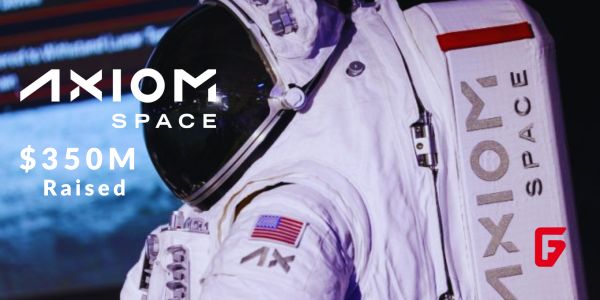
Axiom Space has locked in a fresh $350M raise to push its commercial space station and NASA lunar spacesuits toward launch, signaling growing investor faith in private orbital infrastructure.
Morpheus Space secures $15M funding for GO-2 electric propulsion mass production. Learn how this boosts satellite mobility with efficient thrusters.

Stoke Space extended its Series D funding to $860 million, fueling Nova’s full-reuse rocket production at Cape Canaveral. Backed by founders from Blue Origin, this pushes total capital to $1.34B.

Tomorrow.io has closed a $175 million equity round to deploy DeepSky, its AI-native weather satellite constellation designed to make global atmospheric data far more precise, frequent, and useful for businesses, governments, and communities facing extreme weather.

Stay ahead of AI and space tech wars: OpenAI vs Google AI, SpaceX and Blue Origin’s race for orbital data centers, Meta’s AI strategy shift, and key robotics breakthroughs reshaping industry.

Bridgit Mendler’s Northwood Space is pioneering mass-produced ground stations, enabling scalable, high-speed connectivity for the new era of satellite networks and megaconstellations.
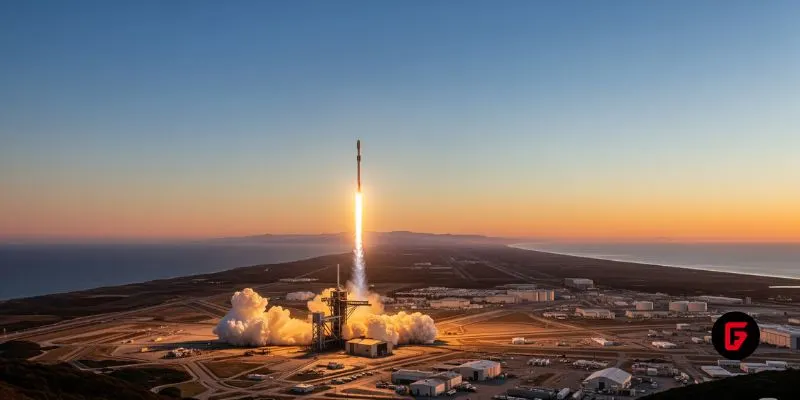
SpaceX aims to nearly double launches from Vandenberg in 2025, facing support from federal agencies but strong objections from the state and local communities.
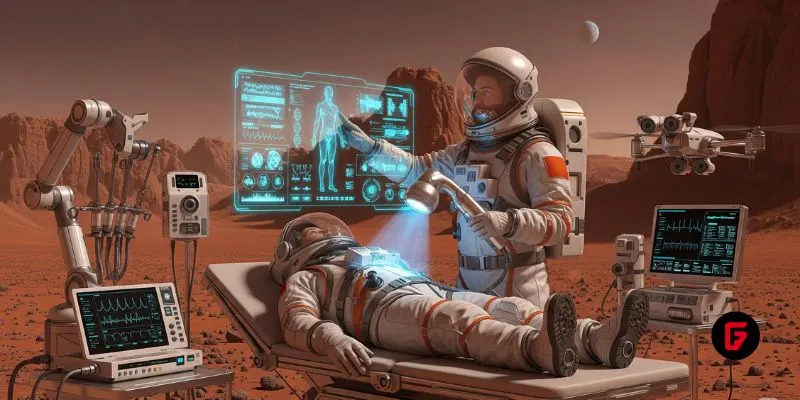
NASA and Google’s AI-powered Crew Medical Officer Digital Assistant enables autonomous diagnoses for astronauts on Mars missions, redefining remote healthcare for space and Earth.
futureTEKnow is focused on identifying and promoting creators, disruptors and innovators, and serving as a vital resource for those interested in the latest advancements in technology.
© 2026 All Rights Reserved.