

































Cocoa, Florida, USA
2017
Aerospace, Hybrid Rocket Propulsion, Defense Technology, Missile Propulsion, Hypersonic Propulsion, Launch Vehicle Development, Small Satellite Launch, In-Space Propulsion, Advanced Manufacturing
Vaya Space, also known as Vaya Defense & Space, is an aerospace technology company developing hybrid rocket propulsion systems for space transportation and defense applications. Its technology combines solid thermoplastic fuel with a separate oxidizer to generate thrust, using a patented vortex-based combustion architecture. The company is developing the Dauntless orbital launch vehicle and propulsion systems for spacecraft maneuvering. It also applies its engine technology to defense propulsion programs involving tactical rockets and hypersonic systems. Vaya designs, manufactures, and tests its propulsion hardware in Cocoa, Florida.
Vaya Space designs, manufactures, and tests rocket engines that use a combination of solid fuel and liquid or other separately supplied oxidizers. Its core technology is the Vortex-Hybrid propulsion system, which uses controlled oxidizer flow and a specially manufactured fuel grain to generate thrust.
The company is developing Dauntless, a two-stage orbital launch vehicle intended to carry small satellites into low Earth orbit. The rocket is designed around Vaya’s hybrid propulsion technology, with launch operations planned from Cape Canaveral Space Force Station.
Vaya also develops propulsion systems for defense applications, including tactical rocket motors and hybrid-fueled ramjet technology. Its research includes controllable propulsion architectures that can be throttled and restarted, unlike conventional solid rocket motors that generally burn continuously after ignition.
Another development area involves in-space propulsion for satellites. Vaya is exploring systems that would allow spacecraft to adjust their orbits, avoid debris, reposition during missions, and perform controlled end-of-life deorbit maneuvers.
The company manufactures thermoplastic fuel grains, propulsion components, and test hardware at its Florida facilities, combining additive manufacturing, precision machining, and engine testing.
Vaya Space develops rocket propulsion systems based on a Vortex-Hybrid engine architecture. Hybrid propulsion combines a solid fuel with a separately stored oxidizer, allowing the combustion process to be controlled by regulating oxidizer flow.
Its engines use high-density polyethylene (HDPE), a thermoplastic material that can be manufactured into solid fuel grains. Vaya has developed processes that incorporate recycled plastic into these fuel components. Unlike conventional solid rocket motors, which contain a premixed fuel and oxidizer, Vaya’s hybrid architecture stores these materials separately.
The company’s patented vortex combustion design introduces oxidizer into the engine in a rotating flow pattern. This increases interaction between the oxidizer and the fuel surface, supporting combustion and thrust generation. The architecture is designed to enable throttling, shutdown, and restart through control of the oxidizer supply.
Vaya reports having demonstrated multiple engine restarts during ground testing. These capabilities are relevant to missions requiring changes in thrust, controlled flight profiles, or more than one propulsion burn.
The company’s Dauntless launch vehicle is being developed as a two-stage rocket powered by its hybrid propulsion technology. Proposed Block 1 and Block 2 configurations have been described with payload capacities exceeding 1,000 and 2,000 kilograms to low Earth orbit, respectively. These remain design specifications rather than demonstrated flight performance.
Vaya is also developing hybrid-fueled ramjet propulsion for defense applications. This work explores propulsion systems that use atmospheric oxygen during flight and can support controllable thrust at high speeds.
Its manufacturing technology includes additive production of thermoplastic fuel grains, metal additive manufacturing, CNC machining, and in-house hot-fire testing. These capabilities allow the company to manufacture and evaluate propulsion components at its Florida facilities.
For orbital applications, Vaya is investigating propulsion configurations compatible with ESPA-class spacecraft interfaces. These systems are intended to support satellite maneuvering, orbital transfers, collision avoidance, and controlled reentry.
Rocket propulsion determines how launch vehicles reach orbit and how spacecraft maneuver after deployment. Vaya Space is developing controllable hybrid propulsion as an alternative to conventional solid rocket motors and other propulsion architectures.
Its technology combines separately stored oxidizer and solid thermoplastic fuel, allowing engine thrust to be adjusted or interrupted under suitable operating conditions. This capability is relevant to missions requiring flexible propulsion sequences rather than a single continuous burn.
The company’s Dauntless program targets small-satellite launch services, while its in-space propulsion concepts address growing requirements for orbital maneuvering and satellite disposal.
Vaya’s defense propulsion work also extends its technology beyond orbital launch, particularly in programs investigating restartable rocket motors and high-speed propulsion. The commercial significance of these developments will depend on continued qualification, flight testing, and successful deployment.
The Vortex-Hybrid engine is Vaya Space’s core propulsion technology. It combines solid HDPE fuel with a separately supplied oxidizer and uses a patented vortex combustion architecture. The engine is designed to support thrust modulation, shutdown, and restart. Vaya has conducted ground tests of its propulsion technology for launch and defense applications.
Dauntless is a two-stage orbital launch vehicle under development for small-satellite deployment. Its planned configurations target approximately 1,000 to 2,000 kilograms of payload capacity to low Earth orbit. The vehicle uses Vaya’s hybrid propulsion technology and is being developed for launch operations from Cape Canaveral Space Force Station. It has not yet completed an orbital flight.
Dauntless Block 1 is the initial configuration described in the launch program’s environmental assessment. The proposed two-stage vehicle measures approximately 22.3 meters in length and is designed to transport more than 1,000 kilograms to low Earth orbit. Its planned first stage uses six hybrid engines, with a single upper-stage engine.
Dauntless Block 2 is a larger proposed configuration with a planned payload capacity exceeding 2,000 kilograms to low Earth orbit. The design is approximately 25 meters long and uses higher-thrust propulsion systems than Block 1. The configuration remains part of the company’s launch vehicle development roadmap.
Vaya develops controllable hybrid propulsion systems for defense applications, including tactical rocket motors. The technology is designed to provide throttle and restart capabilities while using separately stored oxidizer and solid thermoplastic fuel. Its defense development work includes testing and research with U.S. military organizations.
Vaya’s Hybrid-Fueled Ramjet is a propulsion development program for high-speed defense applications. The system combines hybrid fuel technology with air-breathing propulsion concepts. In July 2025, Vaya announced a $1.24 million AFWERX Phase II contract to advance the technology. The program remains in research and development.
Vaya is developing ESPA-compatible spacecraft propulsion based on its hybrid engine architecture. The proposed systems are intended to provide high-thrust maneuvers for orbital repositioning, debris avoidance, and controlled deorbiting. They remain development-stage technologies rather than established commercial spacecraft propulsion products.
Vaya Advanced Machining is the company’s precision manufacturing capability, expanded through the acquisition of KAM Technologies’ machining operations in April 2025. It supports CNC machining, component production, and manufacturing requirements for aerospace and defense propulsion hardware.
Vaya and Seagate Space announced plans in November 2025 to explore offshore launch infrastructure in the Gulf region. The proposed capability would support mobile, sea-based launches of Dauntless for commercial and defense missions. The project is a development initiative, not an operational launch service.
Vaya Space technology is being developed for small-satellite launches and orbital transportation. Its Dauntless vehicle is designed to deploy commercial and government spacecraft into low Earth orbit, including satellites used for communications, Earth observation, and constellation operations.
Its hybrid propulsion systems also support research into defense rocket motors and hypersonic propulsion. Controllable thrust and restart capabilities are relevant to applications requiring changes in propulsion output during flight.
Additional planned applications include satellite repositioning, orbital collision avoidance, spacecraft end-of-life disposal, and flexible launch operations from land-based or offshore facilities. These spaceflight applications remain dependent on continued vehicle development, qualification, and testing.
Vaya Space has conducted propulsion testing and earlier technology demonstration activities, but its Dauntless launch vehicle has not yet completed an orbital flight. The company continues developing the rocket and its associated launch infrastructure.
Vaya’s Vortex-Hybrid engine combines solid HDPE fuel with a separately supplied oxidizer. A vortex combustion architecture directs oxidizer flow through the combustion chamber, where it reacts with the fuel surface. Controlling the oxidizer supply allows the engine to modulate thrust and, under suitable conditions, shut down and restart.
Vaya’s proposed Dauntless configurations target approximately 1,000 to 2,000 kilograms of payload capacity to low Earth orbit. The smaller Block 1 and larger Block 2 versions are development designs, and their payload performance has not yet been demonstrated through orbital launches.
Yes. Vaya manufactures solid rocket fuel grains using high-density polyethylene, including recycled thermoplastic material. The fuel is combined with a separately stored oxidizer in the company’s hybrid propulsion system.
Yes. Vaya develops hybrid propulsion technology for defense applications, including tactical rocket motors and hypersonic propulsion research. Its programs involve U.S. defense organizations, and the company announced an AFWERX Phase II contract in 2025 to develop a hybrid-fueled ramjet system.
Have an update, correction, or additional information about this company? Help us keep the futureTEKnow company database up to date by submitting the latest company information.

Turion Space has raised more than $75 million in Series B funding to scale its Starfire platform and satellite fleet, betting that space domain awareness is the next critical defense infrastructure layer. The piece unpacks Turion’s business model, contracts, and risks for operators and investors watching the new space intelligence stack.

Pulsar Fusion’s Sunbird fusion rocket has achieved first plasma, validating its exhaust architecture and edging a reusable “space tug” concept toward sub‑six‑month Mars transfers. Drawing on multiple reports, this piece breaks down how the Dual Direct Fusion Drive works, what the 2027 in‑orbit demo must prove, and which technical and regulatory hurdles still stand between Sunbird and operational deep‑space logistics.

Aetherflux is betting that orbital data centers can power the next wave of AI, shifting from laser power beaming to space-based compute as it targets a $2 billion valuation. For founders and investors, the company’s 2027 satellite plans highlight how quickly space infrastructure is converging with AI demand and reshaping the deep-tech funding landscape.
Sierra Space’s $550 million Series C round, valuing the company at $8 billion, signals a decisive shift toward defense-tech space. This feature unpacks the hardware, strategy, and risks shaping the next decade of orbital infrastructure.

Axiom Space has locked in a fresh $350M raise to push its commercial space station and NASA lunar spacesuits toward launch, signaling growing investor faith in private orbital infrastructure.
Morpheus Space secures $15M funding for GO-2 electric propulsion mass production. Learn how this boosts satellite mobility with efficient thrusters.

Stoke Space extended its Series D funding to $860 million, fueling Nova’s full-reuse rocket production at Cape Canaveral. Backed by founders from Blue Origin, this pushes total capital to $1.34B.

Tomorrow.io has closed a $175 million equity round to deploy DeepSky, its AI-native weather satellite constellation designed to make global atmospheric data far more precise, frequent, and useful for businesses, governments, and communities facing extreme weather.

Stay ahead of AI and space tech wars: OpenAI vs Google AI, SpaceX and Blue Origin’s race for orbital data centers, Meta’s AI strategy shift, and key robotics breakthroughs reshaping industry.

Bridgit Mendler’s Northwood Space is pioneering mass-produced ground stations, enabling scalable, high-speed connectivity for the new era of satellite networks and megaconstellations.
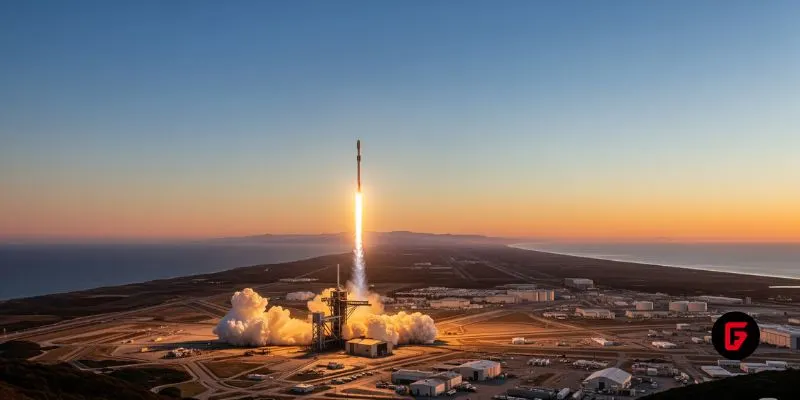
SpaceX aims to nearly double launches from Vandenberg in 2025, facing support from federal agencies but strong objections from the state and local communities.

NASA and Google’s AI-powered Crew Medical Officer Digital Assistant enables autonomous diagnoses for astronauts on Mars missions, redefining remote healthcare for space and Earth.
futureTEKnow is focused on identifying and promoting creators, disruptors and innovators, and serving as a vital resource for those interested in the latest advancements in technology.
© 2026 All Rights Reserved.