


















Dwelly Raises $93M to Supercharge AI-Powered UK Rentals Roll-Up
London startup Dwelly just landed $93M to snap up UK rental agencies and inject AI smarts. Founders from Uber and
Encord Raises $60M Series C: Fueling Physical AI Data Wave
Encord just landed $60M in Series C funding to supercharge data tools for physical AI. Founders Eric Landau and Ulrik

Foodforecast Raises €8M Series A to Slash Ultra-Fresh Food Waste with AI
Foodforecast, a Cologne AI foodtech firm, just scored €8M in Series A funding led by SHIFT Invest. Their tools predict

AI-Driven Operational Excellence: How Leaders Scale Ownership, Discipline, and Continuous Improvement in 2026
In 2026, AI scales operational excellence fundamentals—clear ownership, disciplined execution, and continuous improvement—letting leaders focus on outcomes while systems handle

VoiceLine raises €10M to scale voice AI for enterprise frontline teams
Munich-based VoiceLine has closed a €10M Series A round to grow its voice AI platform for frontline sales and service

AI-Driven Logistics & Distribution Transformation: From Insight to Scalable Impact
AI is redefining logistics transformation—from network design to real-time execution. This article explores how data-driven insight, intelligent automation, and scalable
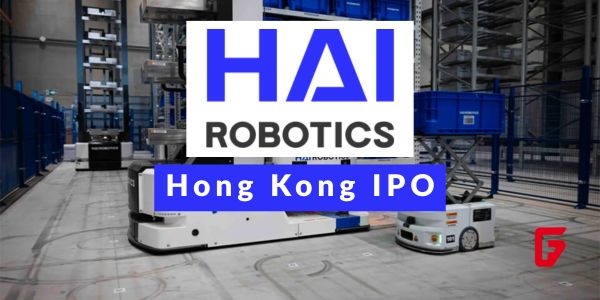
Hai Robotics Hong Kong IPO: From Startup Funding to Warehouse Robot Leader
Shenzhen’s Hai Robotics, pioneer in ACR warehouse robots, files for HK IPO after raising over $500M in funding rounds led

AI-Enabled Process Engineering & Continuous Improvement: Designing Systems That Learn
Explore how AI transforms process engineering and continuous improvement into self-learning systems. This article explains how organizations can design operations
Ouster Acquires StereoLabs: Unified Physical AI Sensing Platform Launches
Ouster’s $35M StereoLabs acquisition fuses lidar and ZED cameras into end-to-end Physical AI sensing. Founders Cecile Schmollgruber and team drive
Bretton AI Lands $75M Series B Funding to Scale AI Agents for Financial Crime and AML/KYC Compliance
Bretton AI’s $75M Series B modernizes AML KYC compliance via AI agents, slashing staffing costs for banks and fintechs like

Axiom Space Raises $350M to Build Commercial Space Station and NASA Spacesuits
Axiom Space has locked in a fresh $350M raise to push its commercial space station and NASA lunar spacesuits toward

Santé Raises $7.6M Seed: AI Fintech Revolution for Wine and Liquor Retail
New York startup Santé secures $7.6M seed to build AI-powered POS for liquor stores, tackling regs & inventory woes after