
























Thousand Oaks, California, USA
2020
Aerospace, Satellite Manufacturing, Space Debris Removal, Satellite Servicing, Space Surveillance, Defense, Space Infrastructure
Orbotic Systems is a space technology company developing systems for satellite maneuvering, orbital debris mitigation, and spacecraft mission monitoring. Its technology includes the D3 Deorbit Drag Device, which uses atmospheric drag to change a satellite’s orbital trajectory without conventional propulsion. The company also develops the WIND space weather sensor, ARGUS onboard threat detection software, the DiskSat spacecraft platform, and the RIDDANCE debris capture system. These technologies address satellite end-of-life disposal, orbital risk assessment, and spacecraft operations, with applications in commercial, civil, and defense space missions.
Orbotic Systems designs hardware and software that help satellite operators control spacecraft, assess orbital conditions, and manage satellites at the end of their operational lives.
Its primary product is the D3 Deorbit Drag Device, a compact system that deploys aerodynamic surfaces to change the drag acting on a satellite. The device can be used to accelerate orbital decay and support limited maneuvering without consuming propellant.
The company also develops space weather sensing and onboard threat analysis systems. WIND measures atmospheric ion and neutral particle densities, while ARGUS processes sensor information to identify potential orbital hazards and support operational decisions.
For active debris removal, Orbotic Systems is developing RIDDANCE, a net-based system designed to capture and stabilize uncontrolled orbital objects before assisting with their disposal.
Its DiskSat platform provides a disk-shaped spacecraft architecture intended for environmental sensing, orbital surveillance, and missions in very low Earth orbit. Together, these developments support spacecraft operations from initial deployment through end-of-life disposal.
Orbotic Systems develops technologies for controlling spacecraft through atmospheric interaction, measuring orbital conditions, analyzing threats, and removing debris. Its approach combines mechanical deployment systems, environmental sensors, onboard processing, and orbital dynamics models.
Its principal technology is the D3 Deorbit Drag Device. D3 uses deployable booms to change a spacecraft’s exposed surface area and the aerodynamic drag it experiences. By adjusting the drag force, a satellite can influence its orbital decay and, under suitable conditions, its relative motion without using conventional rocket propulsion.
The underlying D3 architecture was developed at the University of Florida and licensed to Orbotic Systems. NASA’s 2026 review of small spacecraft deorbit systems describes a design using four deployable tape-spring booms, each approximately 3.7 meters long. The design has undergone ground-based thermal-vacuum and fatigue testing.
The company’s D3 hardware was deployed from the International Space Station in September 2022. Its commercial configuration is designed for integration with CubeSats and other small spacecraft. Orbotic Systems states that the device can support disposal from altitudes up to approximately 700 kilometers, depending on spacecraft and mission conditions.
Orbotic Systems is also developing the WIND ion and neutral density sensor, which measures the concentration of charged and neutral particles in the upper atmosphere. These measurements help characterize atmospheric drag and improve models used for satellite orbit prediction, collision analysis, and space weather forecasting.
Its ARGUS technology performs onboard threat detection and analysis. The system integrates spacecraft sensor information with predictive models and confidence scoring to identify potential hazards and support operational decisions without relying entirely on ground-based processing.
For debris removal, the company is developing RIDDANCE, a dual-net capture system intended to stabilize and secure uncontrolled objects. The proposed architecture combines capture mechanisms with passive deorbit technology, allowing a servicing spacecraft to address debris that lacks a dedicated docking interface.
The company’s DiskSat architecture uses a disk-shaped spacecraft body that provides a relatively large surface area. This geometry is being developed for very low Earth orbit sensing and spacecraft control, where interactions with the residual atmosphere influence satellite behavior.
Small satellites often have limited mass, volume, and power available for propulsion systems. These constraints can make orbital maneuvering and end-of-life disposal difficult, particularly when a spacecraft must meet post-mission debris mitigation requirements.
Orbotic Systems’ propellant-free D3 technology provides an alternative approach to changing a satellite’s orbit by using atmospheric drag. This could help operators reduce the time inactive spacecraft remain in low Earth orbit without dedicating additional propellant to disposal maneuvers.
Its WIND and ARGUS technologies also address the need for more timely information about orbital conditions and spacecraft hazards. Better atmospheric measurements and onboard analysis can support orbit prediction and operational planning.
The company’s RIDDANCE development extends its work from preventing future debris to the potential removal of objects already in orbit. Its practical impact will depend on successful demonstrations of reliable capture, stabilization, and disposal during complete orbital missions.
D3 is a compact, propellant-free system designed for satellite maneuvering and end-of-life disposal. It uses deployable booms to vary the spacecraft’s aerodynamic drag, influencing orbital decay and relative motion. The device is designed for CubeSats and other small satellites, with a compact configuration measuring approximately 10 × 10 × 5.9 centimeters. D3 was deployed from the International Space Station in September 2022, providing space deployment heritage for its drag-based technology. Orbotic Systems also offers a second-generation configuration for spacecraft integration.
DiskSat is a disk-shaped spacecraft platform designed for missions requiring a large exposed surface area, stability, and flexible payload integration. Its geometry is particularly relevant to very low Earth orbit, where atmospheric drag and environmental conditions influence spacecraft performance. The platform supports environmental sensing, orbital surveillance, and integrated spacecraft control. In February 2026, Orbotic Systems announced a manufacturing agreement with The Aerospace Corporation involving DiskSat.
ARGUS is an onboard threat detection and analysis system designed to identify potential hazards during spacecraft operations. It combines sensor information with predictive models and confidence-based assessments to support decisions about orbital risks. The technology is designed for integration with different spacecraft platforms and can operate without depending entirely on ground-based analysis. ARGUS supports real-time orbital threat assessment and spacecraft decision support. Orbotic Systems reported a patent milestone for ARGUS in August 2025.
WIND is a space weather instrument designed to measure ion and neutral particle densities directly in low Earth orbit. The sensor collects environmental information used to characterize atmospheric drag and changes in the upper atmosphere. Its measurements can support orbit prediction, spacecraft drag modeling, and space weather forecasting. WIND has received NOAA Small Business Innovation Research support and is being developed for integration with small satellites and other spacecraft platforms.
RIDDANCE is a dual-net system under development for capturing and stabilizing uncontrolled satellites and orbital debris. It is designed to reduce target rotation, establish a secure connection, and support removal or relocation operations. The proposed architecture combines net-based capture with the company’s D3 passive deorbit technology. In July 2025, Orbotic Systems announced a NASA SBIR Phase II award to advance the system toward a flight-ready prototype. An operational debris removal mission has not yet been verified.
The Orbotic Mission Assurance Stack is the company’s integrated architecture for spacecraft sensing, risk analysis, orbital control, and debris mitigation. It combines environmental measurements from WIND, onboard threat assessment through ARGUS, drag-based maneuvering technology, and RIDDANCE capture capabilities. The architecture is intended to support spacecraft monitoring and orbital lifecycle management through coordinated subsystems. Its individual technologies are at different development stages rather than forming a fully demonstrated operational system.
The D3 Calculator is a mission analysis tool offered by Orbotic Systems for evaluating the potential effects of its drag device on satellite disposal. It helps users assess orbital decay under different mission conditions, including spacecraft characteristics and orbital altitude. The tool supports satellite end-of-life planning and preliminary deorbit assessments, allowing operators to examine whether drag-based disposal may be suitable for a proposed mission.
Orbotic Systems develops technologies for satellite deorbiting, orbital maneuvering, and space debris mitigation. Its D3 system can be integrated into compatible small satellites to increase atmospheric drag and reduce their orbital lifetimes after mission completion.
Its space weather monitoring and orbital threat assessment technologies support satellite operators seeking better information about atmospheric conditions, spacecraft trajectories, and potential hazards.
The company’s RIDDANCE system is being developed for active debris removal and uncontrolled spacecraft capture, including missions involving objects without dedicated servicing interfaces.
DiskSat provides a platform for environmental sensing and orbital surveillance, particularly in very low Earth orbit. Together, these technologies have applications in commercial satellite constellations, government missions, spacecraft engineering, and space traffic management.
Orbotic Systems develops technologies for satellite deorbiting, orbital maneuvering, space weather monitoring, and debris removal. Its products include the D3 Deorbit Drag Device, DiskSat spacecraft platform, ARGUS onboard threat detection system, WIND space weather sensor, and RIDDANCE debris capture system. These technologies support spacecraft safety and orbital lifecycle management.
D3 uses deployable booms to change the surface area exposed to atmospheric drag. By adjusting that drag, the device can influence a satellite’s orbital decay and relative motion without using conventional rocket propulsion. The technology is designed primarily for small satellites in low Earth orbit, where residual atmospheric particles can affect spacecraft trajectories.
Yes. Orbotic Systems launched D3 hardware aboard SpaceX’s CRS-25 mission in July 2022, and the device was deployed from the International Space Station in September 2022. The company has also performed ground-based testing and developed a second-generation version. These milestones establish deployment heritage, although they do not independently demonstrate every proposed commercial maneuvering and disposal capability.
RIDDANCE is a debris capture system being developed to stabilize and secure uncontrolled objects in orbit. It uses a dual-net architecture intended to reduce target rotation and establish a controlled connection. The proposed system can be combined with D3 technology to support passive deorbiting. Orbotic Systems received a NASA SBIR Phase II award in 2025 to continue developing the technology.
WIND is a sensor designed to measure ion and neutral particle densities in the upper atmosphere, providing information about space weather and atmospheric drag. ARGUS is an onboard analysis system that evaluates sensor information to identify orbital threats and support spacecraft decisions. WIND focuses on measuring environmental conditions, while ARGUS focuses on interpreting risks and supporting operational responses.
Have an update, correction, or additional information about this company? Help us keep the futureTEKnow company database up to date by submitting the latest company information.

Turion Space has raised more than $75 million in Series B funding to scale its Starfire platform and satellite fleet, betting that space domain awareness is the next critical defense infrastructure layer. The piece unpacks Turion’s business model, contracts, and risks for operators and investors watching the new space intelligence stack.
Pulsar Fusion’s Sunbird fusion rocket has achieved first plasma, validating its exhaust architecture and edging a reusable “space tug” concept toward sub‑six‑month Mars transfers. Drawing on multiple reports, this piece breaks down how the Dual Direct Fusion Drive works, what the 2027 in‑orbit demo must prove, and which technical and regulatory hurdles still stand between Sunbird and operational deep‑space logistics.

Aetherflux is betting that orbital data centers can power the next wave of AI, shifting from laser power beaming to space-based compute as it targets a $2 billion valuation. For founders and investors, the company’s 2027 satellite plans highlight how quickly space infrastructure is converging with AI demand and reshaping the deep-tech funding landscape.
Sierra Space’s $550 million Series C round, valuing the company at $8 billion, signals a decisive shift toward defense-tech space. This feature unpacks the hardware, strategy, and risks shaping the next decade of orbital infrastructure.

Axiom Space has locked in a fresh $350M raise to push its commercial space station and NASA lunar spacesuits toward launch, signaling growing investor faith in private orbital infrastructure.
Morpheus Space secures $15M funding for GO-2 electric propulsion mass production. Learn how this boosts satellite mobility with efficient thrusters.

Stoke Space extended its Series D funding to $860 million, fueling Nova’s full-reuse rocket production at Cape Canaveral. Backed by founders from Blue Origin, this pushes total capital to $1.34B.

Tomorrow.io has closed a $175 million equity round to deploy DeepSky, its AI-native weather satellite constellation designed to make global atmospheric data far more precise, frequent, and useful for businesses, governments, and communities facing extreme weather.

Stay ahead of AI and space tech wars: OpenAI vs Google AI, SpaceX and Blue Origin’s race for orbital data centers, Meta’s AI strategy shift, and key robotics breakthroughs reshaping industry.

Bridgit Mendler’s Northwood Space is pioneering mass-produced ground stations, enabling scalable, high-speed connectivity for the new era of satellite networks and megaconstellations.
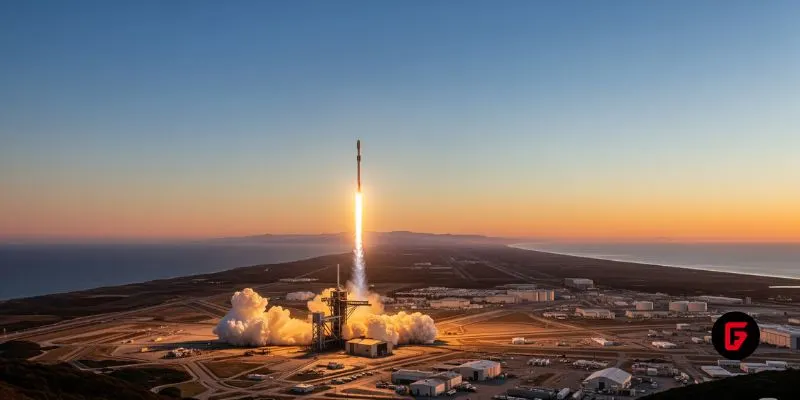
SpaceX aims to nearly double launches from Vandenberg in 2025, facing support from federal agencies but strong objections from the state and local communities.

NASA and Google’s AI-powered Crew Medical Officer Digital Assistant enables autonomous diagnoses for astronauts on Mars missions, redefining remote healthcare for space and Earth.
futureTEKnow is focused on identifying and promoting creators, disruptors and innovators, and serving as a vital resource for those interested in the latest advancements in technology.
© 2026 All Rights Reserved.