
Startups & Business News
SpaceX Sets US Record: Four Astronauts Reach ISS in 15 Hours
KEY POINTS
SpaceX completed its fastest-ever journey, delivering four international astronauts to the International Space Station (ISS) in just 15 hours.
The multinational crew—representing the United States, Russia, and Japan—will focus on advanced scientific research to prepare for future Moon and Mars missions.
Significant crew reshuffling occurred due to Boeing’s Starliner delays and other technical issues, highlighting SpaceX’s growing reliability in space transport.
The mission underscores strong international cooperation, even amid current global tensions, and paves the way for expanded use of commercial spacecraft in human spaceflight.
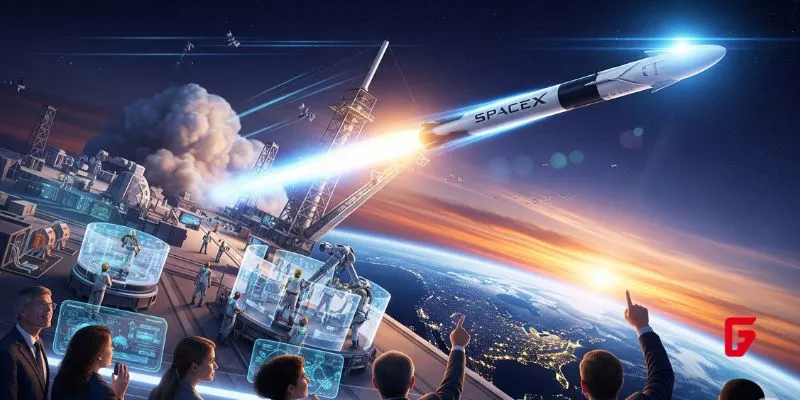
Space travel milestones aren’t made quietly—and this weekend, SpaceX set a new record for speed and resilience, delivering an international crew to the ISS in the quickest time in commercial spaceflight history. If you blinked, you might’ve missed the 15-hour dash from Kennedy Space Center in Florida to docking high above the South Pacific. But behind that headline is an equally fascinating story of technical pivots, international teamwork, and a bold roadmap for the future of science in orbit.
The Fastest U.S. Crew Mission Ever
At exactly 2:27 a.m. EDT, the SpaceX Crew Dragon capsule docked, its four tired but jubilant passengers greeted by their new space family. NASA’s Zena Cardman and Mike Fincke, Japan Aerospace Exploration Agency’s Kimiya Yui, and Russia’s Oleg Platonov now call the ISS home for the next six months—a tenure packed with research that might shape humanity’s next leap to the Moon, and even Mars.
SpaceX’s journey, the fastest the company has ever completed, is a U.S. record and a testament to both its operational maturity and the razor-sharp focus of its launch team. While the 15-hour transit is blazing by American standards, the Russians still hold the global record for the quickest ISS trip at just three hours—proof that international rivalry and inspiration remain alive and well 400 kilometers above Earth.
A Crew Reassigned by Technical Turbulence
Look past the celebratory headlines, and you’ll find this mission’s real drama: reassignment roulette driven largely by hardware delays elsewhere in the commercial space world. NASA’s Zena Cardman was moved from her original mission to make way for crewmates stranded by Boeing’s Starliner troubles—a week-long test flight that turned into a nine-month odyssey. Mike Fincke and Kimiya Yui, too, swapped from the Boeing Starliner program after its latest round of grounding due to persistent thruster malfunctions.
And then there’s Oleg Platonov. His original Soyuz slot faded away a few years back after a sudden illness; now fully recovered, he finally takes to the stars on Crew-11. If nothing else, Crew-11 highlights the flexibility required as agencies coordinate complex multinational partnerships and ever-changing technology timelines.
Science at the Frontier: Prepping for Deep Space
With their trip complete, the crew won’t have long to bask in the glow of Earthrise. Their schedule is packed with experiments designed to move us closer to lunar and Martian exploration. Think lunar landing simulations, data on how altered gravity impacts piloting skills, and deep studies into vision safety for astronauts on multi-year missions. There’s also frontier biomedical science—like producing stem cells in microgravity, understanding plant cell division, and investigating how viruses that kill bacteria behave when untethered from Earth’s constraints.
All this isn’t just academic: The findings will form the backbone of future missions to Earth’s nearest neighbors and might one day help treat human diseases back home.
Diplomacy in Microgravity
It’s no small feat, either, that this mission comes at a time of renewed tension between the U.S. and Russia. ISS operations stand as a rare stage for international goodwill, reinforced by recent high-level meetings between space chiefs to ensure continued collaboration. The shared goals—deep space exploration, lunar missions, and even long-term joint ventures—remain a shining example of what’s possible when science takes the front seat.
The Legacy (and the Road Ahead)
This record-setting mission is more than a technical victory. It’s a strong signal that commercial spaceflight—especially through proven players like SpaceX—is now crucial for space station operations and the future of human exploration. As the orbital handshakes subside and the science begins, all eyes are on what Crew-11’s work will spark, not just above the planet but down on the ground as well.
So, as the ISS now bustles with eleven aboard, and SpaceX’s capsule cools in the orbital night, one thing is certain: the race for space is still rewriting its own rules—and Crew-11’s journey has just begun.

futureTEKnow
Editorial Team
Discover the companies and startups shaping tomorrow — explore the future of technology today.



Trending Companies
Latest Articles
futureTEKnow is focused on identifying and promoting creators, disruptors and innovators, and serving as a vital resource for those interested in the latest advancements in technology.
© 2026 All Rights Reserved.