Cannes, France
2007
Aerospace, Satellite Manufacturing, Satellite Communications, Earth Observation, Defense, Space Exploration, Navigation, Orbital Infrastructure
Thales Alenia Space is a space technology manufacturer developing satellites, spacecraft systems, and orbital infrastructure for commercial, government, and scientific missions. Its technologies include telecommunications satellites, Earth observation instruments, navigation payloads, and pressurized space modules. The company manufactures Spacebus and Space INSPIRE satellite platforms and contributes to major programs including Copernicus, Galileo, the International Space Station, and lunar exploration missions. Its engineering activities cover spacecraft structures, avionics, digital communications, radar and optical instruments, propulsion, and mission systems. Thales Alenia Space also develops space station habitats and lunar infrastructure for human exploration.
Thales Alenia Space designs, manufactures, integrates, and tests satellites and spacecraft systems. Its products support telecommunications, navigation, Earth observation, scientific research, defense, and human spaceflight.
The company develops geostationary communications satellites and satellite constellation technology. Its Spacebus B2, Spacebus NEO, and Space INSPIRE platforms provide spacecraft architectures for broadcasting, broadband connectivity, and software-defined communications services.
Thales Alenia Space also manufactures radar and optical Earth observation systems used to monitor oceans, weather, land surfaces, and environmental changes. It participates in European programs including Copernicus, Meteosat, and Galileo, supplying spacecraft, instruments, navigation equipment, and ground systems.
For human spaceflight, the company develops pressurized structures that support astronauts and scientific equipment. Its hardware includes modules used on the International Space Station, cargo structures for Cygnus spacecraft, and components for planned commercial space stations and lunar infrastructure.
The company also develops spacecraft and subsystems for lunar and planetary exploration, including contributions to the Argonaut lunar lander, ExoMars, and European scientific missions. Its services include systems engineering, payload integration, environmental qualification, and spacecraft manufacturing.
Thales Alenia Space develops spacecraft platforms, communications payloads, navigation systems, remote sensing instruments, and orbital infrastructure. Its engineering capabilities combine mechanical structures, digital electronics, radiofrequency systems, propulsion, optical sensors, radar, and spacecraft control software.
Its telecommunications technology includes the Spacebus B2, Spacebus NEO, and Space INSPIRE satellite platforms. Spacebus NEO supports high-throughput communications missions using electric propulsion, while Space INSPIRE incorporates software-defined payload technology that allows operators to modify communications coverage and capacity after launch.
The company develops digital communications processors, antennas, and radiofrequency equipment for satellites operating in geostationary orbit and multi-orbit constellations. Its software-defined satellite systems can reallocate communications resources to respond to changes in demand without physically modifying the spacecraft.
For Earth observation, Thales Alenia Space develops synthetic aperture radar, optical imaging, and radar altimetry technologies. These instruments collect measurements of Earth’s surface, oceans, atmosphere, and ice. Radar instruments can acquire observations under cloud cover and during darkness, while optical sensors provide imagery across different spectral bands.
Its navigation technology includes spacecraft and ground segment systems for the Galileo program. Thales Alenia Space is responsible for six of the twelve satellites in a Galileo Second Generation procurement and associated ground mission segment activities. The company also contributes to lunar navigation infrastructure through the Moonlight program.
In orbital infrastructure, the company specializes in pressurized spacecraft structures and habitation modules. It manufactured major International Space Station components, including Nodes 2 and 3, the Cupola, and the Leonardo Permanent Multipurpose Module. Its structural engineering includes pressure vessels, thermal protection, micrometeoroid shielding, and interfaces for crewed spacecraft systems.
For lunar exploration, Thales Alenia Space is developing hardware for Gateway, the Argonaut lunar lander, and a planned lunar surface habitat. These projects require spacecraft structures, communications, power and thermal interfaces, navigation equipment, and systems capable of operating in demanding environments beyond low Earth orbit.
The company also manufactures avionics, onboard computers, digital processing equipment, propulsion subsystems, and spacecraft testing systems. These technologies support missions ranging from commercial telecommunications satellites to planetary exploration spacecraft.
Satellite infrastructure supports communications, weather forecasting, navigation, environmental monitoring, and scientific research. These services depend on spacecraft capable of operating reliably for years while transmitting information across large distances.
Thales Alenia Space’s software-defined communications satellites allow operators to adapt coverage and capacity as demand changes. This provides greater operational flexibility than fixed satellite payload configurations.
Its Earth observation and navigation technologies contribute to European satellite infrastructure used for environmental monitoring, positioning services, disaster assessment, and security applications.
The company’s experience manufacturing pressurized modules also supports the transition from the International Space Station toward commercial orbital stations and future lunar habitats. Its role in both operational satellite systems and exploration hardware connects established space infrastructure with emerging missions beyond Earth orbit.
Space INSPIRE is a software-defined geostationary telecommunications satellite platform designed to support flexible communications services. Its digital payload architecture allows operators to reconfigure coverage areas, bandwidth allocation, and communications capacity after launch. The platform supports high-throughput broadband and adaptable satellite connectivity. Thales Alenia Space has received orders for Space INSPIRE satellites from operators including SKY Perfect JSAT and Es’hailSat.
Spacebus NEO is an all-electric geostationary satellite platform developed for high-capacity telecommunications missions. It combines electric propulsion with configurable communications payloads and spacecraft subsystems. The platform supports very-high-throughput satellite communications, including broadband internet, broadcasting, and connectivity services across large geographic regions.
Spacebus B2 is a geostationary telecommunications satellite platform designed for operators requiring regional communications coverage. It provides a spacecraft architecture for broadcasting, telecommunications, and other connectivity services. The platform forms part of Thales Alenia Space’s family of geostationary communications satellite systems, alongside Spacebus NEO and Space INSPIRE.
Thales Alenia Space is the prime contractor for the Sentinel-1 satellite family, which uses C-band synthetic aperture radar to observe Earth’s surface. Sentinel-1 collects radar imagery during daylight and darkness and through cloud cover, supporting monitoring of land movement, sea ice, maritime activity, and natural disasters. The company also received a contract in 2026 to develop Sentinel-1 Next Generation satellites.
Sentinel-3 is an Earth observation satellite family developed to monitor oceans, land surfaces, and environmental conditions. Thales Alenia Space serves as prime contractor for the spacecraft and contributes to the mission’s measurement systems. Sentinel-3 observations support oceanography, surface temperature monitoring, and environmental research, providing data used by scientific institutions and operational monitoring services.
Poseidon-4 is a radar altimeter developed by Thales Alenia Space for the Sentinel-6 oceanography mission. The instrument measures the distance between the satellite and the ocean surface, enabling calculations of sea surface height. Its measurements support sea level monitoring, ocean circulation research, and climate analysis. Poseidon-4 instruments are carried aboard the Sentinel-6 satellites, including Sentinel-6B, launched in November 2025.
Meteosat Third Generation is a European geostationary weather satellite program comprising imaging and atmospheric sounding spacecraft. Thales Alenia Space serves as prime contractor for the satellites, which provide frequent observations of clouds, atmospheric conditions, and weather systems. The program supports weather forecasting, severe storm monitoring, and atmospheric analysis, with imaging and sounding satellites designed to provide complementary meteorological measurements.
Thales Alenia Space is responsible for manufacturing six satellites under a Galileo Second Generation procurement and contributes to the associated Ground Mission Segment. The satellites will support Europe’s satellite navigation infrastructure through advanced positioning, navigation, and timing capabilities. The program is intended to improve navigation performance, signal resilience, and operational flexibility compared with earlier Galileo spacecraft.
Thales Alenia Space manufactured major pressurized structures used aboard the International Space Station, including Nodes 2 and 3, the Cupola observation module, and the Leonardo Permanent Multipurpose Module. The company also supplied pressurized cargo structures for Cygnus spacecraft. These systems provide habitable spacecraft volume, cargo storage, and orbital research infrastructure, using pressure vessel engineering, thermal protection, and micrometeoroid shielding.
Thales Alenia Space is manufacturing pressurized modules for Axiom Space’s planned commercial space station. The structures are designed to support astronaut habitation, scientific experiments, and commercial activities in low Earth orbit. The program applies the company’s experience in pressurized space habitats and orbital infrastructure to the development of commercial space station facilities.
Thales Alenia Space contributes pressurized structures and systems for the planned Lunar Gateway orbital station. Its work includes the HALO primary structure, the I-HAB habitation module, and the ESPRIT communications and refueling module. ESPRIT incorporates Lunar Link communications and Lunar View refueling capabilities. These systems are designed to support astronaut habitation, lunar communications, and spacecraft logistics in cislunar space.
Argonaut is a robotic lunar lander being developed for the European Space Agency. Thales Alenia Space is responsible for developing the lunar descent module, which will transport cargo and scientific equipment to the Moon’s surface. The system is intended to support autonomous lunar cargo delivery and surface exploration. Its first mission is planned for 2030, making Argonaut a development program rather than an operational lunar transportation service.
The Multi-Purpose Habitat is a planned lunar surface habitation module being developed for the Italian Space Agency. It is designed to provide a pressurized environment for astronauts conducting extended surface operations. The habitat will incorporate life-support interfaces, structural protection, and equipment accommodation to support human habitation and scientific activities on the Moon.
Thales Alenia Space develops spacecraft systems for the European ExoMars program. Its contributions include the Trace Gas Orbiter and engineering work on the planned Rosalind Franklin rover mission. For ExoMars 2028, the company is responsible for the entry, descent, and landing module, radar altimeter, onboard computer, and integration of the rover’s Analytical Laboratory Drawer. These systems support Mars exploration, atmospheric research, and subsurface scientific investigation.
Stratobus is a solar-powered stratospheric airship concept designed to operate at an altitude of approximately 20 kilometers. The platform is being developed for persistent regional observation and communications services. Its proposed applications include environmental monitoring, telecommunications, and surveillance. Unlike an orbital satellite, Stratobus would operate within Earth’s atmosphere and remains a development program.
Thales Alenia Space’s telecommunications platforms support satellite broadband, broadcasting, mobile connectivity, and secure communications. Its software-defined satellites allow operators to adjust coverage and capacity as service requirements change.
Its Earth observation and meteorological technologies support climate research, ocean monitoring, weather forecasting, disaster management, agriculture, and environmental protection. Radar and optical instruments collect measurements used by scientific institutions and public agencies.
The company’s navigation and defense systems support satellite positioning, timing services, secure communications, and Earth surveillance. These technologies are used in civil infrastructure, government operations, and security applications.
Thales Alenia Space also develops infrastructure for human spaceflight, lunar exploration, and planetary science. Its pressurized modules, spacecraft structures, and exploration systems support orbital laboratories, commercial space stations, lunar habitats, and robotic missions beyond Earth orbit.
Thales Alenia Space manufactures satellites, spacecraft systems, and orbital infrastructure. Its products include telecommunications satellite platforms, Earth observation instruments, navigation systems, and pressurized modules for space stations. The company participates in major programs including Copernicus, Galileo, Meteosat, the International Space Station, and lunar exploration missions.
Space INSPIRE is a software-defined telecommunications satellite platform that allows operators to reconfigure communications coverage and capacity after launch. Spacebus NEO is an all-electric geostationary satellite platform designed for high-capacity communications missions. Both support satellite connectivity, but Space INSPIRE emphasizes digital payload flexibility, while Spacebus NEO emphasizes electric propulsion and high-throughput spacecraft architecture.
Thales Alenia Space manufactures satellites and instruments for Europe’s Copernicus Earth observation program. It serves as prime contractor for Sentinel-1 and Sentinel-3, contributes to Sentinel-2 ground systems, and supplies instruments for other missions including Sentinel-6. Its technologies support radar imaging, ocean monitoring, climate research, and environmental observation.
Thales Alenia Space manufactured major pressurized structures for the International Space Station, including Nodes 2 and 3, the Cupola observation module, and the Leonardo Permanent Multipurpose Module. It also supplied cargo modules used by Cygnus spacecraft. These structures support astronaut habitation, scientific research, and equipment storage in orbit.
Yes. Thales Alenia Space develops systems for the planned Lunar Gateway station, including habitation, communications, and refueling infrastructure. It is also developing the Argonaut lunar descent module for the European Space Agency and a Multi-Purpose Habitat for the Italian Space Agency. These projects are intended to support cargo delivery, astronaut operations, and scientific research around and on the Moon.
Have an update, correction, or additional information about this company? Help us keep the futureTEKnow company database up to date by submitting the latest company information.

Turion Space has raised more than $75 million in Series B funding to scale its Starfire platform and satellite fleet, betting that space domain awareness is the next critical defense infrastructure layer. The piece unpacks Turion’s business model, contracts, and risks for operators and investors watching the new space intelligence stack.

Pulsar Fusion’s Sunbird fusion rocket has achieved first plasma, validating its exhaust architecture and edging a reusable “space tug” concept toward sub‑six‑month Mars transfers. Drawing on multiple reports, this piece breaks down how the Dual Direct Fusion Drive works, what the 2027 in‑orbit demo must prove, and which technical and regulatory hurdles still stand between Sunbird and operational deep‑space logistics.

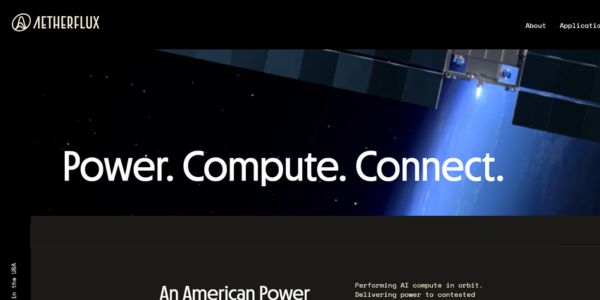
Aetherflux is betting that orbital data centers can power the next wave of AI, shifting from laser power beaming to space-based compute as it targets a $2 billion valuation. For founders and investors, the company’s 2027 satellite plans highlight how quickly space infrastructure is converging with AI demand and reshaping the deep-tech funding landscape.

Sierra Space’s $550 million Series C round, valuing the company at $8 billion, signals a decisive shift toward defense-tech space. This feature unpacks the hardware, strategy, and risks shaping the next decade of orbital infrastructure.

Axiom Space has locked in a fresh $350M raise to push its commercial space station and NASA lunar spacesuits toward launch, signaling growing investor faith in private orbital infrastructure.

Morpheus Space secures $15M funding for GO-2 electric propulsion mass production. Learn how this boosts satellite mobility with efficient thrusters.

Stoke Space extended its Series D funding to $860 million, fueling Nova’s full-reuse rocket production at Cape Canaveral. Backed by founders from Blue Origin, this pushes total capital to $1.34B.

Tomorrow.io has closed a $175 million equity round to deploy DeepSky, its AI-native weather satellite constellation designed to make global atmospheric data far more precise, frequent, and useful for businesses, governments, and communities facing extreme weather.

Stay ahead of AI and space tech wars: OpenAI vs Google AI, SpaceX and Blue Origin’s race for orbital data centers, Meta’s AI strategy shift, and key robotics breakthroughs reshaping industry.

Bridgit Mendler’s Northwood Space is pioneering mass-produced ground stations, enabling scalable, high-speed connectivity for the new era of satellite networks and megaconstellations.

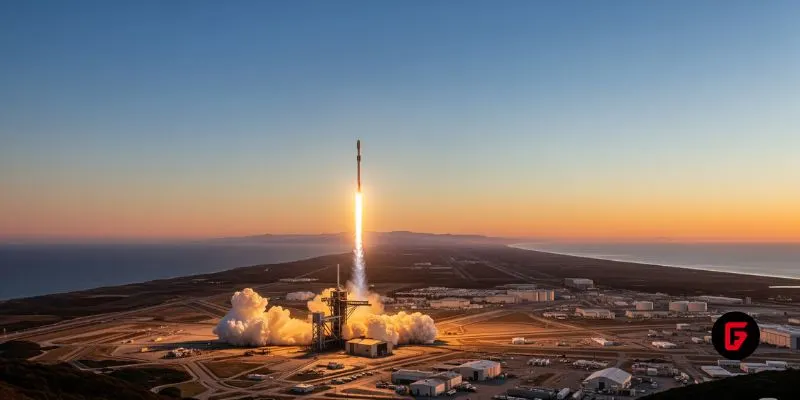
SpaceX aims to nearly double launches from Vandenberg in 2025, facing support from federal agencies but strong objections from the state and local communities.

NASA and Google’s AI-powered Crew Medical Officer Digital Assistant enables autonomous diagnoses for astronauts on Mars missions, redefining remote healthcare for space and Earth.
futureTEKnow is focused on identifying and promoting creators, disruptors and innovators, and serving as a vital resource for those interested in the latest advancements in technology.
© 2026 All Rights Reserved.