































Astro Digital

Company Information

Astro Digital is a company that provides space-based systems and mission support services that are designed to accelerate mission success.

Headquarters

Santa Clara, California, USA

Year Founded

2015

Website

Sector

Industries

Satellite Manufacturing, Telecommunications, Earth Observation, Aerospace Engineering, Scientific Research, Defense

What Is Astro Digital?

Astro Digital is a space technology company that designs, manufactures, and operates modular satellite platforms and spacecraft systems. Its products range from compact CubeSats to larger microsatellites designed for Earth observation, communications, scientific research, and technology demonstration missions.

The company combines spacecraft manufacturing, avionics development, mission engineering, and satellite operations into an integrated service offering. Its Corvus and Raven satellite platforms provide configurable spacecraft architectures that can accommodate different payload sizes, power requirements, and mission profiles across low Earth orbit and geostationary applications.

What Does Astro Digital Do?

Astro Digital develops spacecraft and supporting infrastructure for organizations conducting satellite missions. Its engineering teams design satellite buses, integrate customer payloads, manufacture flight hardware, and perform the testing required before launch.

The company’s Corvus satellite platforms provide standardized spacecraft architectures with integrated power, communications, computing, and attitude control systems. Its developing Raven platform supports larger payloads and higher electrical power requirements.

Astro Digital also provides end-to-end mission design and operations, including orbital analysis, constellation planning, payload integration, launch preparation, commissioning, and satellite control.

Through its mission control infrastructure and global ground station network, the company supports multiple spacecraft simultaneously. Its satellite systems have been used for Earth observation, optical communications experiments, scientific payloads, and other commercial and institutional space missions.

Join Our Newsletter

* indicates required

Intuit Mailchimp

ADVERTISEMENT
eMerge Americas 2027 Conference
ADVERTISEMENT
Submit Your Company | futureTEKnow

Astro Digital Technology

Astro Digital develops modular spacecraft bus architectures that integrate the essential systems required to operate satellites in orbit. Its platforms combine electrical power generation and storage, onboard computing, communications, attitude determination and control, and payload interfaces into configurable spacecraft designs.

The Corvus family includes CubeSat and microsatellite platforms supporting different payload masses and electrical power requirements. Its smaller Corvus-6U and Corvus-16U platforms accommodate compact instruments, while Corvus-Micro and Corvus-XL support larger payloads and more demanding missions.

Astro Digital’s avionics technology includes high-voltage power storage and generation, high-speed S-band, X-band, and Ka-band communications, onboard processing hardware, and precision attitude determination and control systems. These subsystems support spacecraft pointing, data transmission, payload operation, and autonomous flight functions.

The developing Corvus-Raven platform extends the company’s architecture to larger spacecraft, with published specifications including a 250-kilogram payload capacity and approximately 1,000 watts of average orbital power. These are design specifications rather than demonstrated flight performance.

Astro Digital also operates mission control software and a global ground station network for spacecraft commanding, telemetry collection, monitoring, and payload data handling. Its operational infrastructure is designed to support individual spacecraft as well as larger satellite constellations.

The company’s engineering approach combines reusable spacecraft designs with mission-specific payload integration. This allows satellite systems to be adapted to different applications without redesigning every spacecraft subsystem for each mission.

Why Astro Digital Matters

Satellite missions require more than a payload or scientific instrument. Organizations must also develop reliable spacecraft structures, power systems, communications, attitude control, ground infrastructure, and operational procedures.

Astro Digital provides integrated satellite infrastructure that reduces the need to develop every spacecraft component independently. Its modular platforms allow organizations to select spacecraft configurations based on payload mass, electrical power, and mission requirements.

The company’s experience across multiple satellite missions also supports the transition from individual technology demonstrations to operational satellite constellations.

Its work is relevant to the growing market for specialized satellite manufacturing and mission services, particularly as commercial and institutional customers increasingly require spacecraft tailored to specific applications without establishing their own satellite production and operations infrastructure.

Astro Digital Products & Platforms

Corvus-6U

Corvus-6U is a compact CubeSat platform designed for smaller scientific instruments, communications experiments, and technology demonstration payloads. It supports payloads of up to 4 kilograms, with a published payload volume of 10 × 20 × 30 centimeters and approximately 15 watts of average orbital power. The platform has flight heritage dating to 2017.

Corvus-16U

Corvus-16U is a larger CubeSat platform providing additional payload capacity and electrical power for compact satellite missions. Its published specifications include an 18-kilogram payload capacity, a 20 × 20 × 40-centimeter payload volume, and approximately 42 watts of average orbital power. The platform has flight heritage dating to 2019.

Corvus-Micro

Corvus-Micro is a modular microsatellite bus designed for missions requiring more payload accommodation than conventional CubeSats. It supports payloads of up to 30 kilograms, with a 35 × 35 × 40-centimeter payload volume and approximately 70 watts of average orbital power. Its architecture supports scientific instruments, communications systems, and remote sensing payloads.

Corvus-XL

Corvus-XL is a larger spacecraft platform designed for higher-capacity satellite payloads. Its published specifications include a payload mass of up to 100 kilograms, a 50 × 50 × 70-centimeter payload volume, and approximately 300 watts of average orbital power. The platform has flight heritage dating to 2021 and supports commercial and institutional satellite missions.

Corvus-Raven

Corvus-Raven is Astro Digital’s developing high-capacity spacecraft bus for larger and more power-intensive payloads. Its published design specifications include a 250-kilogram payload capacity, an 80 × 80 × 90-centimeter payload volume, and approximately 1,000 watts of average orbital power. The company identifies the platform as launching soon, so these capabilities should not yet be treated as flight-proven.

Spacecraft Avionics Subsystems

Astro Digital develops spacecraft avionics including electrical power generation and storage, high-speed S-band, X-band, and Ka-band communications, onboard computing, and attitude determination and control systems. These components support satellite pointing, payload operation, telemetry, and data transmission across different spacecraft configurations.

End-to-End Mission Design

Astro Digital provides satellite mission engineering and integration services, including mission architecture, payload development, constellation design, spacecraft integration, program management, and launch preparation. These services connect customer payload requirements with suitable spacecraft platforms and operational plans.

Mission Operations

Astro Digital operates mission control infrastructure and a global ground station network supporting spacecraft commissioning, commanding, telemetry monitoring, and payload data handling. Its operational systems are designed to manage multiple satellites concurrently, including spacecraft deployed as part of larger constellations.

Astro Digital Applications

Earth Observation: Providing satellite platforms for optical imaging, radar sensing, and other remote sensing payloads.

Satellite Communications: Supporting spacecraft carrying radio frequency and optical communications equipment.

Scientific Research: Integrating scientific instruments for orbital experiments and space-based measurements.

Technology Demonstrations: Hosting experimental payloads to validate new hardware and software under orbital conditions.

Satellite Constellations: Developing repeatable spacecraft platforms for coordinated satellite networks.

Defense and National Security: Supporting spacecraft development and payload integration for government space programs.

Optical Communications: Providing spacecraft infrastructure for testing inter-satellite laser communication technologies.

Mission Operations: Managing satellite commanding, telemetry, ground communications, and operational monitoring.

Spacecraft Manufacturing: Producing configurable satellite buses and avionics for different payload and orbital requirements.

Latest Companies

ADVERTISEMENT
Track AI, Robotics & Space Startups

Frequently Asked Questions

What does Astro Digital do?

Astro Digital designs, manufactures, and operates satellite platforms for Earth observation, communications, scientific research, and technology demonstrations. It also provides mission engineering, payload integration, and satellite operations services.

What is Astro Digital’s Corvus satellite platform?

Corvus is a family of modular spacecraft buses that provide electrical power, communications, computing, attitude control, and payload accommodation. The family includes CubeSat and microsatellite configurations.

How many satellites has Astro Digital delivered?

Astro Digital reports delivering more than 40 satellites across 16 mission types since its establishment in 2015. The company also reports 15 missions currently in operation.

What is the Corvus-Raven satellite?

Corvus-Raven is a developing spacecraft bus designed for payloads of up to 250 kilograms and approximately 1,000 watts of average orbital power. The company identifies it as an upcoming platform rather than an established flight-proven product.

Does Astro Digital operate satellites?

Yes. Astro Digital provides satellite mission operations through its mission control infrastructure and global ground station network, including spacecraft commanding, telemetry monitoring, and operational support.

Where is Astro Digital headquartered?

Astro Digital is headquartered in Littleton, Colorado. It also operates a production facility in San Jose, California, and satellite operations in Sydney, Australia.

Is Astro Digital a publicly traded company?

Astro Digital announced a proposed business combination with Proem Acquisition Corp I in September 2026. The announcement alone does not establish that the transaction has closed or that Astro Digital has completed a public listing.

Related Companies

EnduroSat

Apex

LeoStella

Do You Have an Update for This Company?

Have an update, correction, or additional information about this company? Help us keep the futureTEKnow company database up to date by submitting the latest company information.

Update Company Information

Latest Articles

Fusion rocket Sunbird ignites in a first plasma test, putting Pulsar Fusion’s high‑efficiency fusion rocket Sunbird closer to sub‑6‑month Mars missions.

Fusion rocket Sunbird ignites: Pulsar Fusion’s plasma breakthrough for faster deep-space travel

Pulsar Fusion’s Sunbird fusion rocket has achieved first plasma, validating its exhaust architecture and edging a reusable “space tug” concept toward sub‑six‑month Mars transfers. Drawing on multiple reports, this piece breaks down how the Dual Direct Fusion Drive works, what the 2027 in‑orbit demo must prove, and which technical and regulatory hurdles still stand between Sunbird and operational deep‑space logistics.
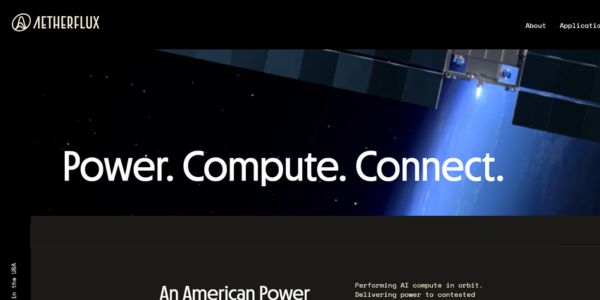
Aetherflux orbital data center plans target a $2B valuation as the startup pivots from laser power beaming to space-based AI compute.

Aetherflux’s $2B orbital bet: space data centers for the AI age

Aetherflux is betting that orbital data centers can power the next wave of AI, shifting from laser power beaming to space-based compute as it targets a $2 billion valuation. For founders and investors, the company’s 2027 satellite plans highlight how quickly space infrastructure is converging with AI demand and reshaping the deep-tech funding landscape.
futureTEKnow is focused on identifying and promoting creators, disruptors and innovators, and serving as a vital resource for those interested in the latest advancements in technology.

© 2026 All Rights Reserved.