





























London, England
2025
Space Technology, Satellite Tracking, Space Situational Awareness, Satellite Navigation, Space Infrastructure, Geospatial Data
Foundational is a space technology company developing commercial satellite laser ranging infrastructure for precise satellite tracking and orbital positioning. Its technology combines automated laser ground stations, passive optical retroreflectors mounted on spacecraft, and software that processes ranging measurements into usable orbital data.
Founded in 2025, the company builds on satellite laser ranging research developed at Lumi Space. Its integrated infrastructure is designed to make high-precision orbital measurements available as a commercial data service for satellite operators, space traffic management organizations, scientific institutions, and other users of space-based infrastructure.
Foundational builds and operates automated ground stations that use laser pulses to measure the distance to satellites. Its stations transmit laser signals toward spacecraft equipped with retroreflectors and calculate range measurements from the time required for the reflected light to return.
The company manufactures satellite-mounted laser retroreflectors that return incoming laser signals toward the transmitting ground station. These passive components require no electrical power, onboard processing, or active pointing mechanism.
Foundational also operates Origin, an online orbital data platform that delivers ranging measurements through a web interface and API. Customers can access measurement records in standardized data formats for integration with satellite operations and analysis systems.
Its services support satellite position validation, orbit determination, spacecraft tracking, and the development of improved orbital prediction models. The company is expanding its ground station network and developing additional software products for satellite operators and constellation management.
Foundational develops automated satellite laser ranging technology that measures the distance between ground stations and spacecraft using the travel time of short laser pulses. A ground station transmits a laser signal toward a satellite, and a retroreflector returns a portion of the light toward the source. The station calculates the distance from the measured round-trip travel time.
The company’s ground infrastructure uses eye-safe laser systems and automated tracking equipment. Foundational reports millimetre-level precision for individual range measurements and tracking capability at distances of up to approximately 2,000 kilometres. Measurement precision should not be confused with the absolute accuracy of a satellite’s complete orbital position, which depends on additional observations and modeling.
Its laser retroreflectors use passive optical elements that redirect incoming light toward the transmitting station. Because they require no power, electronics, or active spacecraft pointing, they can remain usable during commissioning, spacecraft safe mode, and after a satellite’s operational lifetime.
Foundational offers multiple retroreflector configurations for different spacecraft requirements, including flight-proven passive devices and uniquely identifiable retroreflectors under development.
The company’s Origin orbital data platform collects ranging measurements from its ground network and makes them available through an online interface and API. It supports normal-point and full-rate measurement data in TDM, CRD, and JSON formats. More advanced orbit determination, propagation, and validation products remain under development.
Foundational combines ground station manufacturing, space-based optical hardware, and software processing in a vertically integrated architecture. Its commercial model is designed to expand satellite laser ranging beyond specialized scientific facilities into a distributed network serving operational spacecraft.
Satellite operators depend on accurate orbital information to plan maneuvers, assess conjunction risks, and maintain spacecraft operations. As the number of satellites increases, uncertainties in position estimates can complicate collision avoidance and space traffic coordination.
Foundational is commercializing satellite laser ranging as an operational data service, extending a precision measurement technique historically concentrated in scientific and government facilities.
Its combination of passive spacecraft retroreflectors and automated ground stations creates a dedicated source of measurements that can supplement radar observations, optical tracking, and onboard navigation information.
The technology is relevant to space traffic management, precision orbit determination, and satellite constellation operations, where reliable orbital measurements support more informed operational decisions.
Foundational’s significance also extends to geodesy and Earth observation, where precise satellite ranging contributes to reference frames and models used to understand the planet’s changing environment.
Foundational operates a commercial satellite laser ranging network that measures the distance to spacecraft using automated ground stations. Its infrastructure transmits laser pulses toward satellites and records the round-trip travel time of the reflected signals. The service delivers precision ranging measurements without requiring satellite operators to construct and maintain their own laser ranging facilities.
Retro-1 is part of Foundational’s passive laser retroreflector product family. It is designed for installation on spacecraft to return incoming laser signals toward ground-based tracking stations. The device requires no onboard power, electronics, or active pointing mechanism, allowing it to support satellite ranging during normal operations and periods when other spacecraft systems are inactive.
Retro-2 is another configuration in Foundational’s laser retroreflector portfolio. It supports precision optical ranging of equipped spacecraft through passive reflection of laser pulses. The product family is designed to accommodate different satellite missions and integration requirements. Foundational identifies its passive retroreflector technology as flight-proven.
Retro-CS is a named product in Foundational’s laser retroreflector portfolio. Like the company’s other passive ranging hardware, it is intended to support precise distance measurements between satellites and ground stations. Detailed publicly accessible specifications should be consulted before assigning particular size, mass, or optical performance characteristics to this configuration.
Origin is Foundational’s online satellite ranging data platform. It collects measurements from the company’s ground network and makes normal-point and full-rate data available through a web interface and API. Supported output formats include TDM, CRD, and JSON. Raw ranging data is operational, while additional orbit determination, propagation, and validation capabilities are under development.
Foundational develops and operates automated, weather-protected laser ranging stations equipped with eye-safe laser systems and satellite tracking hardware. These stations measure reflected optical signals from equipped spacecraft and transmit the resulting observations to the company’s data infrastructure. Foundational reports ranging measurements at distances of up to approximately 2,000 kilometres.
Precision Satellite Tracking: Measuring distances to equipped spacecraft to improve the information available for orbital positioning.
Space Traffic Management: Providing precision measurements that can contribute to conjunction assessment and satellite collision avoidance.
Satellite Constellation Operations: Supporting orbit validation and navigation analysis across groups of operational spacecraft.
Orbit Determination: Supplying laser ranging observations for estimating spacecraft trajectories and improving orbital models.
Space Domain Awareness: Contributing measurements that supplement other surveillance systems for monitoring known orbital objects.
Geodesy: Supporting scientific measurements used to maintain terrestrial reference frames and study Earth’s physical properties.
Earth Observation: Providing precise orbital reference information for satellite missions that depend on accurate positioning.
In-Orbit Servicing: Supporting spacecraft positioning and relative navigation analysis for future inspection and servicing missions.
Reentry and Atmospheric Research: Supplying ranging measurements that may help refine atmospheric drag models and orbital decay predictions.
Foundational develops satellite laser ranging infrastructure, including automated ground stations, spacecraft retroreflectors, and software that delivers precise orbital measurement data to satellite operators.
Foundational was founded in 2025 and is headquartered in London. Its technology builds on earlier satellite laser ranging research conducted at Lumi Space.
Satellite laser ranging is a measurement technique that determines the distance to a spacecraft by timing how long a laser pulse takes to travel from a ground station to the satellite and return.
Origin is an online platform and API that provides access to satellite laser ranging measurements. It supports standardized data formats and is being expanded to include additional orbit determination and validation products.
No. The company’s passive laser retroreflectors operate without electrical power, onboard processing, or active pointing. They return incoming laser signals toward ground stations through their optical design.
Foundational reports millimetre-level precision for individual laser ranging measurements. The accuracy of a complete orbital position estimate depends on additional observations, timing, geometry, and orbital modeling.
Foundational announced £8.2 million in pre-seed funding on October 1, 2026. The investment supports expansion of its laser ranging network, spacecraft hardware manufacturing, and orbital data platform.
Have an update, correction, or additional information about this company? Help us keep the futureTEKnow company database up to date by submitting the latest company information.

Turion Space has raised more than $75 million in Series B funding to scale its Starfire platform and satellite fleet, betting that space domain awareness is the next critical defense infrastructure layer. The piece unpacks Turion’s business model, contracts, and risks for operators and investors watching the new space intelligence stack.

Pulsar Fusion’s Sunbird fusion rocket has achieved first plasma, validating its exhaust architecture and edging a reusable “space tug” concept toward sub‑six‑month Mars transfers. Drawing on multiple reports, this piece breaks down how the Dual Direct Fusion Drive works, what the 2027 in‑orbit demo must prove, and which technical and regulatory hurdles still stand between Sunbird and operational deep‑space logistics.
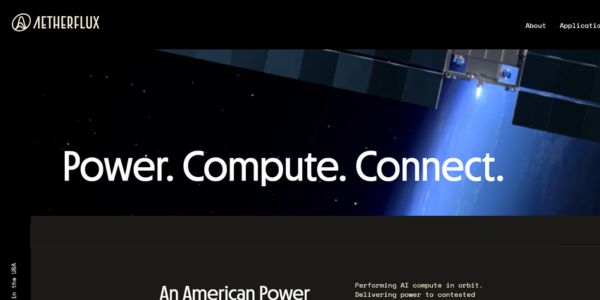
Aetherflux is betting that orbital data centers can power the next wave of AI, shifting from laser power beaming to space-based compute as it targets a $2 billion valuation. For founders and investors, the company’s 2027 satellite plans highlight how quickly space infrastructure is converging with AI demand and reshaping the deep-tech funding landscape.
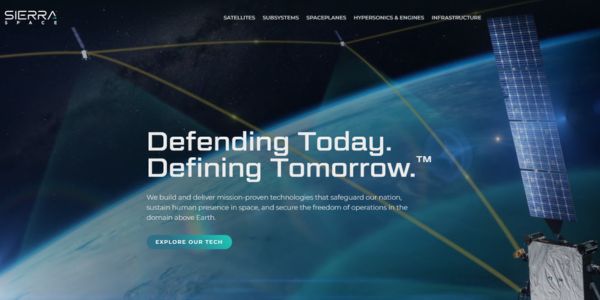
Sierra Space’s $550 million Series C round, valuing the company at $8 billion, signals a decisive shift toward defense-tech space. This feature unpacks the hardware, strategy, and risks shaping the next decade of orbital infrastructure.
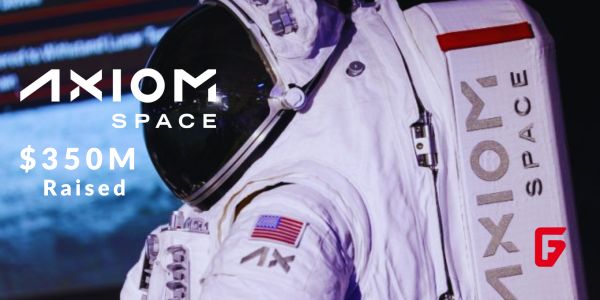
Axiom Space has locked in a fresh $350M raise to push its commercial space station and NASA lunar spacesuits toward launch, signaling growing investor faith in private orbital infrastructure.
Morpheus Space secures $15M funding for GO-2 electric propulsion mass production. Learn how this boosts satellite mobility with efficient thrusters.

Stoke Space extended its Series D funding to $860 million, fueling Nova’s full-reuse rocket production at Cape Canaveral. Backed by founders from Blue Origin, this pushes total capital to $1.34B.

Tomorrow.io has closed a $175 million equity round to deploy DeepSky, its AI-native weather satellite constellation designed to make global atmospheric data far more precise, frequent, and useful for businesses, governments, and communities facing extreme weather.

Stay ahead of AI and space tech wars: OpenAI vs Google AI, SpaceX and Blue Origin’s race for orbital data centers, Meta’s AI strategy shift, and key robotics breakthroughs reshaping industry.

Bridgit Mendler’s Northwood Space is pioneering mass-produced ground stations, enabling scalable, high-speed connectivity for the new era of satellite networks and megaconstellations.
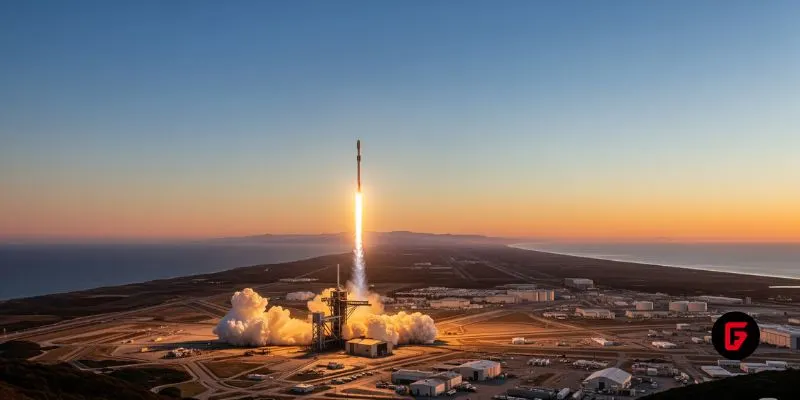
SpaceX aims to nearly double launches from Vandenberg in 2025, facing support from federal agencies but strong objections from the state and local communities.

NASA and Google’s AI-powered Crew Medical Officer Digital Assistant enables autonomous diagnoses for astronauts on Mars missions, redefining remote healthcare for space and Earth.
futureTEKnow is focused on identifying and promoting creators, disruptors and innovators, and serving as a vital resource for those interested in the latest advancements in technology.
© 2026 All Rights Reserved.