































El Segundo, California, USA
2022
Space Transportation, Satellite Services, Aerospace, Space Logistics, In-Space Infrastructure, Space Propulsion
Argo Space is a space transportation company developing reusable, water-powered spacecraft for orbital logistics, satellite delivery, and in-space mobility. Its technology is designed to transport spacecraft and other payloads between Earth orbits and destinations in cislunar space.
The company is developing a transportation architecture that separates launch services from orbital delivery. Its spacecraft are designed to use water-based propulsion and in-space refueling to support multiple missions, reducing the need to launch a new transportation vehicle for every orbital transfer.
Argo Space designs and develops spacecraft capable of transporting satellites, repositioning orbital assets, and supporting logistics operations beyond low Earth orbit. Its transportation vehicles are designed to collect payloads after launch and move them to destinations including medium Earth orbit, geostationary orbit, and lunar orbit.
The company’s Argonaut spacecraft is being developed for orbital transportation and maneuvering, while its broader vehicle architecture incorporates payload capture, propulsion, and refueling capabilities. Argo Space is also researching lunar water extraction as a potential future source of spacecraft propellant.
Argo Space develops spacecraft propulsion and orbital transportation technology built around the use of water as a propellant. Its propulsion architecture supports different operating modes for efficient long-distance orbital transfers and higher-thrust maneuvering. Water can be stored onboard spacecraft and used in propulsion systems designed for extended missions.
The company’s spacecraft architecture integrates propulsion, onboard computing, power generation, guidance and navigation, payload handling, and in-space refueling. These technologies are designed to enable spacecraft to complete multiple transportation missions rather than operating as single-use orbital transfer vehicles.
Argo Space is also developing technology for extracting water from lunar regolith. This research supports its longer-term concept of sourcing spacecraft propellant from the Moon rather than transporting all fuel from Earth.
Most satellite missions depend on launch vehicles to reach their initial orbits, while additional propulsion is required to reach other destinations. Argo Space is developing reusable orbital transportation systems that could provide greater flexibility in moving spacecraft after launch.
Its approach could allow satellite operators to use launches to low Earth orbit while relying on dedicated transportation spacecraft to reach geostationary, lunar, or other orbital destinations. This separation could expand mission planning options and reduce the propulsion requirements placed on individual satellites.
The development of refuellable spacecraft and orbital logistics is also relevant to future satellite servicing, space infrastructure, and cislunar exploration. Argo Space’s technology represents an effort to establish transportation systems that support repeated operations throughout Earth orbit and beyond.
Argonaut is a reusable, refuellable orbital transportation spacecraft designed to move satellites and other payloads between Earth orbits and cislunar destinations. It uses water-based propulsion with high-thrust and low-thrust operating modes to support orbital transfers, spacecraft repositioning, and extended transportation missions.
Chiron is a compact orbital maneuver vehicle designed for high-delta-V operations, payload hosting, and rendezvous and proximity missions. Its water-based propulsion architecture supports orbital mobility and planned refueling capabilities.
Freighter is a planned heavy orbital logistics spacecraft designed to transport large satellites and cargo between orbital destinations. The vehicle is intended to support payload delivery, orbital relocation, and future space infrastructure operations.
Navigator was Argo Space’s first orbital demonstration mission, launched in July 2026 using the Argonaut Demo spacecraft. The mission validated spacecraft communications, onboard software, power generation, and attitude control operations before ending prematurely without completing all planned objectives.
Satellite Transportation: Moving satellites from low Earth orbit to higher orbital destinations, including geostationary and lunar orbits.
Orbital Logistics: Supporting payload delivery, spacecraft repositioning, and transportation between orbital locations.
Spacecraft Mobility: Providing maneuvering capabilities for satellite operators, orbital servicing missions, and space infrastructure.
Cislunar Transportation: Supporting spacecraft delivery and logistics operations between Earth orbit and the Moon.
Defense Space Operations: Supporting spacecraft maneuvering, payload hosting, space domain awareness, and rendezvous and proximity operations.
In-Space Refueling: Developing spacecraft architectures that can replenish propellant in orbit for repeated transportation missions.
Argo Space is a space transportation company developing reusable, water-powered spacecraft for satellite delivery, orbital logistics, and transportation between Earth orbits and cislunar space.
Argo Space develops spacecraft designed to transport satellites and other payloads between orbital destinations. Its technology supports orbital maneuvering, spacecraft repositioning, and future in-space refueling operations.
Argo Space uses water as the foundation of its spacecraft propulsion architecture. Its systems are designed to support both efficient orbital transportation and higher-thrust maneuvering, with the ability to replenish propellant for repeated missions.
Argonaut is Argo Space’s reusable orbital transportation spacecraft designed to move satellites and payloads between low Earth orbit, geostationary orbit, and cislunar destinations. It incorporates water-based propulsion and planned in-space refueling capabilities.
Yes. Argo Space launched its Argonaut Demo spacecraft in July 2026 as part of the Navigator mission. The spacecraft successfully demonstrated several onboard systems, including communications and attitude control, although the mission ended before completing all objectives.
Argo Space is researching methods for extracting water from lunar regolith to support future spacecraft refueling. Its longer-term transportation architecture envisions using water sourced from the Moon as propellant for orbital logistics operations.
Have an update, correction, or additional information about this company? Help us keep the futureTEKnow company database up to date by submitting the latest company information.

Turion Space has raised more than $75 million in Series B funding to scale its Starfire platform and satellite fleet, betting that space domain awareness is the next critical defense infrastructure layer. The piece unpacks Turion’s business model, contracts, and risks for operators and investors watching the new space intelligence stack.

Pulsar Fusion’s Sunbird fusion rocket has achieved first plasma, validating its exhaust architecture and edging a reusable “space tug” concept toward sub‑six‑month Mars transfers. Drawing on multiple reports, this piece breaks down how the Dual Direct Fusion Drive works, what the 2027 in‑orbit demo must prove, and which technical and regulatory hurdles still stand between Sunbird and operational deep‑space logistics.

Aetherflux is betting that orbital data centers can power the next wave of AI, shifting from laser power beaming to space-based compute as it targets a $2 billion valuation. For founders and investors, the company’s 2027 satellite plans highlight how quickly space infrastructure is converging with AI demand and reshaping the deep-tech funding landscape.
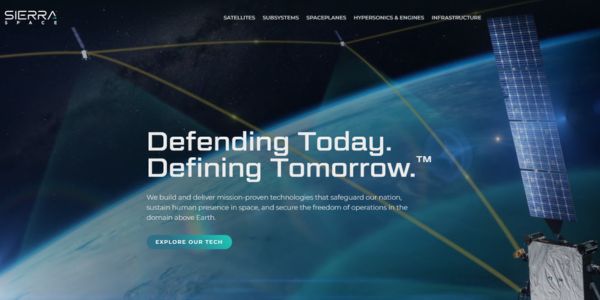
Sierra Space’s $550 million Series C round, valuing the company at $8 billion, signals a decisive shift toward defense-tech space. This feature unpacks the hardware, strategy, and risks shaping the next decade of orbital infrastructure.
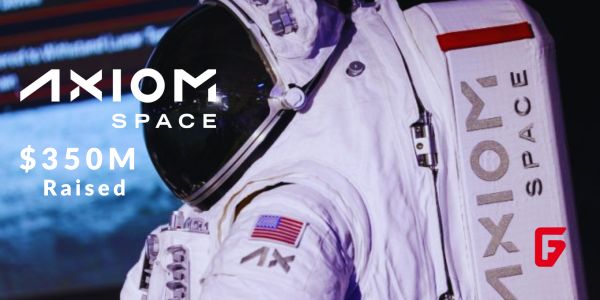
Axiom Space has locked in a fresh $350M raise to push its commercial space station and NASA lunar spacesuits toward launch, signaling growing investor faith in private orbital infrastructure.
Morpheus Space secures $15M funding for GO-2 electric propulsion mass production. Learn how this boosts satellite mobility with efficient thrusters.

Stoke Space extended its Series D funding to $860 million, fueling Nova’s full-reuse rocket production at Cape Canaveral. Backed by founders from Blue Origin, this pushes total capital to $1.34B.

Tomorrow.io has closed a $175 million equity round to deploy DeepSky, its AI-native weather satellite constellation designed to make global atmospheric data far more precise, frequent, and useful for businesses, governments, and communities facing extreme weather.

Stay ahead of AI and space tech wars: OpenAI vs Google AI, SpaceX and Blue Origin’s race for orbital data centers, Meta’s AI strategy shift, and key robotics breakthroughs reshaping industry.

Bridgit Mendler’s Northwood Space is pioneering mass-produced ground stations, enabling scalable, high-speed connectivity for the new era of satellite networks and megaconstellations.
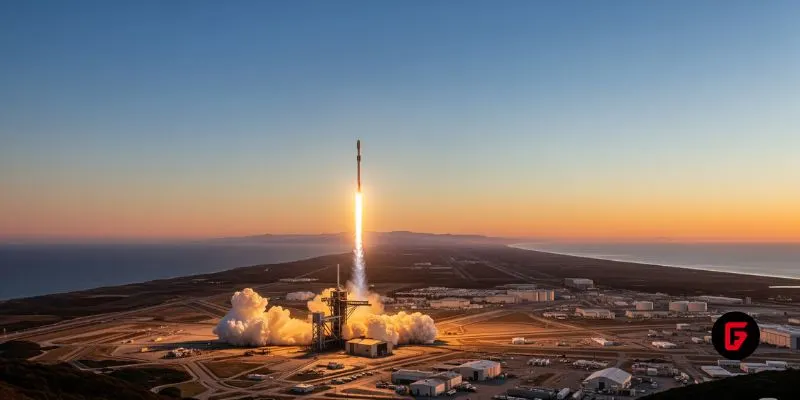
SpaceX aims to nearly double launches from Vandenberg in 2025, facing support from federal agencies but strong objections from the state and local communities.

NASA and Google’s AI-powered Crew Medical Officer Digital Assistant enables autonomous diagnoses for astronauts on Mars missions, redefining remote healthcare for space and Earth.
futureTEKnow is focused on identifying and promoting creators, disruptors and innovators, and serving as a vital resource for those interested in the latest advancements in technology.
© 2026 All Rights Reserved.