

































Somerville, Massachusetts, USA
2025
Space Technology, Optical Engineering, Earth Observation, Geospatial Intelligence, Defense Technology, Advanced Imaging, Space Situational Awareness
Diffraqtion is a deep technology company developing quantum-inspired optical sensing and AI-powered imaging systems for space surveillance, Earth observation, defense, and autonomous machines. Its technology uses specially designed optics to measure spatial information in incoming light that conventional cameras do not directly capture.
The company’s sensing architecture combines passive optical encoding with machine learning models that interpret the resulting measurements. Its development programs focus on improving object detection and image resolution while reducing the optical hardware and processing resources required for demanding sensing applications.
Diffraqtion designs optical sensing systems that measure the spatial structure of light rather than relying exclusively on conventional pixel-based intensity measurements. Its hardware produces encoded optical information that AI models analyze to identify objects, distinguish closely spaced targets, and interpret changes in a scene.
The company’s Quantum Vision System combines specialized optical components with computational processing to support high-resolution sensing using relatively compact hardware. Its development work includes a first-generation quantum camera platform and supporting AI inference technology.
For space applications, Diffraqtion is developing sensors intended to detect and track objects in orbit, including satellites and smaller objects that are difficult to resolve using conventional optical equipment.
Its technology is also being developed for geospatial intelligence, airborne surveillance, and robotic perception. These applications use the same underlying optical measurement architecture but require different AI models and mission-specific processing.
Diffraqtion develops spatial-mode optical sensing technology that extracts information from the structure of incoming light. Conventional digital cameras measure the intensity of light reaching individual pixels. Diffraqtion’s approach instead uses passive optical components to encode spatial information into measurements that can be interpreted computationally.
The underlying research draws on quantum information theory and optical measurement techniques designed to distinguish closely spaced light sources. In conventional imaging, the diffraction limit constrains how clearly an optical system can resolve objects at a given aperture size and wavelength. Spatial-mode measurements can preserve information about object separation that may be difficult to recover from ordinary intensity images.
Its Quantum Vision System combines an optical encoder with AI-based decoding software. Rather than generating a conventional image for every processing step, the sensor produces a compact measurement signature that computational models interpret to estimate object properties or scene changes.
The company’s first-generation quantum camera platform applies this architecture to a deployable sensing device. The optical hardware is designed to remain fixed after manufacturing, while the software can be updated to support additional detection and classification tasks.
For satellite applications, Diffraqtion is investigating onboard inference and reduced data transmission requirements. Instead of transmitting complete high-resolution images for ground processing, a spacecraft could analyze encoded optical measurements and transmit selected findings.
Diffraqtion has reported early experimental validation of resolution performance beyond conventional intensity-based imaging limits. However, claimed performance advantages depend on the measurement conditions, optical design, scene characteristics, and processing models. They should not be interpreted as universal improvements for every imaging application.
The company is also developing its technology for airborne intelligence systems, geospatial analysis, and machine vision. These applications require adaptations to different sensor geometries, target motion, environmental conditions, and computational constraints.
Space-based optical sensing is constrained by the relationship between telescope aperture, angular resolution, spacecraft size, and launch cost. Detecting smaller objects at greater distances traditionally requires larger optical instruments or more demanding imaging configurations.
Diffraqtion is investigating alternative optical measurements that could improve sensing performance without proportionally increasing telescope size. This could be significant for smaller spacecraft used in orbital surveillance and Earth observation.
Its approach also connects optical hardware directly with machine learning inference, potentially reducing the amount of image data that satellites need to transmit to ground stations.
The technology is relevant to space domain awareness and distributed sensing constellations, where detecting objects quickly and operating within limited spacecraft power and bandwidth are important engineering requirements.
Diffraqtion remains an emerging technology developer. Its significance lies in the potential of spatial-mode sensing and computational optics, while operational performance in orbit still requires demonstration.
The Quantum Vision System is Diffraqtion’s optical sensing and AI interpretation architecture. It uses passive optical components to encode spatial information from incoming light, producing measurements that computational models analyze to detect objects and characterize scenes. The system is being developed for compact sensing hardware used in spacecraft, aircraft, and other environments where conventional imaging systems face limitations in size, resolution, or processing capacity.
The Gen-1 Quantum Camera Platform is a first-generation sensing device combining specialized optics with computational interpretation. Rather than relying exclusively on conventional pixel-intensity images, it measures encoded optical information that AI software can process to identify scene characteristics. The platform is under development and has not been independently confirmed as an operational spaceflight camera.
Space Domain Awareness: Developing optical sensors for detecting and distinguishing satellites and other objects in orbit, including closely spaced targets that are difficult to resolve with conventional imaging systems.
Geospatial Intelligence: Investigating compact optical payloads for extracting geographic and activity-related information from space-based observations.
Earth Observation: Exploring high-resolution sensing architectures that could reduce the optical aperture and spacecraft resources required for selected imaging missions.
Airborne Intelligence, Surveillance, and Reconnaissance: Developing sensing technology for aircraft-based observation, target detection, and scene interpretation.
Robotics and Automation: Applying spatial-mode measurements and AI inference to machine vision systems used for object detection and automated perception.
Space Astronomy: Investigating optical measurement techniques relevant to distinguishing closely spaced light sources and supporting future astronomical observations.
Onboard AI Processing: Exploring compact sensor outputs that can be analyzed directly by embedded computing systems, potentially reducing the need to transmit complete images.
Diffraqtion develops quantum-inspired optical sensing systems that combine spatial-mode measurements with AI-based interpretation. Its technology is being developed for space surveillance, geospatial intelligence, airborne sensing, and robotic perception.
Diffraqtion was founded in 2025 and is headquartered in Somerville, Massachusetts. Its technology builds on earlier academic research supported by NASA and DARPA.
Diffraqtion’s quantum camera uses specialized optics to encode spatial information from light. AI software analyzes these measurements to identify objects and extract scene information that may be difficult to obtain using conventional pixel-intensity imaging.
No. Diffraqtion describes a passive optical sensing architecture that draws on quantum information theory but does not require entangled light sources or cryogenic cooling.
Space domain awareness is one of the company’s principal development applications. Its technology is intended to improve the detection and discrimination of orbital objects, although operational debris tracking performance in space has not yet been independently established.
As of November 2026, a successful orbital demonstration has not been independently confirmed. The company has announced plans for future space-based testing of its optical sensing technology.
Conventional cameras primarily record light intensity at image pixels. Diffraqtion uses optical components to measure spatial information in light and applies AI models to interpret the resulting encoded measurements.
Have an update, correction, or additional information about this company? Help us keep the futureTEKnow company database up to date by submitting the latest company information.

Turion Space has raised more than $75 million in Series B funding to scale its Starfire platform and satellite fleet, betting that space domain awareness is the next critical defense infrastructure layer. The piece unpacks Turion’s business model, contracts, and risks for operators and investors watching the new space intelligence stack.

Pulsar Fusion’s Sunbird fusion rocket has achieved first plasma, validating its exhaust architecture and edging a reusable “space tug” concept toward sub‑six‑month Mars transfers. Drawing on multiple reports, this piece breaks down how the Dual Direct Fusion Drive works, what the 2027 in‑orbit demo must prove, and which technical and regulatory hurdles still stand between Sunbird and operational deep‑space logistics.

Aetherflux is betting that orbital data centers can power the next wave of AI, shifting from laser power beaming to space-based compute as it targets a $2 billion valuation. For founders and investors, the company’s 2027 satellite plans highlight how quickly space infrastructure is converging with AI demand and reshaping the deep-tech funding landscape.
Sierra Space’s $550 million Series C round, valuing the company at $8 billion, signals a decisive shift toward defense-tech space. This feature unpacks the hardware, strategy, and risks shaping the next decade of orbital infrastructure.
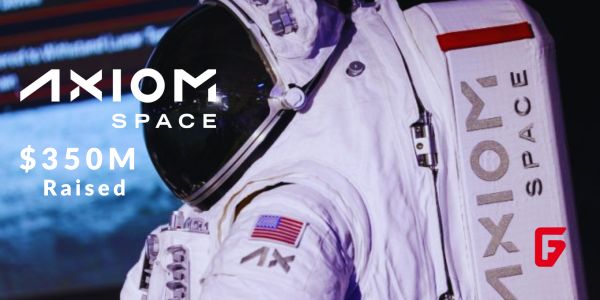
Axiom Space has locked in a fresh $350M raise to push its commercial space station and NASA lunar spacesuits toward launch, signaling growing investor faith in private orbital infrastructure.

Morpheus Space secures $15M funding for GO-2 electric propulsion mass production. Learn how this boosts satellite mobility with efficient thrusters.

Stoke Space extended its Series D funding to $860 million, fueling Nova’s full-reuse rocket production at Cape Canaveral. Backed by founders from Blue Origin, this pushes total capital to $1.34B.

Tomorrow.io has closed a $175 million equity round to deploy DeepSky, its AI-native weather satellite constellation designed to make global atmospheric data far more precise, frequent, and useful for businesses, governments, and communities facing extreme weather.

Stay ahead of AI and space tech wars: OpenAI vs Google AI, SpaceX and Blue Origin’s race for orbital data centers, Meta’s AI strategy shift, and key robotics breakthroughs reshaping industry.
Bridgit Mendler’s Northwood Space is pioneering mass-produced ground stations, enabling scalable, high-speed connectivity for the new era of satellite networks and megaconstellations.
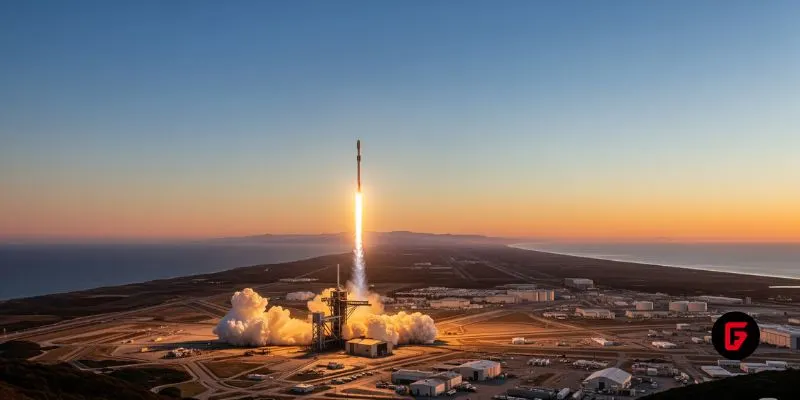
SpaceX aims to nearly double launches from Vandenberg in 2025, facing support from federal agencies but strong objections from the state and local communities.
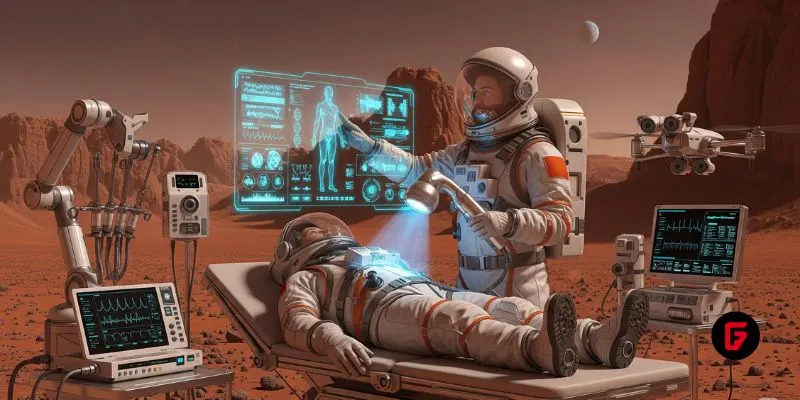
NASA and Google’s AI-powered Crew Medical Officer Digital Assistant enables autonomous diagnoses for astronauts on Mars missions, redefining remote healthcare for space and Earth.
futureTEKnow is focused on identifying and promoting creators, disruptors and innovators, and serving as a vital resource for those interested in the latest advancements in technology.
© 2026 All Rights Reserved.