






















Paris, France
2016
Aerospace, Space Situational Awareness, Satellite Operations, Space Traffic Management, Space Domain Awareness, Defense, Satellite Communications, Space Infrastructure, Orbital Debris Monitoring, Space Surveillance
Aldoria is a space technology company specializing in space situational awareness, orbital surveillance, and satellite collision-risk monitoring. Formerly known as Share My Space, the company develops ground-based optical observation systems and software for detecting, tracking, and characterizing objects orbiting Earth. Its technology combines telescope networks, orbital mechanics, automated image processing, and multi-source data analysis to provide information about satellites and space debris. Aldoria operates within the emerging space traffic management and space domain awareness industry, supporting the safety and security of commercial and government space operations.
Aldoria operates a global network of optical surveillance stations that observe satellites, rocket bodies, and other objects in Earth orbit. Its telescopes collect measurements that are processed into orbital trajectories, object identification records, and information about changes in spacecraft movement.
The company provides satellite operators with collision-risk assessments, conjunction monitoring, and tracking services. These capabilities help organizations identify potential close approaches between spacecraft and other orbital objects, evaluate risks, and plan appropriate responses.
Aldoria also supports space domain awareness and orbital security by monitoring unusual maneuvers, proximity operations, and changes in satellite behavior. Its data services are available through software interfaces and APIs, allowing customers to integrate orbital information into mission control systems, satellite fleet management, and defense-related monitoring activities.
Aldoria develops space surveillance technology combining ground-based optical sensors, automated object detection, orbital determination algorithms, and multi-source data processing. Its observation network uses specialized telescopes to detect satellites and other objects across low, medium, and geostationary Earth orbits.
One of its principal technologies is the Multiple Telescopes Observation Station (MTOS), which uses four coordinated telescopes at a single observation site. Their synchronized movement is designed to improve the detection of fast-moving objects, including satellites in low Earth orbit. The telescopes can also operate independently to track specific targets and collect additional observations.
Images captured by the sensors are processed into astrometric measurements, photometric data, and estimated orbital trajectories. Astrometry determines an object’s apparent position, while photometry measures changes in reflected light that can help characterize its behavior. Aldoria combines these observations with other available data sources to refine orbital estimates, identify objects, and detect maneuvers.
Its Orbital Information System maintains a continuously updated catalog of tracked objects and distributes information through web interfaces and REST APIs. The company reports an image-processing-to-orbit-determination workflow of approximately two minutes.
Aldoria is also developing multispectral surveillance technology through the RAMSES program, combining visible and near-infrared observations to improve object characterization and expand monitoring capabilities under different lighting conditions.
The increasing number of satellites and orbital debris objects creates greater demands for accurate tracking and collision-risk assessment. Satellite operators need timely information about nearby objects to protect spacecraft and maintain essential communications, navigation, and observation services.
Aldoria addresses this challenge through independent optical surveillance and orbital intelligence services. Its sensor network provides measurements that complement other tracking sources, while its processing systems turn observations into information that operators can use when assessing potential collisions or unusual satellite activity.
The company’s work also contributes to space domain awareness and independent access to orbital data, particularly for organizations seeking greater control over their space surveillance capabilities. Aldoria represents the growing importance of ground-based sensing and data infrastructure as orbital environments become more congested and strategically significant.
TRACKER provides on-demand optical observations of selected orbital objects. Customers can request tracking of particular satellites or debris to obtain measurements that support orbit determination, maneuver detection, and investigation of unusual spacecraft activity.
SPACELOG provides access to historical observations of satellites and other orbital objects. Its archived measurements help organizations examine past trajectories, investigate orbital events, and analyze changes in spacecraft behavior over time.
CALM and COLA provide collision-risk monitoring and conjunction assessment for spacecraft operations. These services help operators evaluate predicted close approaches, assess orbital hazards, and make decisions about collision avoidance during launch and in-orbit operations.
WATCHER provides ongoing surveillance around selected space assets. It supports the detection of approaching objects, unexpected maneuvers, and potential orbital threats, helping satellite operators maintain awareness of activity near their spacecraft.
Aldoria’s attitude determination service analyzes observations to characterize spacecraft orientation and behavior. It supports investigations involving proximity operations, anomalies, and changes in the apparent motion or attitude of orbital objects.
Aldoria’s technology supports satellite collision avoidance, orbital debris monitoring, and space traffic management. Commercial satellite operators can use its tracking measurements and conjunction assessments to evaluate potential close approaches and plan spacecraft maneuvers.
Government and defense organizations use space surveillance information to monitor strategically important satellites, detect unusual orbital movements, and investigate potential threats. Its optical tracking capabilities also support launch and early orbit operations, constellation monitoring, and analysis of spacecraft proximity activities.
Additional applications include independent orbital catalog development, space safety research, and national space surveillance infrastructure. Aldoria’s observation stations and data processing systems can help organizations establish their own monitoring capabilities and integrate tracking information into operational decision-making.
Yes. Aldoria previously operated under the name Share My Space before adopting the Aldoria brand in 2024. Its business remains focused on space surveillance, orbital tracking, and satellite safety services.
The Multiple Telescopes Observation Station, or MTOS, is a patented optical surveillance system using four coordinated telescopes. The telescopes can scan the sky together or independently track selected objects, collecting observations used to calculate orbital trajectories and detect spacecraft maneuvers.
Yes. Aldoria’s optical surveillance network monitors objects across low, medium, and geostationary Earth orbits. Its MTOS architecture is designed to detect fast-moving objects in low Earth orbit, including targets at altitudes as low as approximately 300 kilometers.
RAMSES is a €12 million program announced by Aldoria and ONERA in November 2025, with support from France 2030. It involves developing five multispectral observation stations that combine visible and near-infrared sensing to improve satellite tracking, object characterization, and surveillance under different lighting conditions.
No. Aldoria specializes in detecting, tracking, and analyzing objects in orbit rather than capturing or removing debris. Its surveillance data helps satellite operators assess collision risks and can support organizations developing debris mitigation or removal missions.
Have an update, correction, or additional information about this company? Help us keep the futureTEKnow company database up to date by submitting the latest company information.

Turion Space has raised more than $75 million in Series B funding to scale its Starfire platform and satellite fleet, betting that space domain awareness is the next critical defense infrastructure layer. The piece unpacks Turion’s business model, contracts, and risks for operators and investors watching the new space intelligence stack.
Pulsar Fusion’s Sunbird fusion rocket has achieved first plasma, validating its exhaust architecture and edging a reusable “space tug” concept toward sub‑six‑month Mars transfers. Drawing on multiple reports, this piece breaks down how the Dual Direct Fusion Drive works, what the 2027 in‑orbit demo must prove, and which technical and regulatory hurdles still stand between Sunbird and operational deep‑space logistics.
Aetherflux is betting that orbital data centers can power the next wave of AI, shifting from laser power beaming to space-based compute as it targets a $2 billion valuation. For founders and investors, the company’s 2027 satellite plans highlight how quickly space infrastructure is converging with AI demand and reshaping the deep-tech funding landscape.
Sierra Space’s $550 million Series C round, valuing the company at $8 billion, signals a decisive shift toward defense-tech space. This feature unpacks the hardware, strategy, and risks shaping the next decade of orbital infrastructure.

Axiom Space has locked in a fresh $350M raise to push its commercial space station and NASA lunar spacesuits toward launch, signaling growing investor faith in private orbital infrastructure.
Morpheus Space secures $15M funding for GO-2 electric propulsion mass production. Learn how this boosts satellite mobility with efficient thrusters.

Stoke Space extended its Series D funding to $860 million, fueling Nova’s full-reuse rocket production at Cape Canaveral. Backed by founders from Blue Origin, this pushes total capital to $1.34B.

Tomorrow.io has closed a $175 million equity round to deploy DeepSky, its AI-native weather satellite constellation designed to make global atmospheric data far more precise, frequent, and useful for businesses, governments, and communities facing extreme weather.

Stay ahead of AI and space tech wars: OpenAI vs Google AI, SpaceX and Blue Origin’s race for orbital data centers, Meta’s AI strategy shift, and key robotics breakthroughs reshaping industry.

Bridgit Mendler’s Northwood Space is pioneering mass-produced ground stations, enabling scalable, high-speed connectivity for the new era of satellite networks and megaconstellations.
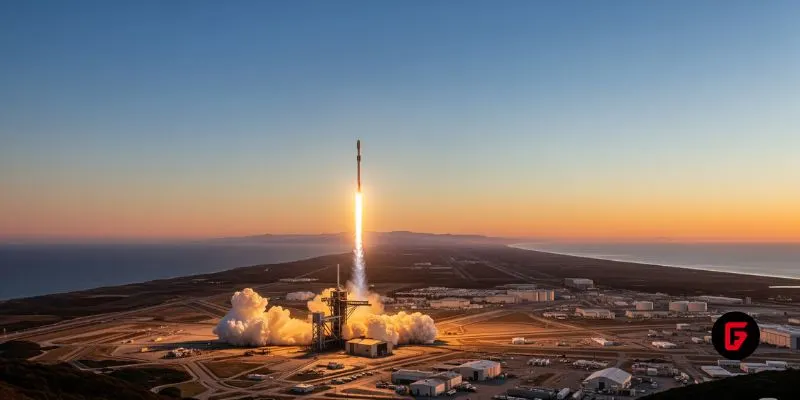
SpaceX aims to nearly double launches from Vandenberg in 2025, facing support from federal agencies but strong objections from the state and local communities.

NASA and Google’s AI-powered Crew Medical Officer Digital Assistant enables autonomous diagnoses for astronauts on Mars missions, redefining remote healthcare for space and Earth.
futureTEKnow is focused on identifying and promoting creators, disruptors and innovators, and serving as a vital resource for those interested in the latest advancements in technology.
© 2026 All Rights Reserved.