

































Vyoma is a space technology company developing satellite surveillance systems, orbital tracking services, and software for managing spacecraft operations. Its technology combines space-based optical sensors and ground-based observations to monitor satellites, orbital debris, and other objects around Earth. The company operates Flamingo-1, the first spacecraft in its planned surveillance constellation, and provides software for collision avoidance, flight dynamics, mission planning, and satellite control. Vyoma also develops space domain awareness services for government and defense organizations that require information about orbital activity and potential threats to spacecraft.
Vyoma collects and processes information about objects moving through Earth orbit. Its systems combine observations from ground-based sensors and satellites equipped with optical telescopes to estimate object positions, track orbital movements, and identify changes in spacecraft behavior.
The company is developing the Flamingo satellite constellation, a planned network of 12 surveillance spacecraft designed to collect frequent observations of satellites and debris. Flamingo-1 launched in January 2026, while additional spacecraft are being prepared for deployment.
Vyoma provides satellite safety and mission operations software that supports collision warnings, avoidance maneuver planning, orbit determination, spacecraft scheduling, and automated mission control.
For government and defense customers, the company supplies orbital tracking data, surveillance planning, and software for analyzing unusual spacecraft activity. Its services include monitoring maneuvers, close approaches, object deployments, and changes in orbital behavior.
Vyoma also develops turnkey surveillance capabilities that allow customers to operate dedicated space-based sensors and associated ground infrastructure.
Vyoma develops technology for observing orbital objects, processing surveillance measurements, predicting spacecraft trajectories, and automating satellite operations. Its architecture combines space-based optical instruments, a distributed ground sensor network, orbital modeling software, and cloud-based mission control systems.
Its primary sensing technology is the Flamingo space surveillance constellation. Flamingo satellites use optical telescopes to observe other spacecraft and debris from orbit. Unlike ground-based telescopes, these sensors operate above Earth’s atmosphere and can collect observations from viewing positions unavailable to terrestrial stations. Flamingo-1 was launched into a sun-synchronous orbit in January 2026.
The planned 12-satellite network is designed to provide frequent observations of objects in low Earth orbit. Vyoma states that the complete constellation is intended to reduce observation revisit intervals to less than one hour for low Earth orbit targets. Later-generation spacecraft are planned to incorporate inter-satellite communications and advanced sensing capabilities.
The company’s optical image processing technology identifies stars and moving orbital objects in telescope images. Its software associates detections across multiple observations, performs astrometric measurements, and generates tracking data that can be used to calculate object trajectories. Vyoma combines conventional algorithms with machine learning and develops onboard processing to reduce the amount of raw imagery transmitted to Earth.
Vyoma also develops orbital cataloguing systems that combine observations from different sensors. These systems perform orbit determination, trajectory propagation, and association of new measurements with previously identified objects. The company is working toward an independent catalogue of satellites and debris.
For spacecraft operators, Vyoma provides automated flight dynamics and collision avoidance software. These tools calculate satellite trajectories, assess close approaches, recommend avoidance maneuvers, and coordinate spacecraft activities while accounting for operational constraints such as power, onboard memory, and communications windows.
Its defense-oriented software analyzes maneuvers, object proximity, deployments, and patterns of orbital activity. The technology supports monitoring of spacecraft that may present operational or security concerns.
Vyoma addresses the growing need for reliable information about satellites and debris in increasingly congested orbital regions. Satellite operators require timely tracking measurements to evaluate collision risks and decide whether spacecraft maneuvers are necessary.
Its space-based surveillance infrastructure adds observations from orbit to existing ground-based tracking networks. These additional viewing positions can improve the monitoring of objects that are difficult to observe consistently from Earth.
The company’s automated satellite safety and operations software also helps operators manage the increasing number of spacecraft in commercial constellations. By combining tracking information with mission planning tools, Vyoma supports faster assessment of potential hazards and operational responses.
For government and defense organizations, Vyoma’s technology contributes to independent space domain awareness capabilities, including monitoring spacecraft maneuvers and identifying unusual activity. Its work with the European Space Agency also supports research into smaller debris populations that are not consistently captured by existing tracking systems.
Flamingo-1 is Vyoma’s first space surveillance satellite, launched on January 11, 2026. The microsatellite carries an optical telescope designed to observe satellites and orbital debris from a sun-synchronous orbit. Its spacecraft platform completed commissioning in June 2026, with optical payload commissioning following that milestone. Flamingo-1 provides the foundation for space-based object detection and orbital tracking, including observations that complement ground-based surveillance systems.
Flamingo is Vyoma’s planned constellation of 12 optical surveillance satellites. The network is designed to provide frequent observations of objects in low Earth orbit, with a targeted revisit interval of less than one hour when fully deployed. Flamingo-2 is scheduled for launch in the first quarter of 2027, followed by additional satellites during 2028 and 2029. The constellation is intended to support persistent orbital surveillance and space domain awareness.
Vyoma’s Space Surveillance & Tracking Service provides observational data from its ground-based and space-based sensor network. Customers can request surveillance campaigns, track specific objects, and receive measurements for orbital analysis. The service supports satellite tracking, maneuver detection, and identification of previously unobserved objects, including objects relevant to defense and space safety operations.
Vyoma’s Space Domain Awareness Service analyzes surveillance data to identify spacecraft maneuvers, close approaches, object deployments, and changes in orbital behavior. It provides software tools for monitoring high-interest satellites and investigating unusual activity. The service supports orbital threat assessment and spacecraft behavior analysis for government and defense organizations.
Vyoma provides integrated space surveillance systems for organizations seeking to operate dedicated sensing capabilities. Its turnkey offering combines space-based sensors, ground infrastructure, observation scheduling, satellite operations software, and payload data processing. The systems can be deployed with on-premises software to support independent space surveillance and data control.
The Satellite Safety Service is a cloud-based subscription platform providing collision warnings, trajectory screening, close-approach analysis, and maneuver recommendations. It combines orbital tracking information with flight dynamics calculations to help operators evaluate potential hazards. The service supports collision avoidance and satellite protection throughout spacecraft operations.
Vyoma’s Flight Dynamics Service provides orbit and attitude determination, trajectory propagation, pass predictions, and maneuver planning. The software helps operators calculate spacecraft movements and evaluate different orbital scenarios. Available through cloud-based or on-premises deployment, it supports orbital navigation, trajectory optimization, and spacecraft maneuver planning.
The Mission Planning Service schedules satellite activities based on operational constraints such as onboard power, memory capacity, communication windows, and payload requirements. It helps operators determine when spacecraft can collect data, communicate with ground stations, and perform maneuvers. The software supports automated spacecraft scheduling and payload operations.
Vyoma’s Satellite Operations Service combines flight dynamics, mission planning, spacecraft control, and telemetry storage into an integrated software environment. It is designed to automate routine mission operations and support the management of individual spacecraft or satellite constellations. The platform provides cloud-based and on-premises mission control capabilities.
Vyoma develops software that processes optical telescope imagery to identify stars and moving objects, associate observations, and calculate tracking measurements. Its cataloguing system combines observations from different sources to estimate orbital positions and identify new objects. These technologies support optical data processing, orbit determination, and orbital object cataloguing.
Vyoma’s technologies support space situational awareness, satellite safety, orbital surveillance, and space traffic management. Its optical sensors and tracking software provide information about objects in Earth orbit, helping operators evaluate collision risks and unexpected orbital movements.
Commercial satellite operators use its software for flight dynamics, maneuver planning, mission scheduling, and spacecraft control. These capabilities are relevant to organizations managing individual satellites and larger constellations.
Government and defense organizations can use Vyoma’s space domain awareness and surveillance services to monitor high-interest spacecraft, detect maneuvers, and analyze orbital behavior.
The company’s space-based observations also support scientific research into smaller orbital debris populations. Data collected by Flamingo satellites can help improve models of the debris environment used for spacecraft design and mission risk assessments.
Vyoma develops space surveillance technology and satellite operations software. Its systems combine ground-based observations with optical sensors aboard spacecraft to track satellites and orbital debris. The company also provides collision avoidance, flight dynamics, mission planning, and space domain awareness services for commercial and government customers.
Flamingo is a planned constellation of 12 space surveillance satellites equipped with optical telescopes. The satellites are designed to detect and track objects in Earth orbit and provide frequent updates about their positions. Flamingo-1 launched in January 2026, while Flamingo-2 is scheduled for the first quarter of 2027. The remaining spacecraft are planned for deployment in 2028 and 2029.
Yes. Vyoma launched Flamingo-1 on January 11, 2026, aboard a SpaceX rideshare mission. The satellite entered a sun-synchronous orbit at approximately 500 kilometers altitude. In June 2026, Vyoma announced successful commissioning of the spacecraft platform, with optical payload commissioning as the next step before routine surveillance operations.
Vyoma combines orbital tracking information with flight dynamics software to identify potential close approaches between spacecraft and debris. Its Satellite Safety Service provides collision warnings, trajectory screening, and recommendations for avoidance maneuvers. Its additional mission planning and operations tools help satellite operators evaluate and implement appropriate responses.
No. Vyoma focuses on detecting, tracking, and analyzing orbital objects rather than physically removing debris. Its surveillance systems provide measurements used to understand the space environment and assess collision risks. This information can also support organizations planning debris removal or spacecraft servicing missions.
Have an update, correction, or additional information about this company? Help us keep the futureTEKnow company database up to date by submitting the latest company information.

Turion Space has raised more than $75 million in Series B funding to scale its Starfire platform and satellite fleet, betting that space domain awareness is the next critical defense infrastructure layer. The piece unpacks Turion’s business model, contracts, and risks for operators and investors watching the new space intelligence stack.
Pulsar Fusion’s Sunbird fusion rocket has achieved first plasma, validating its exhaust architecture and edging a reusable “space tug” concept toward sub‑six‑month Mars transfers. Drawing on multiple reports, this piece breaks down how the Dual Direct Fusion Drive works, what the 2027 in‑orbit demo must prove, and which technical and regulatory hurdles still stand between Sunbird and operational deep‑space logistics.

Aetherflux is betting that orbital data centers can power the next wave of AI, shifting from laser power beaming to space-based compute as it targets a $2 billion valuation. For founders and investors, the company’s 2027 satellite plans highlight how quickly space infrastructure is converging with AI demand and reshaping the deep-tech funding landscape.
Sierra Space’s $550 million Series C round, valuing the company at $8 billion, signals a decisive shift toward defense-tech space. This feature unpacks the hardware, strategy, and risks shaping the next decade of orbital infrastructure.

Axiom Space has locked in a fresh $350M raise to push its commercial space station and NASA lunar spacesuits toward launch, signaling growing investor faith in private orbital infrastructure.
Morpheus Space secures $15M funding for GO-2 electric propulsion mass production. Learn how this boosts satellite mobility with efficient thrusters.

Stoke Space extended its Series D funding to $860 million, fueling Nova’s full-reuse rocket production at Cape Canaveral. Backed by founders from Blue Origin, this pushes total capital to $1.34B.

Tomorrow.io has closed a $175 million equity round to deploy DeepSky, its AI-native weather satellite constellation designed to make global atmospheric data far more precise, frequent, and useful for businesses, governments, and communities facing extreme weather.

Stay ahead of AI and space tech wars: OpenAI vs Google AI, SpaceX and Blue Origin’s race for orbital data centers, Meta’s AI strategy shift, and key robotics breakthroughs reshaping industry.

Bridgit Mendler’s Northwood Space is pioneering mass-produced ground stations, enabling scalable, high-speed connectivity for the new era of satellite networks and megaconstellations.
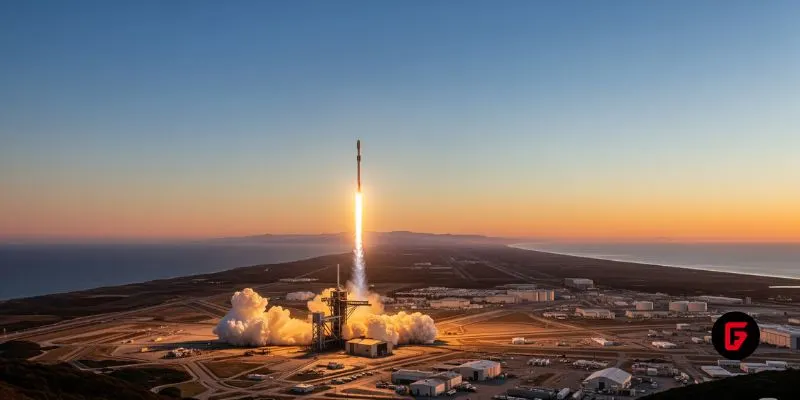
SpaceX aims to nearly double launches from Vandenberg in 2025, facing support from federal agencies but strong objections from the state and local communities.

NASA and Google’s AI-powered Crew Medical Officer Digital Assistant enables autonomous diagnoses for astronauts on Mars missions, redefining remote healthcare for space and Earth.
futureTEKnow is focused on identifying and promoting creators, disruptors and innovators, and serving as a vital resource for those interested in the latest advancements in technology.
© 2026 All Rights Reserved.