































Lichtenau, Germany
2021
Space Transportation, Space Logistics, Spacecraft Manufacturing, In-Space Manufacturing, Biotechnology, Pharmaceuticals, Scientific Research, Aerospace Engineering, Space Infrastructure, Defense
ATMOS Space Cargo is a space technology company developing reusable orbital return capsules for transporting scientific experiments, manufactured materials, and other cargo from space to Earth. Its PHOENIX spacecraft incorporates an inflatable atmospheric decelerator designed to protect payloads during re-entry while reducing the mass associated with conventional heat shields and parachute systems. The company combines spacecraft engineering, thermal protection technology, orbital logistics, and payload integration to support commercial and institutional missions requiring access to microgravity and the return of materials from orbit.
ATMOS Space Cargo develops spacecraft and mission services that allow organizations to send experiments and materials into low Earth orbit and return them for analysis or further processing on Earth.
Its principal product, the PHOENIX return capsule, is designed to provide two-way orbital cargo transportation without requiring customers to operate their own spacecraft or depend entirely on space station infrastructure.
The company provides payload integration, launch coordination, orbital experiment accommodation, re-entry planning, and recovery services. Its technology is particularly relevant to microgravity research and in-space manufacturing, where experiments or manufactured products must be retrieved after spending time in orbit.
ATMOS completed its first orbital test mission with PHOENIX 1 in April 2025. It is developing PHOENIX 2 with onboard propulsion, guidance, and recovery capabilities intended to support more flexible commercial return missions.
ATMOS Space Cargo develops spacecraft re-entry technology centered on its Inflatable Atmospheric Decelerator (IAD), a deployable structure designed to slow a returning spacecraft while protecting its cargo from the extreme thermal conditions of atmospheric entry.
Unlike conventional rigid ablative heat shields, which dissipate heat partly through material consumption, the company’s inflatable system uses a larger aerodynamic surface and non-ablative thermal protection materials. The expanded structure increases atmospheric drag, enabling deceleration while limiting the mass dedicated to re-entry protection.
The PHOENIX spacecraft architecture combines thermal protection, aerodynamic deceleration, and payload accommodation. The first PHOENIX 1 mission tested heat shield deployment and collected spacecraft and customer experiment data during its orbital flight and return trajectory.
PHOENIX 2 adds integrated propulsion and guidance capabilities intended to provide more control over orbital operations, re-entry timing, and landing locations. The vehicle is designed to accommodate up to 100 kilograms of payload, with a pressurized compartment, thermal management, and electrical and data interfaces for scientific equipment.
The company’s mission architecture also incorporates ground-to-space communications and payload monitoring, allowing operators to receive experimental data during flight. Its longer-term development focuses on reusable spacecraft, predictable recovery, and scalable cargo return capacity.
The growing number of commercial activities in low Earth orbit creates demand for transporting materials in both directions. While launch services provide access to space, returning experiments and manufactured products requires specialized spacecraft capable of surviving atmospheric re-entry.
ATMOS addresses this challenge through lightweight, reusable orbital return technology. Its inflatable decelerator is designed to reduce the hardware mass required for atmospheric entry, potentially allowing a greater proportion of spacecraft capacity to be allocated to customer payloads.
The company’s approach is particularly relevant to commercial microgravity manufacturing and research, where the economic value of experiments depends on recovering samples and products.
Its development also contributes to Europe’s efforts to establish independent space return capabilities. The successful commercialization of this model will depend on reliable spacecraft recovery, reusability, mission frequency, and the economics of transporting cargo from orbit.
PHOENIX 1 is ATMOS Space Cargo’s first orbital re-entry prototype, launched aboard SpaceX’s Bandwagon-3 mission on April 21, 2025. The spacecraft carried scientific experiments and technology demonstration payloads while testing the deployment of the company’s inflatable heat shield. The mission completed one orbit before beginning atmospheric re-entry. Although the capsule was not recovered, it transmitted spacecraft telemetry and experiment data that supported the development of subsequent vehicles.
PHOENIX 2 is a reusable orbital transfer and return vehicle designed for autonomous cargo missions. Its planned capabilities include onboard propulsion, controlled re-entry, and precision recovery. The spacecraft accommodates up to 100 kilograms of payload in a pressurized compartment, with electrical power, data connections, and thermal control for customer experiments. ATMOS describes mission durations ranging from three hours to twelve months. PHOENIX 2 is being developed for commercial orbital logistics and microgravity research missions.
The Inflatable Atmospheric Decelerator is ATMOS’s proprietary non-ablative thermal protection and aerodynamic braking system. It deploys a large inflatable surface that increases atmospheric drag during re-entry, helping reduce spacecraft velocity while protecting onboard cargo. The technology is designed to support recovery without conventional parachutes and improve the proportion of vehicle mass available for payload transportation.
ATMOS offers an end-to-end orbital cargo return service covering payload integration, launch-site transportation, orbital accommodation, mission monitoring, and planned post-flight recovery. Its service architecture supports experiments requiring controlled environmental conditions and physical retrieval after exposure to microgravity. Commercial operations are being developed around PHOENIX 2, including planned missions integrating Space Cargo Unlimited’s BentoBox manufacturing platform.
Microgravity Research: Providing orbital accommodation for scientific experiments that investigate physical, chemical, and biological processes under reduced gravity.
In-Space Manufacturing: Supporting the production and return of materials manufactured in microgravity, including products requiring analysis or processing after their orbital mission.
Biotechnology: Accommodating biological experiments and research equipment used to investigate processes affected by gravity.
Pharmaceutical Research: Providing a potential return transportation platform for drug development experiments, biological samples, and material research conducted in orbit.
Space Technology Demonstration: Testing spacecraft components, electronics, sensors, and other experimental hardware under orbital and re-entry conditions.
Orbital Logistics: Developing transportation services that return scientific payloads, manufactured materials, and commercial cargo from low Earth orbit.
ATMOS completed an orbital re-entry test with PHOENIX 1 in April 2025. The capsule deployed its inflatable heat shield and transmitted flight and payload data. However, it was not recovered after re-entry because the revised splashdown location was too far from available recovery infrastructure. The mission validated important aspects of the technology but did not demonstrate reusable capsule recovery.
ATMOS specifies a payload capacity of up to 100 kilograms for PHOENIX 2. The spacecraft is designed to accommodate experiments and cargo within a pressurized compartment, with electrical power, data interfaces, and thermal management. The company has described longer-term plans for larger vehicles capable of returning substantially heavier payloads.
No. The PHOENIX design uses an inflatable atmospheric decelerator that serves as both a heat shield and an aerodynamic braking surface. The system is intended to reduce spacecraft velocity and enable controlled water landings without conventional parachutes. Its full recovery capabilities remain part of the development and validation of the next-generation vehicle.
ATMOS and Space Cargo Unlimited announced a seven-flight commercial program combining the PHOENIX return capsule with the BentoBox microgravity manufacturing platform. Their first integrated mission was targeted for 2026. The collaboration is designed to provide station-independent orbital manufacturing, experiment operations, and cargo recovery services.
According to ATMOS’s published technical specifications, PHOENIX 2 is designed to support selectable mission durations ranging from approximately three hours to twelve months. This flexibility is intended to accommodate short-duration experiments and longer research or manufacturing processes before returning the payload to Earth.
Have an update, correction, or additional information about this company? Help us keep the futureTEKnow company database up to date by submitting the latest company information.

Turion Space has raised more than $75 million in Series B funding to scale its Starfire platform and satellite fleet, betting that space domain awareness is the next critical defense infrastructure layer. The piece unpacks Turion’s business model, contracts, and risks for operators and investors watching the new space intelligence stack.
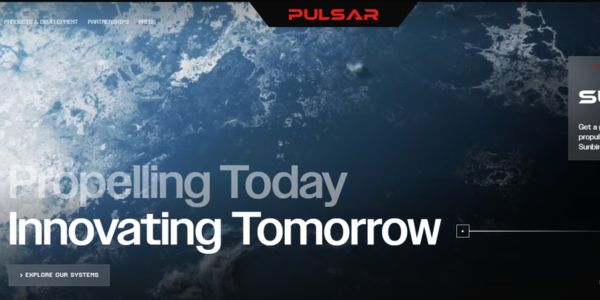
Pulsar Fusion’s Sunbird fusion rocket has achieved first plasma, validating its exhaust architecture and edging a reusable “space tug” concept toward sub‑six‑month Mars transfers. Drawing on multiple reports, this piece breaks down how the Dual Direct Fusion Drive works, what the 2027 in‑orbit demo must prove, and which technical and regulatory hurdles still stand between Sunbird and operational deep‑space logistics.

Aetherflux is betting that orbital data centers can power the next wave of AI, shifting from laser power beaming to space-based compute as it targets a $2 billion valuation. For founders and investors, the company’s 2027 satellite plans highlight how quickly space infrastructure is converging with AI demand and reshaping the deep-tech funding landscape.
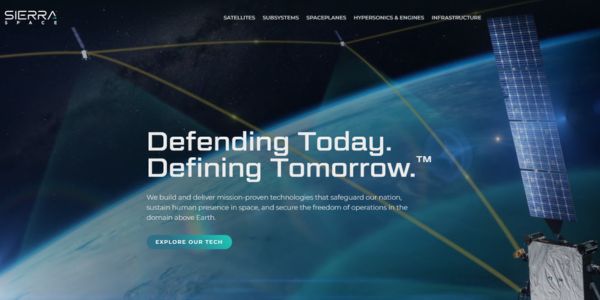
Sierra Space’s $550 million Series C round, valuing the company at $8 billion, signals a decisive shift toward defense-tech space. This feature unpacks the hardware, strategy, and risks shaping the next decade of orbital infrastructure.

Axiom Space has locked in a fresh $350M raise to push its commercial space station and NASA lunar spacesuits toward launch, signaling growing investor faith in private orbital infrastructure.
Morpheus Space secures $15M funding for GO-2 electric propulsion mass production. Learn how this boosts satellite mobility with efficient thrusters.

Stoke Space extended its Series D funding to $860 million, fueling Nova’s full-reuse rocket production at Cape Canaveral. Backed by founders from Blue Origin, this pushes total capital to $1.34B.

Tomorrow.io has closed a $175 million equity round to deploy DeepSky, its AI-native weather satellite constellation designed to make global atmospheric data far more precise, frequent, and useful for businesses, governments, and communities facing extreme weather.

Stay ahead of AI and space tech wars: OpenAI vs Google AI, SpaceX and Blue Origin’s race for orbital data centers, Meta’s AI strategy shift, and key robotics breakthroughs reshaping industry.

Bridgit Mendler’s Northwood Space is pioneering mass-produced ground stations, enabling scalable, high-speed connectivity for the new era of satellite networks and megaconstellations.
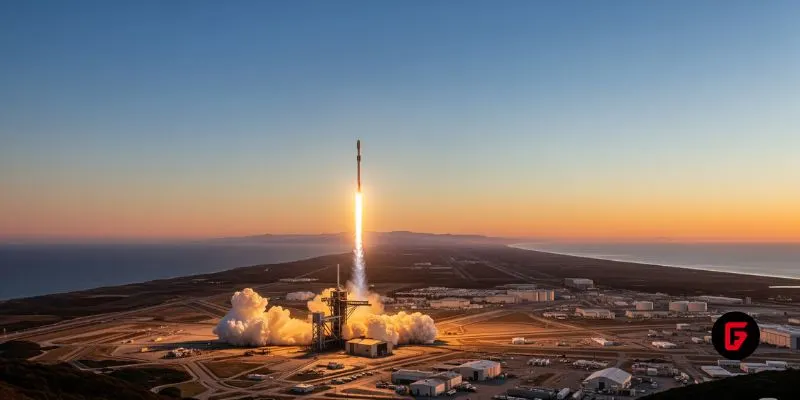
SpaceX aims to nearly double launches from Vandenberg in 2025, facing support from federal agencies but strong objections from the state and local communities.

NASA and Google’s AI-powered Crew Medical Officer Digital Assistant enables autonomous diagnoses for astronauts on Mars missions, redefining remote healthcare for space and Earth.
futureTEKnow is focused on identifying and promoting creators, disruptors and innovators, and serving as a vital resource for those interested in the latest advancements in technology.
© 2026 All Rights Reserved.