



































Berlin, Germany
2007
Space Technology, Satellite Manufacturing, Aerospace Engineering, Spacecraft Thermal Management, Scientific Instruments, Space Exploration, Satellite Components, Space Research, Spacecraft Testing, Ground Support Equipment
Azimut Space is a space engineering company specializing in spacecraft thermal management, thermo-mechanical engineering, and satellite subsystems. The company develops thermal control hardware, scientific instruments, structural components, and supporting equipment for space missions. Its engineering activities cover spacecraft and payload development, from initial design through manufacturing, integration, testing, and qualification. Azimut Space also provides thermal engineering and environmental testing services for organizations developing satellites, scientific payloads, and space exploration hardware.
Azimut Space designs, manufactures, and tests hardware used in satellites, spacecraft, and scientific missions. Its principal activities include developing thermal control systems that regulate spacecraft component temperatures and protect sensitive equipment from extreme environmental conditions.
The company provides thermo-mechanical engineering, system engineering, structural design, and product assurance services. It also supports the development and qualification of scientific instruments and space payloads, working with research institutions and aerospace organizations.
Azimut Space operates thermal vacuum chambers, thermal cycling equipment, and thermal characterization facilities used to reproduce conditions encountered during space missions.
Its activities also include designing ground support equipment, satellite transport containers, and specialized mechanical systems used to assemble, test, handle, and transport spacecraft components. The company has contributed engineering and hardware to planetary exploration missions and European space research projects.
Azimut Space develops engineering technologies for managing temperature, structural performance, and environmental reliability in spacecraft. Its principal specialization is spacecraft thermal control, which involves analyzing heat transfer and designing systems that maintain equipment within acceptable operating temperatures.
The company’s thermal engineering capabilities include thermal architecture development, thermal modeling, thermal hardware design, manufacturing, assembly, and qualification. These activities address the thermal conditions experienced by satellites and instruments during launch, orbital operations, and planetary exploration.
Azimut Space uses thermal vacuum chambers, thermal cycling systems, and thermal characterization equipment to evaluate spacecraft components under controlled environmental conditions. Its testing facilities support qualification activities under European Cooperation for Space Standardization (ECSS) and NASA requirements, including testing at cryogenic temperatures.
The company also develops metallic and composite structures, mechanical assemblies, and scientific instrument hardware. Its systems engineering activities integrate mechanical, thermal, and mission requirements into spacecraft and payload designs.
Its research experience includes low-temperature electronics, thermoelectric cooling, and additive manufacturing for space applications. These technologies have been investigated through European Space Agency research activities, including projects addressing thermal performance, advanced materials, and manufacturing in the space environment.
Spacecraft must maintain reliable operating temperatures despite exposure to solar radiation, deep-space cold, and changing thermal conditions. Temperature fluctuations can affect electronics, sensors, scientific instruments, and structural components, making thermal engineering essential to spacecraft design and mission reliability.
Azimut Space contributes to this area through specialized thermal control hardware and environmental qualification services. Its capabilities support spacecraft developers that require engineering expertise, manufactured subsystems, and testing infrastructure.
The company’s involvement in missions such as NASA’s InSight and the MASCOT asteroid lander demonstrates its experience supporting planetary exploration instrumentation.
Its work is also relevant to the expanding satellite manufacturing industry, where spacecraft developers depend on qualified components and reliable testing procedures. Thermal engineering remains an important part of developing smaller satellites, scientific payloads, and spacecraft intended for increasingly demanding operating environments.
Azimut Space develops spacecraft thermal control systems that regulate temperatures within satellites, instruments, and other space hardware. Its capabilities cover thermal system architecture, design trade-offs, manufacturing, assembly, and qualification. These systems help maintain suitable operating conditions for sensitive electronics and scientific equipment throughout a mission.
The company provides engineering, industrialization, production, and qualification of scientific instruments for space research and exploration missions. Its experience includes contributions to NASA’s InSight Mars mission and the MASCOT asteroid lander. These activities combine thermal engineering, structural design, mechanical integration, and environmental testing to prepare scientific hardware for operation in space.
Azimut Space designs and manufactures ground support equipment for spacecraft assembly, handling, testing, and transportation. Its portfolio includes mechanical support systems and specialized equipment adapted to the dimensions and handling requirements of satellites and scientific instruments. These products support spacecraft manufacturing and integration activities before launch.
The company develops specialized transport containers for satellites, scientific instruments, and spacecraft components. These containers provide mechanical protection and support the handling and storage of sensitive aerospace hardware during transportation between manufacturing, testing, integration, and launch facilities.
Satellite Thermal Management: Designing thermal systems that maintain suitable operating temperatures for satellite electronics, instruments, and spacecraft subsystems.
Planetary Exploration: Supporting the development and qualification of scientific hardware used in missions investigating Mars, asteroids, and other planetary environments.
Scientific Instrument Development: Providing engineering and manufacturing support for research instruments that must operate under demanding space conditions.
Spacecraft Environmental Testing: Conducting thermal vacuum, thermal cycling, and characterization tests to evaluate hardware performance and support qualification.
Satellite Manufacturing: Supplying structural components, thermal hardware, and engineering services for spacecraft development and integration.
Ground Support Operations: Developing equipment for the assembly, handling, transportation, and storage of satellites and space instruments.
Azimut Space, operating under its earlier company name, was the principal industrial partner of the German Aerospace Center (DLR) for the Heat Flow and Physical Properties Package (HP³) instrument. HP³ was developed to investigate heat flow beneath the Martian surface as part of NASA’s InSight mission.
Yes. Azimut Space participated in the MASCOT asteroid lander project developed by DLR and the French space agency CNES for JAXA’s Hayabusa2 mission. MASCOT landed on asteroid Ryugu in 2018 and carried scientific instruments used to investigate the asteroid’s surface properties.
Azimut Space operates thermal vacuum chambers, a thermal cycling chamber, and thermal characterization equipment at its Berlin facilities. These systems support environmental testing and qualification of spacecraft components under vacuum, ambient pressure, and low-temperature conditions.
Yes. The company was established in 2007 as Active Space Technologies Germany and later operated as Sonaca Space GmbH. It adopted the Azimut Space GmbH name in 2019. Its engineering activities have continued to focus on spacecraft thermal systems, scientific instruments, and aerospace hardware.
Azimut Space has participated in ESA research projects investigating additive manufacturing for the International Space Station, low-temperature electronics, thermoelectric cooling for radio-frequency payloads, space aerogels, and other advanced space technologies. These activities extend its engineering work into materials, electronics, and thermal management research.
Have an update, correction, or additional information about this company? Help us keep the futureTEKnow company database up to date by submitting the latest company information.

Turion Space has raised more than $75 million in Series B funding to scale its Starfire platform and satellite fleet, betting that space domain awareness is the next critical defense infrastructure layer. The piece unpacks Turion’s business model, contracts, and risks for operators and investors watching the new space intelligence stack.
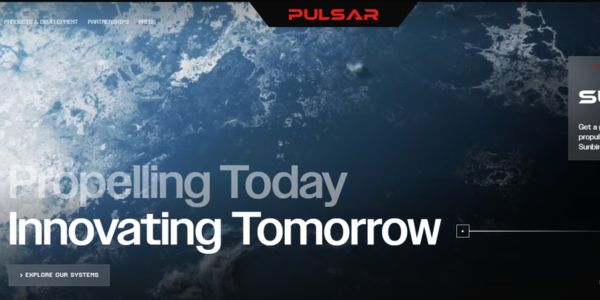
Pulsar Fusion’s Sunbird fusion rocket has achieved first plasma, validating its exhaust architecture and edging a reusable “space tug” concept toward sub‑six‑month Mars transfers. Drawing on multiple reports, this piece breaks down how the Dual Direct Fusion Drive works, what the 2027 in‑orbit demo must prove, and which technical and regulatory hurdles still stand between Sunbird and operational deep‑space logistics.

Aetherflux is betting that orbital data centers can power the next wave of AI, shifting from laser power beaming to space-based compute as it targets a $2 billion valuation. For founders and investors, the company’s 2027 satellite plans highlight how quickly space infrastructure is converging with AI demand and reshaping the deep-tech funding landscape.
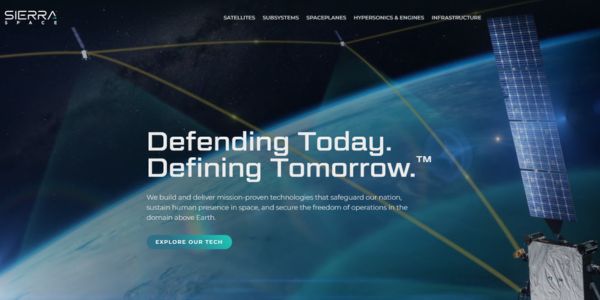
Sierra Space’s $550 million Series C round, valuing the company at $8 billion, signals a decisive shift toward defense-tech space. This feature unpacks the hardware, strategy, and risks shaping the next decade of orbital infrastructure.

Axiom Space has locked in a fresh $350M raise to push its commercial space station and NASA lunar spacesuits toward launch, signaling growing investor faith in private orbital infrastructure.
Morpheus Space secures $15M funding for GO-2 electric propulsion mass production. Learn how this boosts satellite mobility with efficient thrusters.

Stoke Space extended its Series D funding to $860 million, fueling Nova’s full-reuse rocket production at Cape Canaveral. Backed by founders from Blue Origin, this pushes total capital to $1.34B.

Tomorrow.io has closed a $175 million equity round to deploy DeepSky, its AI-native weather satellite constellation designed to make global atmospheric data far more precise, frequent, and useful for businesses, governments, and communities facing extreme weather.

Stay ahead of AI and space tech wars: OpenAI vs Google AI, SpaceX and Blue Origin’s race for orbital data centers, Meta’s AI strategy shift, and key robotics breakthroughs reshaping industry.

Bridgit Mendler’s Northwood Space is pioneering mass-produced ground stations, enabling scalable, high-speed connectivity for the new era of satellite networks and megaconstellations.
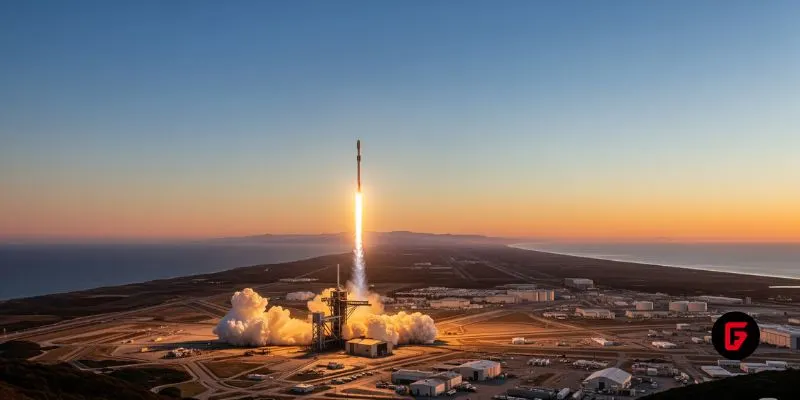
SpaceX aims to nearly double launches from Vandenberg in 2025, facing support from federal agencies but strong objections from the state and local communities.

NASA and Google’s AI-powered Crew Medical Officer Digital Assistant enables autonomous diagnoses for astronauts on Mars missions, redefining remote healthcare for space and Earth.
futureTEKnow is focused on identifying and promoting creators, disruptors and innovators, and serving as a vital resource for those interested in the latest advancements in technology.
© 2026 All Rights Reserved.