

































Berlin, Germany
2010
Aerospace, Satellite Manufacturing, Earth Observation, Remote Sensing, Defense, Telecommunications, Space Infrastructure
Berlin Space Technologies (BST) is a German aerospace company specializing in the design and manufacturing of small satellites and spacecraft components. Founded in 2010, the company develops modular satellite platforms, optical imaging payloads, and subsystems for commercial, government, and scientific space missions. Its technology supports Earth observation, satellite communications, and other orbital applications. BST operates within the New Space industry, focusing on serial satellite production and reusable spacecraft designs that allow organizations to deploy satellites without developing every component independently.
Berlin Space Technologies designs, manufactures, and supports satellite systems for organizations conducting missions in Earth orbit. Its spacecraft portfolio covers satellite classes ranging from approximately 50 to 500 kilograms, with platforms configured for different payloads and mission requirements.
The company develops LEOS satellite platforms, optical Earth observation cameras, onboard computers, power management systems, and attitude determination and control components. These technologies allow customers to assemble complete spacecraft using previously developed and tested hardware.
BST also provides satellite imagery and mission operations services, including spacecraft tasking, satellite control, and image processing. Its engineering activities extend to satellite integration, testing equipment, and technical support for organizations establishing their own satellite capabilities.
Through manufacturing facilities and partnerships across multiple continents, BST supplies satellite hardware and services for commercial and institutional space programs.
Berlin Space Technologies develops spacecraft hardware around modular satellite architecture, enabling different payloads and subsystems to be integrated into standardized satellite platforms.
Its LEOS satellite systems combine onboard computing, electrical power management, communications, propulsion, and attitude determination and control systems. These components work together to maintain spacecraft operations, manage payload activities, and transmit information between satellites and ground stations.
For Earth observation missions, BST develops multispectral optical imaging payloads that capture imagery across visible and near-infrared wavelengths. Its HRVI camera systems use optical assemblies, image sensors, and payload processing electronics to collect and store satellite imagery before transmitting it to Earth.
Spacecraft orientation is managed through attitude determination and control technologies, including star trackers, reaction wheels, sun sensors, and GPS receivers. Star trackers determine a satellite’s orientation by observing known star patterns, while reaction wheels help adjust spacecraft pointing without relying entirely on propulsion.
BST also develops satellite command and data handling units, battery systems, solar panels, and ground support equipment. Its satellite platforms support encrypted communications, onboard data storage, and high-speed downlink capabilities.
The company’s vertically integrated manufacturing approach allows it to produce major spacecraft components internally, supporting standardized production, system integration, and testing across different satellite missions.
Berlin Space Technologies represents the expansion of industrial-scale small satellite manufacturing within the commercial space industry.
Traditional spacecraft development often involves designing specialized hardware for individual missions, creating long development cycles and substantial engineering costs. BST addresses this challenge through modular satellite platforms, standardized subsystems, and manufacturing processes designed for repeatable production.
Its technology supports the growing demand for Earth observation, communications, and government satellite infrastructure. By manufacturing both complete spacecraft and individual components, BST also provides options for organizations with different levels of satellite engineering capability.
The company’s international manufacturing expansion demonstrates how satellite production is moving toward scalable industrial processes, enabling more organizations to develop and operate dedicated space infrastructure.
LEOS-50 is BST’s flight-proven small satellite platform designed primarily for Earth observation missions. It supports payloads weighing up to 30 kilograms and incorporates electrical propulsion, onboard data storage, encrypted communications, and X-band downlink capabilities. The platform has operational heritage dating to 2015 and is designed for a five-year mission lifetime in low Earth orbit.
LEOS-100 is a modular spacecraft platform designed for larger payloads and more demanding missions. Available in LEOS-100S, LEOS-100D, and LEOS-100DX configurations, it supports payload masses up to 250 kilograms. Applications include Earth observation, satellite communications, radar missions, in-orbit servicing, and technology demonstration.
BST develops the HRVI family of satellite imaging systems, including HRVI-6HD, HRVI-2HD, and HRVI-VHR. These payloads support high-resolution optical Earth observation using panchromatic and multispectral imaging. The HRVI-2HD provides approximately 1.9-meter ground sampling resolution from a 500-kilometer orbit.
The ST200 and ST400 are autonomous spacecraft attitude sensors that determine satellite orientation by identifying star patterns. The ST200 is designed for CubeSats and nanosatellites, while the ST400 supports demanding microsatellite missions requiring precision pointing.
Berlin Space Technologies’ satellite systems support Earth observation, remote sensing, satellite communications, and government space missions.
Its optical imaging payloads can collect satellite imagery for agricultural monitoring, environmental analysis, urban planning, and infrastructure assessment. Multispectral observations provide information about vegetation, land surfaces, and changes in geographic areas over time.
BST’s modular spacecraft platforms also support communications payloads, radar imaging, and in-orbit technology demonstrations. Government and defense organizations can use dedicated satellites for Earth observation and other space-based capabilities.
The company’s satellite manufacturing and mission operations services additionally support institutions developing independent space programs, including organizations that require spacecraft integration, satellite control, technical training, and access to Earth observation imagery.
LEOS-50 is designed primarily for smaller Earth observation missions, supporting payloads up to 30 kilograms. LEOS-100 is a larger modular satellite platform supporting payloads up to 250 kilograms, with configurations for optical imaging, communications, radar, and in-orbit servicing missions.
Imaging resolution depends on the optical payload. For example, the HRVI-2HD camera is designed to provide approximately 1.9-meter ground sampling resolution from an altitude of 500 kilometers. Other BST payloads support different imaging resolutions and swath widths.
The ST200 and ST400 are spacecraft orientation sensors. They identify star patterns to determine how a satellite is positioned in space, providing information used by attitude control systems to maintain accurate pointing for imaging, communications, and other payload operations.
Yes. In addition to its German facilities, BST operates through a manufacturing joint venture in Ahmedabad, India. It has also established a North American subsidiary in Albuquerque, New Mexico, with plans for regional satellite production.
Yes. BST offers satellite imagery services, spacecraft tasking and control, and mission operations support. These services allow customers to obtain Earth observation data and access operational capabilities beyond purchasing satellite hardware.
Have an update, correction, or additional information about this company? Help us keep the futureTEKnow company database up to date by submitting the latest company information.

Turion Space has raised more than $75 million in Series B funding to scale its Starfire platform and satellite fleet, betting that space domain awareness is the next critical defense infrastructure layer. The piece unpacks Turion’s business model, contracts, and risks for operators and investors watching the new space intelligence stack.

Pulsar Fusion’s Sunbird fusion rocket has achieved first plasma, validating its exhaust architecture and edging a reusable “space tug” concept toward sub‑six‑month Mars transfers. Drawing on multiple reports, this piece breaks down how the Dual Direct Fusion Drive works, what the 2027 in‑orbit demo must prove, and which technical and regulatory hurdles still stand between Sunbird and operational deep‑space logistics.

Aetherflux is betting that orbital data centers can power the next wave of AI, shifting from laser power beaming to space-based compute as it targets a $2 billion valuation. For founders and investors, the company’s 2027 satellite plans highlight how quickly space infrastructure is converging with AI demand and reshaping the deep-tech funding landscape.
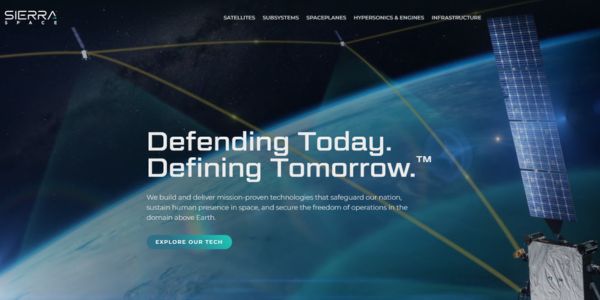
Sierra Space’s $550 million Series C round, valuing the company at $8 billion, signals a decisive shift toward defense-tech space. This feature unpacks the hardware, strategy, and risks shaping the next decade of orbital infrastructure.

Axiom Space has locked in a fresh $350M raise to push its commercial space station and NASA lunar spacesuits toward launch, signaling growing investor faith in private orbital infrastructure.
Morpheus Space secures $15M funding for GO-2 electric propulsion mass production. Learn how this boosts satellite mobility with efficient thrusters.

Stoke Space extended its Series D funding to $860 million, fueling Nova’s full-reuse rocket production at Cape Canaveral. Backed by founders from Blue Origin, this pushes total capital to $1.34B.

Tomorrow.io has closed a $175 million equity round to deploy DeepSky, its AI-native weather satellite constellation designed to make global atmospheric data far more precise, frequent, and useful for businesses, governments, and communities facing extreme weather.

Stay ahead of AI and space tech wars: OpenAI vs Google AI, SpaceX and Blue Origin’s race for orbital data centers, Meta’s AI strategy shift, and key robotics breakthroughs reshaping industry.

Bridgit Mendler’s Northwood Space is pioneering mass-produced ground stations, enabling scalable, high-speed connectivity for the new era of satellite networks and megaconstellations.
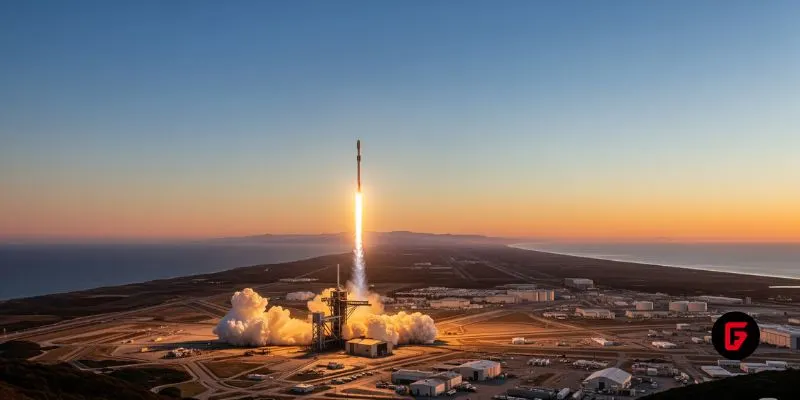
SpaceX aims to nearly double launches from Vandenberg in 2025, facing support from federal agencies but strong objections from the state and local communities.

NASA and Google’s AI-powered Crew Medical Officer Digital Assistant enables autonomous diagnoses for astronauts on Mars missions, redefining remote healthcare for space and Earth.
futureTEKnow is focused on identifying and promoting creators, disruptors and innovators, and serving as a vital resource for those interested in the latest advancements in technology.
© 2026 All Rights Reserved.